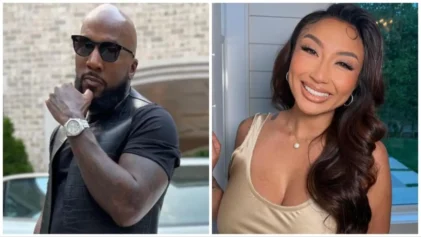
Jeezy sat down for a revealing interview with actress Nia Long to promote his new album, “I Might Forgive… But I Don’t Forget.”
The interview shared on YouTube on Nov. 7, finds the 46-year-old rapper discussing his pending divorce from former host of “The Real,” Jeannie Mai Jenkins, as well as other traumatic experiences in his life.
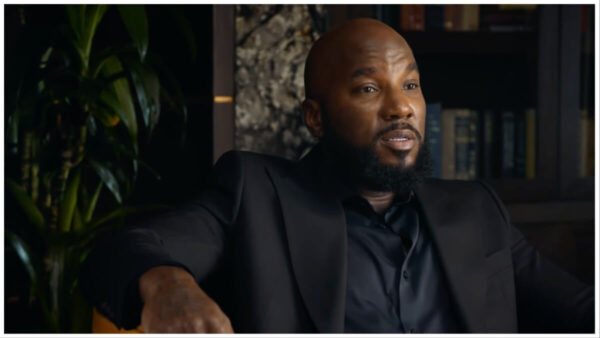
The “Soul Survivor” singer told Long that he was traumatized at an early age by several things, one of which was after being left alone with an older female babysitter who allegedly molested him as a child.
“I think the first was being left with a babysitter. There was a woman that was older than me,” he recalled nearly 50 seconds into the judgement-free conversation. “And her, you know, touching and doing things to me that don’t normally happen to kids.”
“Like molesting?” asked Long for clarity. “Right, basically,” he replied. “So, I was introduced to sex at a very young age.”
For the “second thing,” Jeezy recalled the time he was playing outside as a kid with his neighbor’s two kids, and he witnessed their parents having a domestic dispute.
“I used to hang out with them and I was there one day and I remember like it was yesterday,” he said. “They got into an argument. Me and the little boys was playing in the room and I heard him. I heard that saying before, like, ‘You wait till I get back, I’ll be right back.”
The “Snowman” said next the father came up the stairs and rummaged through the closet to pull out a gun.
“I saw when he pulled it out,” he said. “It was like a big, it had to be like a silver .357, and I looked at them, and I was immediately like, ‘Yo, we got to hide.'”
The recording artist said that he climbed under the sink in the bathroom and before he knew it he heard four shots that hit the woman, who survived. Jeezy said he was still under the sink hiding when police arrived and his parents came looking for him.
“Before I was 8, I had already accepted this is the norm, right? I was already desensitized, at 8 years old. I was already thinking this is what life is.”
The “Standing Ovation” artist also spoke about his pending divorce from Jenkins and revealed that the two tried therapy before ending the relationship.
“This has not been an easy journey,” he said, adding that as a person who has survived trauma, he wanted to be “in the best situation” possible. “I can only be responsible for myself. You know I can only do what I can do, and I can’t expect someone else to do what I’m doing.”
Jeezy opens up about his "childhood trauma" being molested by babysitter as a kid 😥 pic.twitter.com/zKoaKr9gT5
— HIPHOP CROWN NATION (@hiphopcnation) November 8, 2023
Fans reacted to the interview on social media with supportive comments.
“What I got out of the Jeezy and Nia Long interview is black women and black men need to work together to create safe dialogue and spaces for each other,” replied one X user.
“This Jeezy x Nia Long interview is everything,” added one. “Really appreciate seeing a black woman and man having such an evolved and vulnerable conversation together.”
Jeezy filed for a divorce in September after two years of marriage. Mai and Jeezy share a 1-year-old daughter, Monaco. The artist also has a 28-year-old son, Jadarius Dykes, and a 9-year-old daughter, Amra Nor Jenkins, from previous relationships.
The recording artist also discussed the death of his brother and his relationships with his mother and sister in the hour-long interview.
Trending Now:
Never miss a story — sign up for ATLANTA BLACK STAR’S free daily newsletters to stay up-to-date on the latest developments from top news headlines to celebrity news.