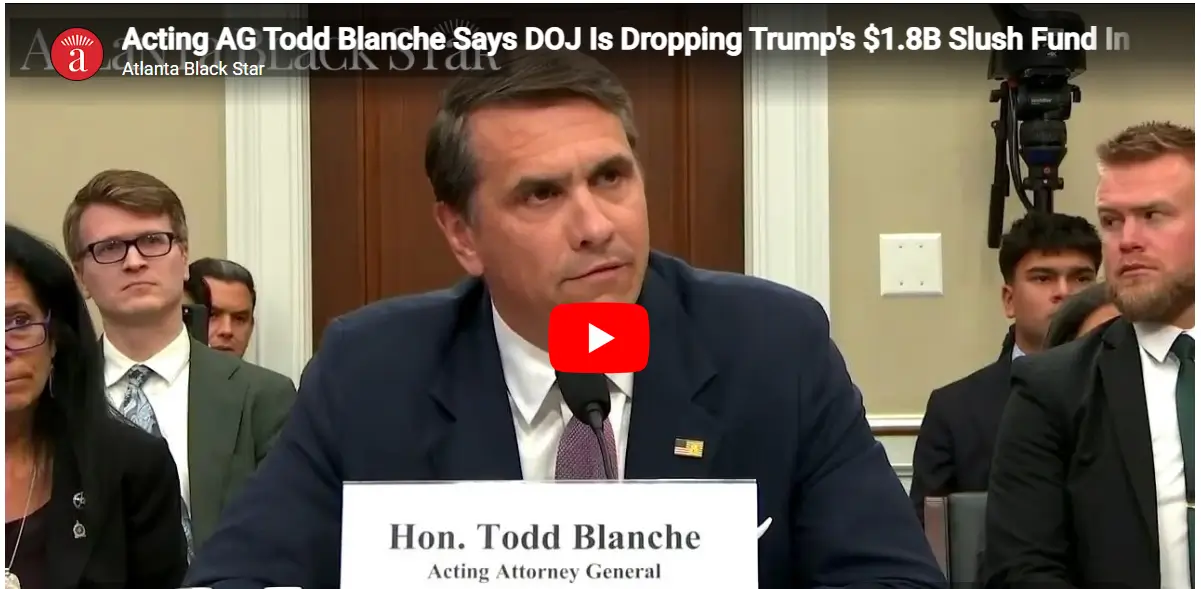
During his testimony before the House Appropriations Committee on June 2, acting Attorney General Todd Blanche delivered a surprise admission to Democratic Rep. Grace Meng confirming that the Department of Justice is walking away from President Donald Trump’s controversial $1.776 billion “anti-weaponization” fund, and that it isn’t coming back.
Major outlets immediately declared the fund dead. But a closer reading of what Blanche actually said — and refused to say — tells a very different story.
Meng opened by pressing Blanche on the fund’s future, noting that the DOJ had agreed to pause the effort only until June 12 and asked point blank what came next.
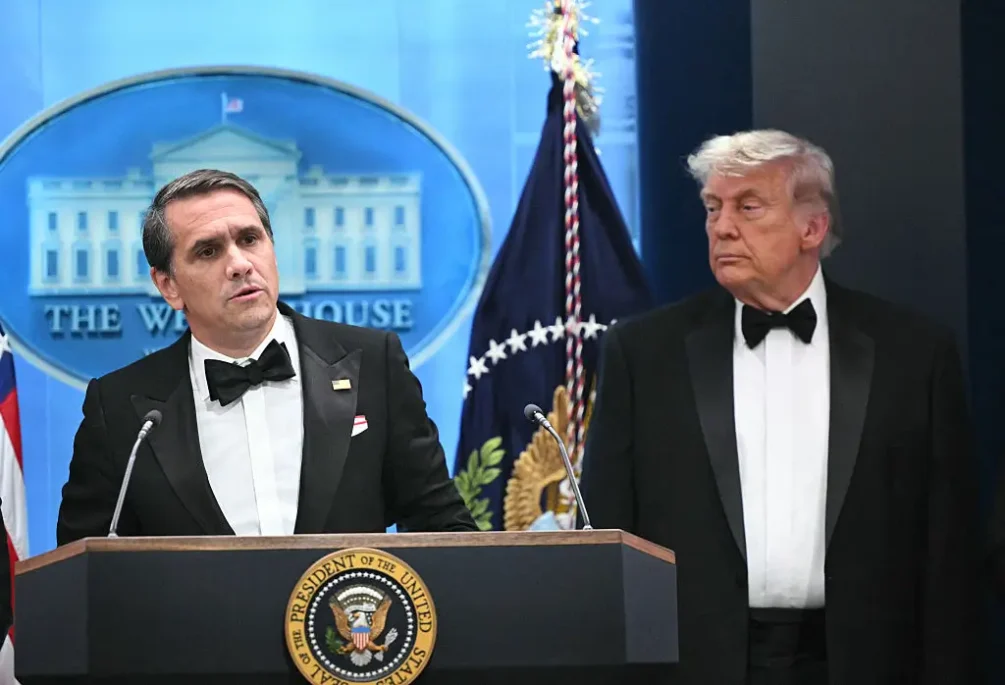
Blanche’s answer was immediate and unequivocal.
“We are not moving forward with the fund, period.”
Meng didn’t let it go at that. The seven-term New York congresswoman pushed to confirm whether “not moving forward” meant permanently.
“Not moving forward, ever?” she asked.
“Correct,” Blanche replied.
But what Blanche never said was that he refused at every turn to put any of it in writing. And that distinction may be everything.
The settlement agreement that created the fund states explicitly that it “may be modified only with the written agreement of the Parties,” according to Popular Information.
Without a written reversal, Blanche’s verbal assurances are worth exactly as much as Trump decides they are, which, it turns out, may not be much at all.
Meng pressed Blanche directly on this point, asking whether he and Associate Attorney General Stanley Woodward would be willing to put the reversal formally in writing, pointing out that the public statement his office had released the day before appeared only to address the pause through June 12, not a permanent abandonment of the fund.
“I don’t know if there are other ways that you could use another vehicle to move forward with a similar fund or similar intention,” she said. “We’ve heard from both Republicans and Democrats, constituents and Americans across the country about this fund, and I think they would love to be reassured that this fund will not progress.”
Blanche also made clear the administration had no intention of abandoning its legal defense of the fund, saying the DOJ would be “defending our rights and making sure our rights are protected” in ongoing litigation in both the Eastern District of Virginia and the Southern District of Florida. In other words, the administration plans to keep fighting for the fund in court while telling Congress it’s gone.
When Meng pressed again for something in writing, Blanche offered a response that was equal parts practical and telling.
“I think there’ll be a transcript to what I say here,” he said. “So that will be in writing.”
Meng accepted that barely and made clear the committee had no intention of letting it slide.
“We will work with you and hold you to it.”
What Blanche didn’t mention and what the transcript won’t capture is that Trump himself has already signaled the fund is anything but dead.
In a podcast interview taped the same day as Blanche’s testimony, Trump was asked directly whether the fund had been dropped.
“No, a court ruled against it,” Trump said, defending the fund and arguing that the people who stood to benefit “should be reimbursed for a crooked government.”
With her remaining time, Meng pivoted to a separate but equally pressing concern, the administration’s proposed budget quietly eliminating the three largest sources of federal support for hate crime prevention and response, including the Jabara-Heyer NO HATE Act, the Shepard-Byrd Hate Crimes Prevention program, and community-based grant programs that local law enforcement has long relied on.
“Why are we proposing to eliminate the very programs that are helping our law enforcement and targeted communities?” she asked.
Blanche pointed to a broader $12 billion violent crime grant request, suggesting there was enough overlap to cover the gap but struggled to name specific programs when Meng pressed him on the details.
“I’m happy to have my team work with you to make sure that we’re getting money where it needs to be,” he said.
Meng made clear she would be taking him up on that offer, closing with a pointed reminder that fighting hate crimes was never just about prosecution.
“It’s also about prevention and working with community organizations,” she said. “I would love to continue to work together on this issue.”
Blanche agreed. Whether that agreement holds — much like his promise on the fund — will be another matter entirely.
Watch full clip of Blanche and Meng on YouTube.