Oprah Winfrey’s involvement with the making of “The Color Purple” is now being defended after coming under scrutiny as more of the cast’s behind-the-scenes issues have come to light.
Actresses Taraji P. Henson and Danielle Brooks have both spoken candidly about production shortcomings while promoting the film, which was reimagined into a musical by new director Blitz Bazawule.
The Warner Bros.-backed movie debuted in theaters on Dec. 25 with a robust $18 million at the domestic box office. But praise for the project has, at times, been eclipsed by larger conversations about the unfair treatment of Black actors.
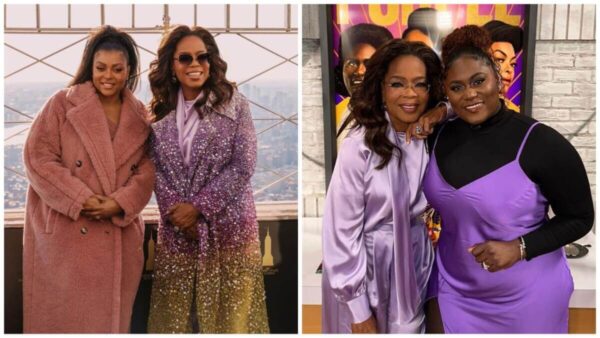
At a Jan. 5 THR: Presents panel, Brooks, who plays Sophia, revealed that the cast shared a dressing room during the early days of rehearsals and that they were not provided food. Henson, who plays Shug Avery, chimed in, “She (Winfrey) had no idea,” as Winfrey, who serves as a producer, said that she heard about the problems.
“You corrected it for us,” said Brooks, who, in part, largely thanked the “Empire” star for speaking with the billionaire entertainer on the crew’s behalf. “I was like, ‘Ms. O, we gotta fix this’ and she said say less,” said Henson.
Seems like Warner Brothers mistreated the cast of The Color Purple because they were Black.. Disrespectful low pay, driving to the set themselves, no personal dressing rooms for rehearsals & no food?
— Jerome Trammel (@MrJeromeTrammel) January 6, 2024
Results:
#1 at box office
$18 million first day
$45 million first week pic.twitter.com/aL2XW3bNiw
In a New York Times interview, the veteran actress would also note that Winfrey made sure the cast was chauffeured to and from set after production initially gave them rental cars while filming in Atlanta.
“I personally called Toby Emmerich, who was at the time the head of Warner Bros. … He said, ‘Well, that means we have to do cars for everybody.’ Then I say, ‘Then we do cars for everybody and if it’s necessary, I will pay for the cars myself,'” Winfrey told Gayle King on Jan. 7 at the Golden Globe Awards. She asked, “It’s so deserving to me, why is my name even in this conversation?”
The film has 12 executive producers, including “The Color Purple” novelist Alice Walker, two co-producers, and four P.G.A. producers, including Winfrey and Steven Spielberg, according to IMDb.
Spielberg was a producer and the director of the original 1885 screenplay starring the former daytime talk show host, Whoopi Goldberg, Danny Glover, and other notable talents. Winfrey is the only producer who has been involved in the promotional tour and has subsequently taken a battering for the aforementioned issues.
Winfrey also addressed speculative reports painting her as the project’s head decision-maker on red carpet with “Entertainment Tonight.”
“Taraji will tell you herself that I have been the greatest champion of this film. Championing not only the behind-the-scenes production but also everything that everybody needed,” Oprah said.
She continued, “I’m not in charge of the budget because that’s Warner Bros. … That’s the way the studio system works. And we, as producers, everybody gets their salary that’s negotiated by your team. And so whenever I heard there was an issue or there was a problem with the cars, a problem with the food, I would step in and do whatever I could to make it right,” said the Oscar-nominated actress.
Her new remarks have since turned the finger of blame on Warner Bros. “It’s too many comments blaming Oprah. It’s not her fault. She ain’t the movie studio,” read an IG comment. Another user wrote, “All this smoke for Oprah who FIXED the issues yet none for Steven Spielberg who’s company Amblin Entertainment was the main production company.”
Spielberg has not issued a statement of acknowledgment regarding Henson or Brooks’ comments.


