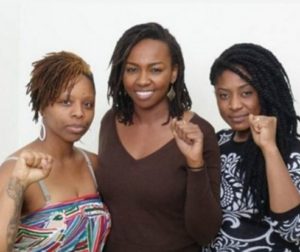
Cullors, left, Tometi, and Garza
A new Fortune ranking puts the three founders of the Black Lives Matter Movement high among other global politicians and leaders.
In a list of 50 world leaders, artists and business people, the three founders of the Black Lives Matter movement came in 27th on Fortune‘s list of World’s Greatest Leaders. Back in 2012, three Black women created the movement that galvanized the nation.
Alicia Garza coined the phrase, fellow activist Patrisse Cullors turned it into a hashtag, and Opal Tometi created a network of 28 local chapters in response to the rampant police brutality against Black people. That year, national coverage of the death of Florida teen Trayvon Martin by neighborhood watchman George Zimmerman brought attention to the racial prejudices of the justice system. Zimmerman was acquitted for his crime, but 17-year old Martin did not receive justice, the activists said.
The BLM movement took off after the 2014 shooting of Ferguson, Missouri, teen Michael Brown by former officer Darren Wilson.
The founders join other Black stars and leaders like Stephen Currry, of the NBA’s Golden State Warriors; R&B singer John Legend; writer, attorney and justice reformer Bryan Stevenson; J.C. Penney CEO Marvin Ellison; and entrepreneur Bright Simons.
According to the Fortune list, the BLM movement is an extension of the 2011 Occupy movement that had a brief stint that year but quickly faded out. That movement was intended to overturn the capitalistic system many of the followers believed to be the root of issues like the 2008 financial crisis, the housing market crash, and extreme student loan debt. The Conversation explains that the Occupy movement and the Tea Party were two movements that stemmed from the 2008 financial collapse but never truly cemented themselves like the Black Lives Matter movement.
The BLM movement has been subjected to criticism from the far right and many people who believe the term and the organization itself is divisive.
“That’s what this movement is all about; that’s as simple as we could get it,” Tometi said to a crowd of 500 at Franklin and Marshall College in Pennsylvania this week. “… The movement is really about building a multiracial democracy that works for all of us.”