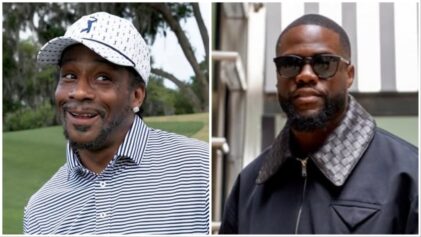
Ali Siddiq fans know him best from comedy stages, not movie roles or television series like the peers he grew up with. But his stats show he belongs in comedy.
He became the first person to win an NAACP Image Award for an independent comedy special with 2026’s “My Two Sons,” while 2025’s “Rugged” earned three Webby Awards.
Despite producing a comedy special many compared to HBO’s “The Wire,” some may still wonder why Siddiq’s storytelling chops haven’t propelled him into superstardom like Dave Chappelle, Kevin Hart and Katt Williams.
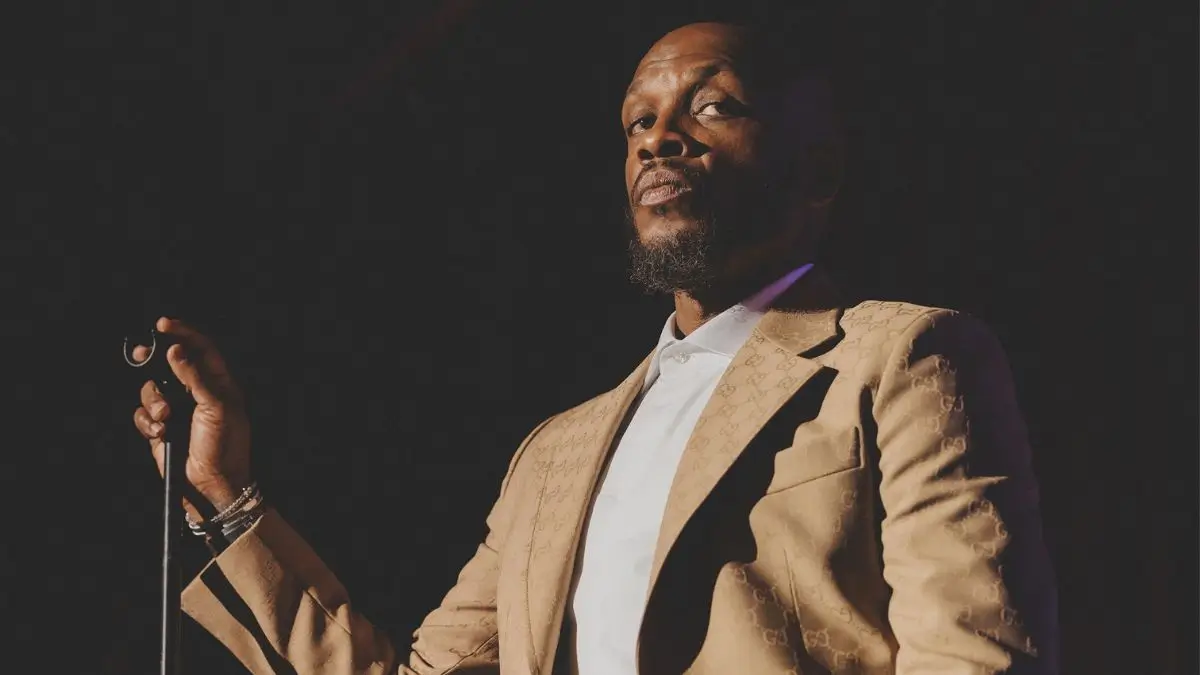
With his own success, the Houston-born comedian says he has no interest in chasing the fame that made his peers household names.
In a raw and unfiltered interview with Atlanta Black Star, Siddiq shares why some may not view him as a megastar like his peers.
He says the answer is simple. They were never chasing the same thing.
“It’s never been somebody to do what I’ve done, but I’m not going to be looked at in the eyes of individuals because they’re looking at movie stars versus people who are doing their own thing,” Siddiq told ABS.
“But it’s going be those who need to look at me, who need the see me, for what I am and be appreciative of my work.”
The entertainer chose to skip the signature comedy playbook of using comedy to advance into Hollywood films and TV.
“We got two different goals. We got two different plans,” Siddiq admits. “When you are focused on doing the best stand-up that you can, being the best comic that you can be, my success is not measured by that in no form or fashion.”
If the scoreboard is money, that doesn’t work either because he says he cannot be bought.
“People talk about monetarily. It’s nothing that they can do that I can’t do,” he says. “My family don’t want for anything. I done driven every car that I wanted to drive, the whole thing.”
Then came the flex.
“Really, [if] you’re talking about riches? I was rich in ’87,” Siddiq told ABS. “And this is the thing that people forget. I was already rich before, as a youngin’, you know what I’m saying?”
He went on to explain that back then he drove Mercedes, wore tailor-made clothes, and flew out of the country to buy nice things.
“I was just living under a different cloud,” he states.
As a teenager in 1980s Houston, Siddiq sold drugs while attending Texas Southern University, the HBCU in the city’s Third Ward.
He lived with one foot in the streets and the other on campus. At 19, he was arrested, convicted, and sentenced to 15 years.
Siddiq only served six years, according to Vulture, but still refuses to glamorize his past.
“What is your responsibility? What is your payback?” he said, asking himself and others. “You have to get in this world and try to make a difference and pay the universe back for the things that you did.”
It shaped a man who doesn’t see Hollywood as the final level.
“I’m not in movies because I’m a stand-up,” Siddiq said. “We got two different ideologies on things. You want to be a movie star. You want to be this, and you use comedy as a vehicle to get those things.”
“I use comedy as a vehicle for me, for the therapy that I get,” he continued. “This is what I do.”
Hart transformed stand-up success into a sprawling film, television and business empire. Chappelle became one of comedy’s most celebrated — and debated — storytellers.
Williams turned his animated delivery, sharp observations and fearless stage persona into his own cultural phenomenon.
Siddiq leans into relatable, autobiographical material and sees himself as a comic’s comedian. His relationship with Williams is complicated, which dates back to a Houston show years ago.
During Siddiq’s breakdown in a 2025 interview on “Club Shay Shay,” he described his performance the first night at Reliant Arena.
On the second night, security blocked his return after he stepped outside. He was later told Williams didn’t want him in the building.
On Carmelo Anthony and Kaz Famuyide’s “7PM in Brooklyn,” Williams admitted that Siddiq had his own venue deal.
“Most of his story is fictitious, right?” Williams said, later adding, “He was not traveling with us. He was not on the tour.”
Williams also claimed they clashed over Rick Ross’ “Hustlin'” as entrance music, and that Siddiq bragged to the openers, “Y’all ain’t even gonna be able to follow me. I’m gonna do 30 minutes, and I’m gonna kill.”
“By the time I get to the conversation, like, either Ali can perform or I can,” Williams said. “You see how that’s a no-brainer?”
An offended Siddiq has said he tore up the check.
“There is nothing to salvage,” Williams told the hosts. “It would be different if we had a relationship and it went awry. We never had a relationship.”
Siddiq cares more about everyday people than any comic’s approval.
“My DM is full of people who are going through cancer, who went through brain surgery, who went through the hardest times in their life, and they listened to me during the course of those times,” Siddiq said.
“This is about my calling, my lane — that I’m a medicine for the people,” he said.
He recounted hearing from a man who slid a laptop playing Siddiq’s comedy into the dark closet where his severely depressed wife had shut herself.
“That’s the first time I heard my wife laugh in months,” he said the husband told him.
“I’m probably gonna be held in high regard when I’m dead versus me being alive,” he said. “Because when I’m dead, you’re not in competition with me anymore.”
“I am for the people,” Siddiq added.
Those people are now following him into arenas. His Custom Fit Tour, billed as “stand-up comedy’s most prolific storyteller,” hits Atlanta’s State Farm Arena Oct. 16 and Chicago’s Wintrust Arena Nov. 14.
For somebody who supposedly never reached comedy’s megastar lane, Siddiq looks comfortable building one of his own.