More than a month after 18-year-old Nolan Wells disappeared during a Fourth of July trip to Mississippi’s Horn Island and was found dead two days later, investigators have completed his official autopsy.
But the public still does not know what killed him.
That is just one of several unanswered questions surrounding the death of the Black college student-athlete, whose case has drawn national attention and intense scrutiny of what happened during the final hours before he disappeared.
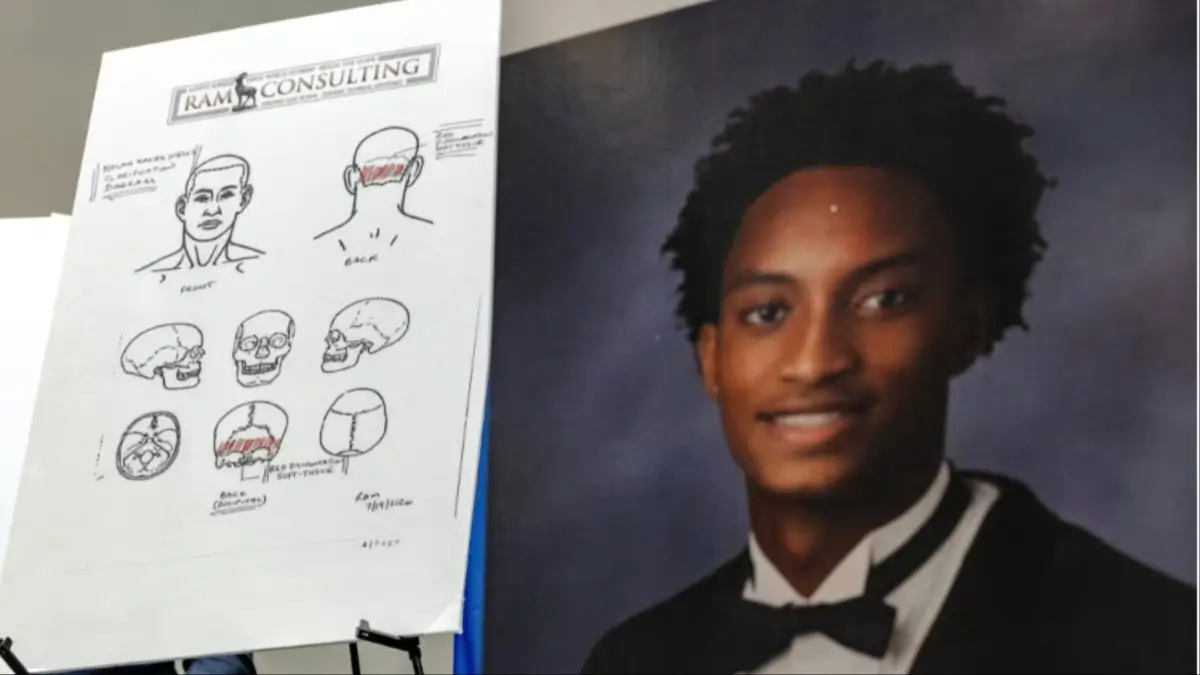
Wells traveled by boat to Horn Island, a barrier island off Mississippi’s Gulf Coast, on July 4 with friends and spent the holiday among a much larger crowd of people visiting the island. He never returned home.
A U.S. park ranger found Wells’ body in the water near the northwestern tip of Horn Island on July 6, two days after his family reported him missing.
Authorities have not named any suspects or announced evidence establishing that someone killed Wells. Jackson County Sheriff John Ledbetter said early in the investigation that he did not suspect foul play and believed Wells may have drowned.
But Wells’ parents, Christine Wonsley and Elmore Wonsley, have repeatedly said they want evidence, not assumptions, to explain how their son ended up dead.
Their attorney, civil rights lawyer Ben Crump, has pushed for a full investigation, while the family commissioned its own independent autopsy and sought digital records they believe could help reconstruct Wells’ final hours.
More than a month later, these are some of the biggest questions that remain.
What Actually Killed Nolan Wells?
The most fundamental question in the case still has not been publicly answered: What was Wells’ cause of death?
The Mississippi State Medical Examiner’s Office performed an autopsy on July 7. Jackson County Coroner Bruce Lynd Jr. previously said officials were waiting for additional testing, including toxicology, which can take weeks.
Lynd told CNN that investigators did not immediately observe obvious signs of trauma or foul play on Wells’ body.
But the circumstances surrounding his death were uncertain enough that officials requested a full state autopsy.
Wells’ family did not rely solely on the state examination.
They had his body transported out of state for a second examination by forensic pathologist Dr. Roger A. Mitchell Jr.
The independent autopsy listed Wells’ cause and manner of death as “undetermined” pending further investigation. Mitchell said he could not rule out non-accidental factors. Decomposition also limited what Mitchell could determine.
Among other things, Mitchell identified an area of red discoloration in tissue along the back of Wells’ neck and skull but could not determine what caused it. He also sought additional information from the state examination, including photographs and observations made when Wells’ body was recovered and examined closer to the time of his death.
Mitchell also could not examine some structures that had already been removed and retained during the state autopsy, a practice his report acknowledged can be routine in forensic pathology.
That left other significant questions unanswered, including whether Wells suffered a neck injury or brain bleeding, what was found in his stomach and, critically, how he entered the water.
Mitchell said he could not determine whether Wells was conscious or unconscious when he entered the water or whether someone forced him into it.
Authorities have not released their findings of the official state autopsy.
Why Did Wells’ Body Take Two Days to Surface?
Another question centers on the time between Wells’ disappearance and the discovery of his body.
Wells was last seen on Horn Island on July 4. His body was not discovered until the morning of July 6.
Exactly when Wells entered the water remains unknown publicly, making it difficult to establish precisely how long his body was there.
Investigators have not publicly established a time of death, and the independent autopsy listed Wells’ date of death as unknown.
Determining when Wells died, when he entered the water and how his body moved before its discovery could help investigators reconstruct what happened after he was last seen alive.
What Is Happening in the Background of the Disputed Audio?
An audio recording connected to the day Wells disappeared has generated another round of questions.
The recording, reportedly involving a Sea Tow communication from July 4, circulated widely online after an enhanced version purported to reveal voices or statements in the background.
Audio engineer Netta Brantley, who has more than 15 years of experience, analyzed and enhanced the clip and said she believed portions of the background deserved closer examination.
But the enhanced recording has also become a source of fierce dispute.
Attorneys representing Wells’ friends have challenged interpretations of the recording and characterized versions circulating online as manipulated or “doctored.”
Atlanta Black Star could not independently verify what was allegedly being said in the enhanced background audio.
That leaves a crucial distinction between the original recording and interpretations of digitally enhanced versions of it.
Investigators have not publicly announced whether forensic audio experts working on the official investigation have authenticated the disputed sounds or determined what, if anything, can reliably be heard in the background. However, Wells’ family attorney said they have acquired experts of their own to investigate.
Why Was There Nothing from July 4 on Wells’ Snapchat?
Wells’ cellphone returned from Horn Island even though he did not.
His mother said she eventually used the Life360 location-tracking app to find the phone at a friend’s home.
When Wonsley and her sister went through Wells’ phone, she said they found no saved Snapchat pictures or snaps from July 4, something she found alarming because Wells frequently documented social gatherings.
Wonsley said she checked the account before Snapchat’s typical 24-hour expiration window had passed.
“When we opened it up, there was nothing,” she previously said.
The absence of that material has fueled questions about whether content was deleted, automatically disappeared, or was never created in the first place.
The family is now trying to obtain the data directly from the companies that may still have it.
At Wonsley’s request, the Jackson County Chancery Court issued subpoenas to Snap, Meta Platforms, TikTok, WhatsApp and Life360 seeking records connected to Wells’ accounts.
The subpoenas demand information including communications, direct messages, photographs, videos and GPS location data. The companies were given 21 days to preserve and produce the requested electronic information.
The records could potentially answer two major questions: what Wells was doing and saying during his final hours and whether anything disappeared from his accounts after he vanished.
Wells’ father has raised another question about his son’s belongings. Elmore Wonsley said Wells’ keys were found at the home of another person connected to the outing.
What Happened During the Final Stretch Before the Boat Left?
Perhaps no period in the timeline demands more scrutiny than the stretch between the last independently corroborated sighting of Wells and the departure of the boat that had carried him to Horn Island.
The available timeline places the last sighting of Wells sometime between approximately 3:23 p.m. and 4:27 p.m.
GPS records reportedly show the Triton departing Horn Island at approximately 4:31 p.m.
That narrow window is critical.
If investigators can establish precisely where Wells was, who was with him and what he was doing immediately before the boat departed, they could significantly narrow the possibilities surrounding his disappearance.
Accounts from those on the island have provided pieces of the timeline, but the public still does not have a minute-by-minute reconstruction of Wells’ final known movements.
Digital evidence could help piece them together more.
Location records from Life360, social media metadata, messages, photographs and videos could help investigators compare witness accounts with electronic timestamps and determine whether the different pieces of the timeline line up.
What Will the Official Autopsy Reveal?
One part of the investigation is now finished.
Mississippi officials confirmed on July 31 that the official state autopsy is complete. Its results, however, remain confidential.
That means the public still does not know whether the state medical examiner determined that Wells drowned, identified another cause of death, or reached conclusions that agree or conflict with the independent examination.
Officials have also warned the public against relying on purported toxicology findings circulating online. Mississippi authorities said a document presented online as Wells’ toxicology report was fake and did not reflect the official findings.
The secrecy surrounding the genuine report is intentional, according to District Attorney Angel Myers McIlrath.
McIlrath said her office would withhold the autopsy findings while investigators complete their work and until a grand jury reviews the evidence.
“The pressure for answers does not change what the work requires,” McIlrath said. “Our responsibility to Nolan and our community is to complete this investigation thoroughly and carefully, without compromise, supported by the evidence and worthy of the confidence of the people we serve.”
McIlrath has also stressed that presenting a death investigation to a grand jury does not itself mean prosecutors have concluded a crime occurred. She said her office routinely presents county deaths to grand juries, with limited exceptions for natural deaths and non-criminal vehicle crashes.
Once that investigation is complete, the evidence surrounding Wells’ death will go before a Mississippi grand jury.


