President Donald Trump spent part of the week celebrating what he described as a breakthrough agreement with Iran on Wednesday. But one of his closest political allies may have already started laying the groundwork for who gets blamed if the deal falls apart.
Now Trump appears to be doing the same thing himself.
Shortly after details of the proposed Iran agreement emerged Sunday, Sen. Lindsey Graham publicly singled out Vice President JD Vance as the “architect” of the deal, a label that immediately caught the attention of political observers and social media users.
Many interpreted the move as more than a compliment.
Some saw it as an attempt to make sure Vance, not Trump, owns the outcome if negotiations with Tehran go sideways.
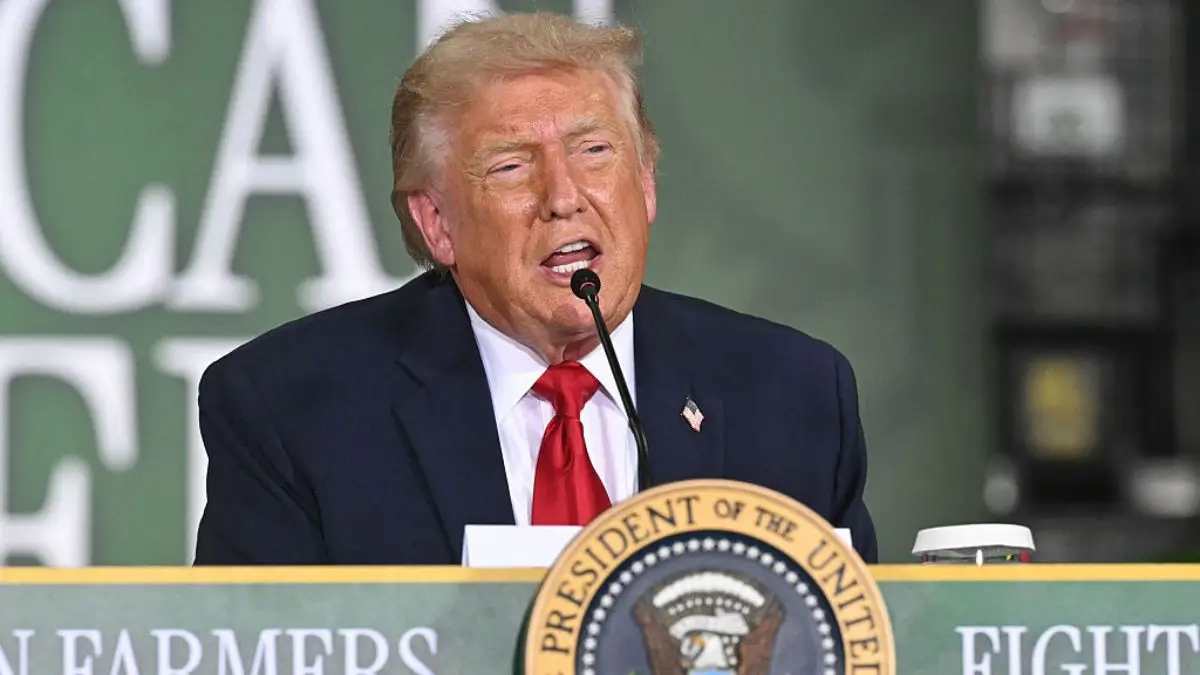
Days later, Trump fueled that perception during a press conference Wednesday at the Group of Seven summit in France before signing the agreement.
Trump: This is a memorandum of understanding. It's very important, but it might not be the kind of a document that I should be signing. If it works out, I'm going to take the credit. If it doesn't work out, I'm blaming JD
— Acyn (@acyn.bsky.social) June 17, 2026 at 1:31 PM
[image or embed]
Asked by Fox News correspondent Peter Doocy whether Vance would take the blame if the deal falls apart, Trump laughed and embraced the idea.
“I like that idea, sure,” Trump said.
“If it works out, I’m going to take the credit. If it doesn’t work out, I’m blaming JD. You better be careful, JD. He’s going to turn his plane around and get the hell out of here.”
While Trump delivered the remarks jokingly, they immediately drew attention because they echoed concerns already circulating online after Graham publicly attached Vance’s name to the agreement.
Graham Put Vance Front and Center
The agreement, which still faces scrutiny from lawmakers in both parties, would reopen the Strait of Hormuz and begin a new round of negotiations over Iran’s nuclear program. Congress is demanding more details before offering support.
Graham, one of the Senate’s most vocal Iran hawks, made clear that he remains skeptical.
“I am somewhat concerned that Iran’s view of the agreement seems different than what the American negotiating team is claiming,” Graham wrote on X.
He then delivered the line that set social media ablaze.
“Under our law, any nuclear deal with Iran will be sent to Congress for review and a vote. I look forward to reviewing the final product, and I believe it is imperative that the architect of the deal, Vice President Vance, and his negotiating partners be part of the process in presenting the final deal to Congress.”
Then Graham added three words that many interpreted as a warning:
“Time will tell.”
Trump Lowers Expectations
Trump’s latest comments also revealed that he is far less certain about the agreement than he appeared when details first emerged.
Throughout Wednesday’s press conference, Trump repeatedly lowered expectations about the deal’s durability and warned that military action remains on the table if Iran fails to comply.
“If they don’t honor the agreement, or some things aren’t even mentioned in the agreement, it’s a memorandum of understanding, but we have an understanding of certain things without writing it,” Trump said.
“If they don’t honor that, we’ll probably go back to bombing them until they honor it.”
Trump added, “It’s amazing what bombs can do.”
Earlier Wednesday, he similarly warned that the United States could bomb Iran again “if they don’t behave.”
The comments underscored how preliminary the agreement remains despite administration efforts to portray it as a diplomatic breakthrough.
Vance Already Defended the Deal
Graham’s comments quickly reached Vance during a Monday appearance on ABC’s “Good Morning America.”
Host George Stephanopoulos pointed out that Iranian media appeared to be describing a very different agreement than the one Trump administration officials have discussed publicly.
Stephanopoulos specifically asked whether the deal involved releasing billions of dollars in frozen Iranian assets.
That question gave Vance an opening to respond directly to Graham.
“No, George, it’s not true. And I’d caution Lindsey Graham and anybody else not to believe the hardliner propaganda in Iran, but to believe what’s actually in the agreement,” Vance said.
Vance added that the White House plans to release the text of the agreement.
“We’re releasing the text this week, and what everybody will see is that Iran doesn’t get a dime of money unless they perform their obligations,” he said.
Observers Predict the Future
Political journalist John Harwood was among the first to notice Graham’s wording.
Above a repost of Graham’s statement, Harwood wrote, “Vance as ‘architect of the deal’ should work well for Rubio.”
The remark appeared to reference growing speculation about future Republican power struggles and the possibility that Secretary of State Marco Rubio could emerge as a rival to Vance ahead of the 2028 presidential race.
Other social media users were even more blunt.
“If this deal succeeds, Trump will call it historic. If it backfires, everyone will suddenly remember JD Vance was on TV explaining it,” one user wrote.
Another added, “I love how they’re sending this goon out on all the shows to be the face of this sh-tty situation.”
Whether that is actually happening remains unclear.
But the perception has only gained momentum now that Trump himself has publicly joked about pinning the blame on his vice president if the agreement unravels.
For now, Trump continues to promote the deal as a potential diplomatic victory.


