Kash Patel‘s future as FBI director is in jeopardy after a scathing article pulled back the curtain on his life behind White House doors.
Kash Patel’s future as FBI director is in jeopardy after a scathing article exposed his conduct behind White House doors.
Patel has now filed a defamation lawsuit against a media outlet and a reporter for what he calls false claims.
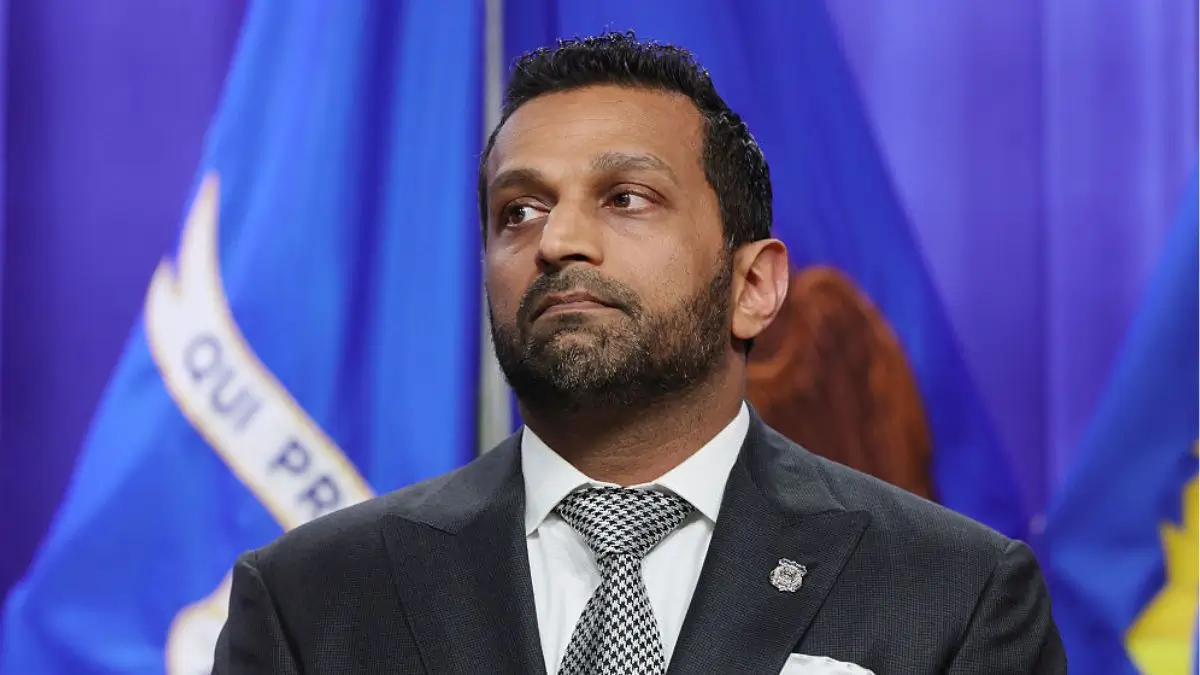
Newsweek reports that Patel filed a 19-page lawsuit in federal court in Washington, D.C., seeking at least $250 million in damages.
It stresses accuracy and editorial rigor, but readers quickly spotted errors in the document.
The filing didn’t hide the mistakes in footnotes or bury them in dense legal jargon.
They appeared plainly on the page. Words like “feable” showed up where “feeble” was expected, “politices” replaced “policies,” and “dicussed” appeared instead of “discussed.”
None of the errors changed the legal argument. But the contrast clashed with a filing centered on failed journalistic standards.
Social media users wasted no time turning the moment into commentary.
View on Threads
“Typing is hard when inebriated,” one person wrote on Threads. Another joked, “He was probably eight IPA’s (a type of Indian beer) deep when writing this.”
Many believe “He was drunk writing it up Ooof… how is that gona help him.” And others suspect he got service during a last-ditch effort to save his career from fumbling.
“I’m sure Patel feels like he’s the next target for getting fired and he is trying a Hail Mary to save his job,” said one person. Another agreed, “Oh yes. He’s terrified he’s next. So he’s doing major sucking up.”
The jokes piled on. Some even suspected he would take a page from Jamie Foxx’s hit record “Blame It (on the Alcohol).” But in Patel’s case, it would be “Blame it on whiskey and bharatanatyam.”
Reactions kept coming, not because the case lacked seriousness, but because the visual details made it feel ironic. Legal observers noted that several attorneys typically review court filings before submission, which made the errors stand out.
Another voice wondered, “In an era with spell check, and LLMs, how is this even possible?”
The lawsuit claims The Atlantic relied on anonymous sources to publish damaging allegations about Patel’s behavior, alcohol use, and job performance—claims federal officials denied before publication.
But once screenshots of the typos began circulating online, the public conversation shifted from the allegations to the presentation.
Patel’s lawyer, Jesse R. Binnall blasted on X, bragging about the lawsuit.
“This is the letter we sent to The Atlantic and Sarah Fitzpatrick BEFORE they published their hit piece on FBI Director @FBIDirectorKash . They were on notice that the claims were categorically false and defamatory. They published anyway. See you in court,” he tweeted.
This is the letter we sent to The Atlantic and Sarah Fitzpatrick BEFORE they published their hit piece on FBI Director @FBIDirectorKash. They were on notice that the claims were categorically false and defamatory. They published anyway.
— Jesse R. Binnall (@jbinnall) April 17, 2026
See you in court. pic.twitter.com/Ke8cqNh8hY
Many blasted him, despite how cocky he is.
One critic directed frustration at the legal team, writing, “You suck at your job, Jesse. You are an amoral, corrupt little pinhead. @TheAtlantic @S_Fitzpatrick you’re gonna be fine.”
Discovery is going to be delicious! Maybe he’ll make a supplement to detox from the lawsuit like he did with the Covid vax!
— Mike Brady 🇺🇸 (@Not_Mike_Brady) April 18, 2026
“I would believe @TheAtlantic a thousand times over what comes out of the current administration,” one tweeted.
The language was blunt, but the sentiment reflected a growing perception that confidence alone could not shield a public figure from scrutiny.
The lawsuit didn’t come out of nowhere.
A rocky stretch inside the bureau preceded the filing.
Patel allegedly struggled to log into an internal system and briefly thought he’d been fired, then reacted in a way that left staff uneasy before a technical glitch was identified as the cause.
Patel fired back, accusing the publication of a “sweeping, malicious, and defamatory hit piece” designed to damage his reputation and push him out of his job.
The Atlantic story references conditions that the whole world has seen: His alcohol use.
The world has seen footage of Patel celebrating with the U.S. men’s hockey team following an Olympic victory.
Video of the locker-room celebration spread quickly online, prompting critics to question whether the moment reflected strong leadership or poor judgment for an agency already under scrutiny.
Then the comedians stepped in, not teasing him about drinking but about his looks.
During a recent performance, Katt Williams zeroed in on Patel with a joke that spread across social media within hours. “You can really do anything right about now,” he told the crowd, before landing the line that drew the loudest reaction: “Cross-eyed and the director of the FBI? You can’t even be an eyewitness.”
The clip quickly became another sign the narrative had shifted.
Meanwhile, the legal fight continues. Supporters argue the lawsuit is necessary to protect Patel’s name and challenge reporting they believe crossed a line. Critics see it differently, saying the spelling mistakes in the filing created an unnecessary distraction and handed opponents an easy talking point.
What started as an effort to shut down criticism has become a lesson in attention to detail. In politics, perception can shift in a heartbeat — and sometimes the smallest mistakes, a missed letter, a rushed review, a moment caught on camera, end up making the loudest noise.


