
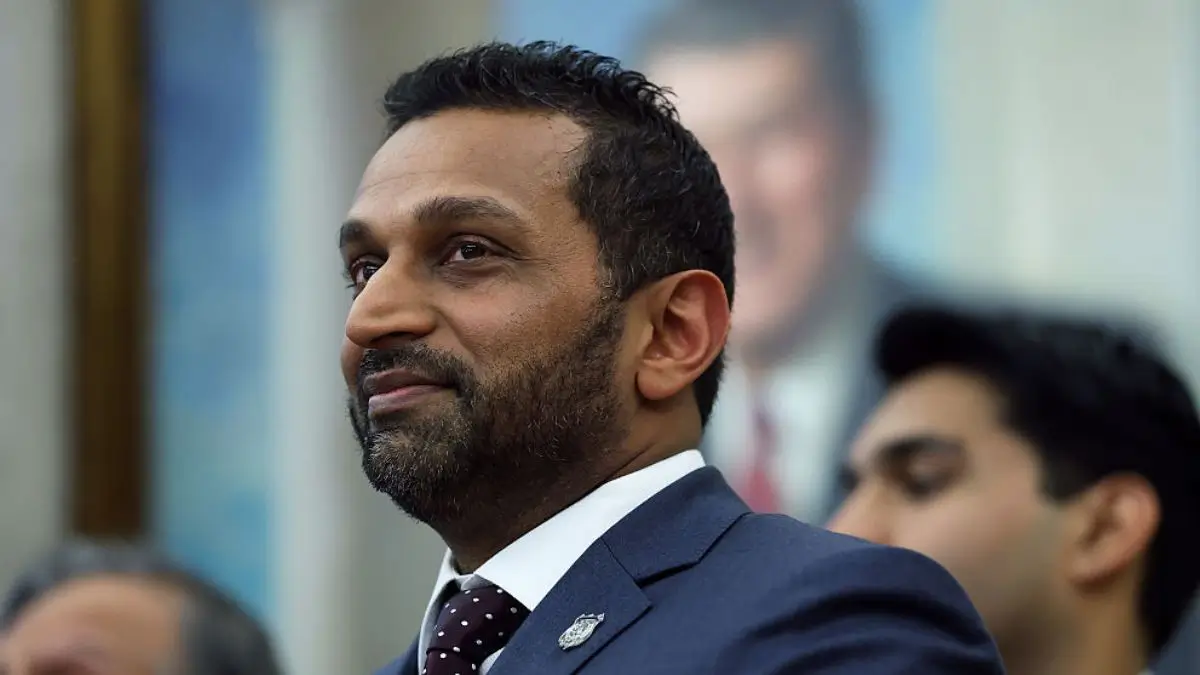
A photo of Kash Patel hit different around the holidays, landing more like a seasonal meme than a serious interview, as online jokes wrote themselves about what some believe is his biggest insecurity.
The FBI Director recently filmed an interview inside a gymnasium, a space more often associated with kids’ games like dodgeball and pep rallies than federal authority. Instead of focusing on policy or preparedness, one camera angle has people wondering what was swinging beneath his chair.
The image, pulled from one of his Fox News interviews this year, shows Patel seated across from correspondent Bret Baier, slightly swinging his legs.
Baier appears grounded and centered in his chair. Compared to his interview guest, who was positioned farther left in the frame and looked noticeably smaller.
“No way this wasn’t intentional,” said one person at the time, who noticed Patel’s chair sat high enough that his feet hovered just above the floor, creating an awkward contrast that immediately hijacked the narrative once the screenshot circulated online.
5/28/2025
— Linkinlogger (@SmokingAces17) May 28, 2025
Kash Patel interview on Fox News with Bret Baier:
Part 1@FBIDirectorKash @BretBaier@FoxNews
pic.twitter.com/3hERzRf7bf
The framing did the rest, shrinking Patel visually and shifting attention away from his role and toward his presence.
Once the image hit social platforms, particularly Threads, the reaction was swift and relentless, with users turning the still frame into a running commentary on optics, power, and presentation.
View on Threads
“The way Kash Patel’s feet are dangling,” one person wrote, setting off a wave of jokes.
Another followed with, “Muppet legs,” while a third escalated it further: “You’ve heard of Elf on the Shelf, now get ready for Ghoul on a Stool.”
The disbelief about his 5’7 stature kept building.
“Pls pls pls say there’s footage of him climbing into that chair,” one person added, while another questioned the logistics: “This can’t be real. Ain’t no way that man hoisted himself on that chair like my toddler.”
One final comment captured the tone perfectly: “It was the shortest they had. Hims just a widdle guy!” Another joked, “Explains the anger all the time.”
View on Threads
Height comparisons added fuel to the narrative. The List of Patel, as he frequently appears alongside colleagues and political figures who physically tower over him, making the contrast unavoidable in photos and televised appearances.
Whether standing near Donald Trump, Kristi Noem, or Fox News hosts, the visual imbalance has become a recurring topic. In spaces where authority is often communicated through posture and framing, those details take on outsized importance.
In the end, the viral moment wasn’t about height or furniture. It was about optics and timing, and how fast authority can slip when an image takes over. One chair, one camera angle, and a single frame turned a serious interview into a lasting joke the internet refuses to forget.
Others who work alongside Trump faced recent criticism over their appearance in a major high-profile feature of his Cabinet members. Offering unusually candid critiques of the inner circle’s behavior and competence, people such as Karoline Leavitt, Marc Rubio and Susie Wiles made headlines for their seemingly dark images that appeared to have a darker meaning because no one smiled.
As the image circulated, Patel had bigger fish to fry, with quiet rumors about his standing in the Trump administration beginning to swirl.
Talk about his future intensified after reports suggested Trump’s inner circle had grown frustrated with the headlines surrounding him, sparking internal conversations about whether he should remain in the role.


