Monica Lewinsky has spent nearly three decades living in the shadow of a scandal that refuses to age. Her name still sparks instant recognition, shorthand for a moment that blurred politics, power, and public spectacle in ways the country had never quite seen before.
In the wake of a series of revelations stemming from the slow-drip release of Department of Justice files related to Jeffrey Epstein, Lewinsky is now offered a reflection of her own — one she says was rooted in empathy. Not everyone believes she connected the right dots.
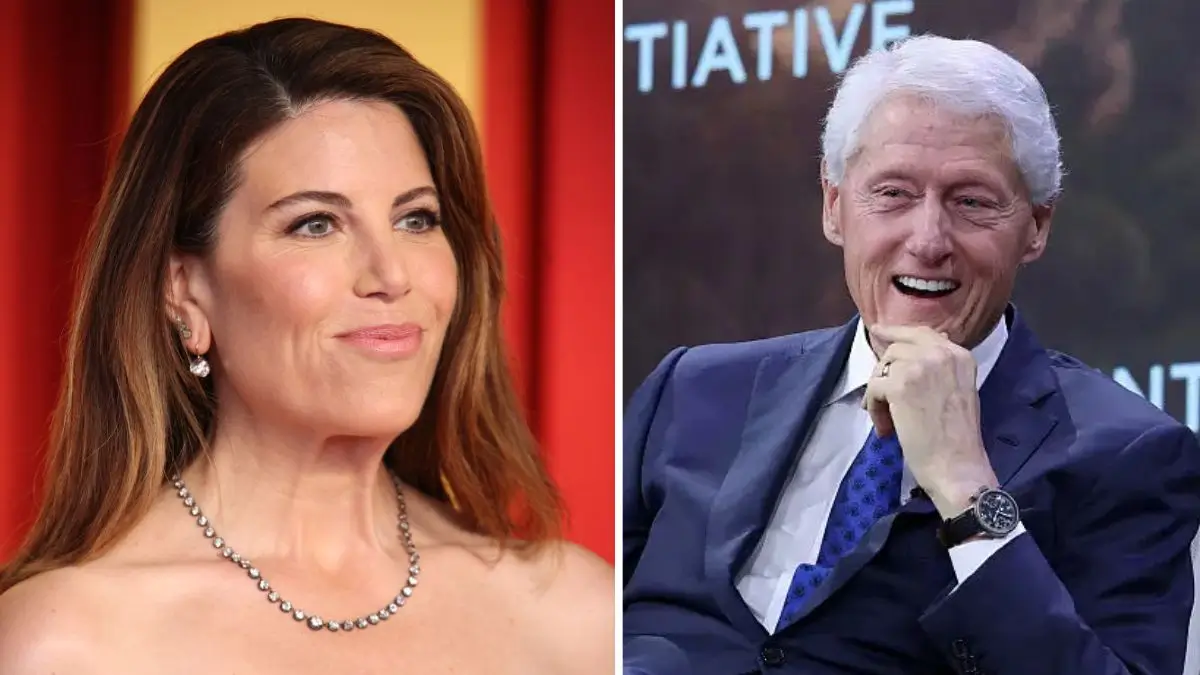
In a recent essay for Vanity Fair, Lewinsky tried to unpack what she was feeling as new files and testimony dominated news cycles. She wrote that she told her therapist, “People keep asking me if I’m OK vis-à-vis all the Epstein news.”
“Fine,” was the masking statement she repeated over and over when asked how she was doing amid the government’s photo rollout. But in December 2025, Lewinsky described breaking down after realizing she had been “holding in so much anxiety for these women who had already been so brave.”
“While many people—especially women—felt similarly, few others, if any, knew what I knew. Knew what the survivors were about to experience being at the center of a government document dump,” she shared, noting the millions of pages and photos released in the last three months.
The now 52-year-old was careful to draw a boundary, noting, “What they had endured was far different from and far worse than my experiences.”
Still, she said she understood the exposure: “That they were about to have their darkest nightmares splayed out on the world’s stage click by click. That they—and their trauma—would be dissected and feasted on like carcasses. It’s an exposure unlike any other. To have that level of attention and energy coming toward you, to be in strangers’ thoughts.”
She later added, “Sure, yes, Bill Clinton’s name had resurfaced in the news at some point in late fall in connection with Epstein and Ghislaine Maxwell. But that felt distant from my personal narrative.”
BREAKING: Bill Clinton denies having an affair with Monica Lewinsky pic.twitter.com/Pb41aNcIwp
— Gain of Fauci (@DschlopesIsBack) February 28, 2026
On Instagram, viewers seized on Lewinsky’s attempt to relate decades after her scandalous affair with former president Bill Clinton.
“Monica was old enough to make her own decisions. She knew what she was doing,” one person wrote. Another added, “Girl. You pursued him. That’s consent, not abuse.” A third commenter snapped, “She needs to shut up.”
One reader offered a more measured take: “Very difficult. I’m not saying he was innocent but she was not a child. She could have walked away. Pretty sure she was flattered by the attention of the President.”
Not everyone pushed back. “Totally agree with her, she is a victim and should be recognized as such,” another wrote. Lewinsky admitted she was “not equating my experiences and trauma with those of the survivors of Epstein’s abuse.”
Another said, “She’s NOT WRONG! It was and she was put through HELL. I respect her RIGHT to speak out about this.”
To many critics, the distinction lies in what unfolded in the 1990s.
Lewinsky was a 24-year-old White House intern when her relationship with then-President Bill Clinton, who was 51, became public. Their involvement began in 1995 and spiraled into a national spectacle by 1998. Taped conversations, sworn testimony, and a now-infamous dress became fixtures of nightly news.
Clinton was impeached for lying under oath about the relationship, but remained in office.
Lewinsky, meanwhile, became a cultural punchline. Over time, she has transformed her look and reexamined that chapter with more layered language.
“The public humiliation was excruciating; life was almost unbearable,” she told The Times of London this year. She has described their relationship as “a gross abuse of power. Full stop,” while also acknowledging that she made mistakes and hurt people.
That balance — accepting her own choices while calling out imbalance — has defined her later advocacy.
The road back was not quick. Lewinsky once recounted hiding for months inside her mother’s apartment with the curtains drawn, stepping onto the balcony only briefly at night. Job opportunities evaporated. Her name overshadowed any résumé.
Years later, she began reshaping her story through speaking engagements, production credits and, in 2025, her own podcast focused on reclaiming identity after public shaming.
Recent document releases have again placed Clinton’s name in headlines because of his past social ties to the predator Epstein.
Clinton has denied wrongdoing and testified that he “saw nothing” improper during his time around the late financier. In a viral clip from his deposition, the former president was grilled about an image of himself from the Epstein files as he laughed and reminisced about the good old times he may have had.
Bill stared at the photo of him in a hot tub with a person whose face and body were redacted to hide their identity, so long that his lawyer snatched it from him, and he snatched it back for a closer look.
Bill Clinton is smiling while looking back through old Epstein photos & nodding over memories🤣
— Star S.⭐️⭐️⭐️⭐️⭐️ (@DominguezH31015) March 2, 2026
His attorney snatches them out of Bill’s hands. pic.twitter.com/JlF0jFUwQm
No prominent accusers have alleged misconduct against him. Even so, the renewed spotlight has prompted broader conversations about accountability and proximity to power.
It is within that climate that Lewinsky’s comments, read by millions, are being questioned. For her, the connection appears rooted in the shared experience of having one’s life exposed in granular detail.
For critics, the circumstances remain worlds apart and are an unfair comparison.


