A resurfaced news video showing several white South African students wearing Blackface is drawing a lot of attention on the social platform X, formerly known as Twitter.
That video from January 2012 shows students from Afriforum Youth, a group that protests minority rights, staging a demonstration at the Department of Higher Education and Training to dispute the admissions policies of the country’s sole veterinary institute at the University of Pretoria.
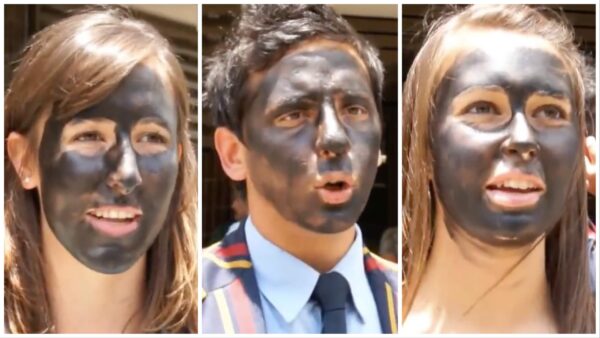
Members of the organization accused school officials of unjustly discriminating against and refusing entry to white students while favoring Black students. So, to attempt to make a point, they painted their faces black to try to underscore their claim that they need to be Black to be treated fairly.
Trending Today:
- How Black Folks Really Feel About the Israeli-Palestinian Conflict
- Ohio School Employee Caught on Disturbing Video Knocking Autistic 3-Year-Old to the Floor, Carrying Him Upside Down Finally Charged
According to news outlet Independent Online, the group alleged at the time that 30 prospective students with numerous accolades and distinctions were not admitted to the school because they weren’t Black.
“Every year, 140 students are admitted to the veterinary science faculty and only 22 white matriculants from the 2011 group may be admitted,” Afriforum Youth Chairman Charl Oberholzer said.
While the university said it was true that only 22 white students would be enrolled in the institute that year, it noted that other white students also would’ve been admitted, but they matriculated before last year. Those students had also already been exposed to tertiary education and would be considered for admission after completing a year’s worth of study in an animal science or biological science degree program.
The policy the group protested against is intended to provide more spaces and educational opportunities to disadvantaged students and those from marginalized parts of the country so they can train as veterinarians.
However, the Afriforum Group perceives that this policy only exercises what they call “racial targeting.”
Many people, including university officials, have dismissed and discredited the group’s claims and believe its members don’t understand the inequities in higher education established by the country’s past conflicts.
Watch the video below:
People in the comments shared varied reactions to the video:
“WTF they doing black face?” one person commented.
“All these kids have distinctions. They don’t get space because they are too white. Well, I think the issue got the attention loud and clear,” another X user wrote.
One person even alluded to the chant Julius Malema, head of the Economic Freedom Fighters Party, made in a rally over the summer where he recited an anti-apartheid struggle song, “Kill the Boer, the Farmer.”
“We should never condemn Malema when he sings Kill the Boer,” that X user wrote.
The Boer refers to the white descendants of Dutch settlers in South Africa.


