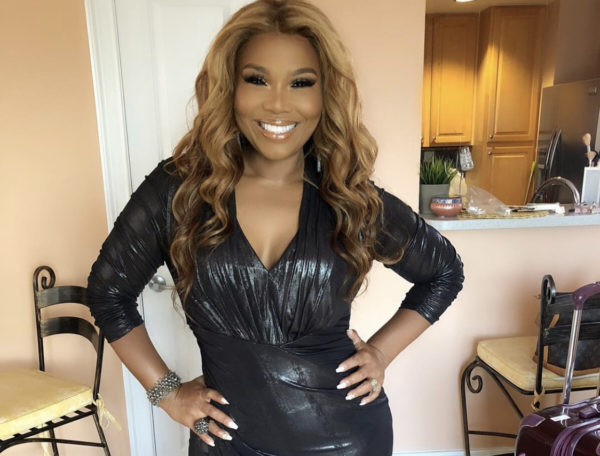
“Love & Hip Hop“ creator Mona Scott-Young opened up about the decade-long success of the franchise during an interview with Shadow and Act on July 5 following the season 10 premiere of “LHH: ATL.” The upcoming season, which aired the same day, returned after a year hiatus due to production being suspended because of the pandemic.
In the interview, Scott-Young disclosed that when she initially started the show back in 2011 — with the New York franchise — she didn’t know how impactful it would be. The 54-year-old said the cast has made the show what it is: “It’s always been a collective effort. I always credit the talent, because without them being so open and letting us into their lives day in, day out, there would be no show.”
Scott-Young continued by mentioning how “lucky” everyone is to have a franchise has run for over a decade.
She explained, “We are lucky and blessed to have had over the course of the 10 years of Atlanta, 11 years of New York and all the other cities, some amazing cast members and some amazing team members. I just feel lucky to have been a part of all of that storytelling, history-making, culture creating, and we did some things that hopefully will go down in the book. I feel honored, I feel proud, but definitely always very, very blessed and grateful for the success and longevity of the franchise.”
The producer then shifted gears to discuss how “LHH” changed how Black people were being represented and how the show wasn’t afraid to push the envelope on controversial topics. “We changed the way television looks in terms of seeing so many more Black faces and so many more lives that had not been represented – whether it was in the hip-hop community, [the] aspirational music artist space or [the] LGBTQIA+ community.”
She added, ‘We dealt with topics that people were afraid to deal with, but we [tackled] them head-on, did it unapologetically, furthered the culture and opened hip-hop up to so many more homes and spaces that we wanted part of the conversation. This is a global franchise that has success in parts of the world where they don’t even speak English and [so] I want to be remembered for having changed the look of reality television.”
This initial interview comes months after former “LHH” stars like Joseline Hernandez and others called out Scott-Young as the main culprit behind the horrible depictions of Black women on television. This backlash came after Scott-Young claimed she faced more scrutiny than her male counterpart producers like Carlos King and Andy Cohen in similar fields. Once her comments were published by The Neighborhood Talk, Hernandez replied in the comment section, “Honestly I just hate this b–h. No good p–y sucking trick. She f–ked so many cast members. I wonder why no expose her. Smh.”
“Love and Hip Hop: Hollywood” alum Christopher Milian followed suit by saying, “@monascottyoung CUT THE SHIII we can all count on 1 hand how many actual physical altercations happen on rhoa but EVERY episode of LHH black people (woman) are physically attacking each other weekly.”
Milan added, “Something in which you & your production company condone! whereas the other ie @bravoandy do not. Some fights actually result in pay cuts, suspension or even being fired from the RHOA franchise.Go have a seat with your manipulative evil ahz. It’s black empowerment year & your divisive energy ain’t needed in the world today! Thanks in advance from an EX cast member!”