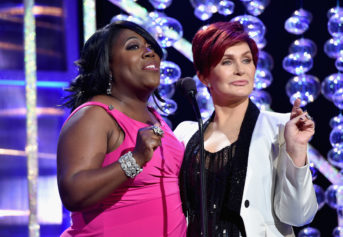
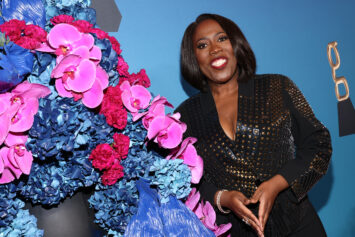
Comedian Sheryl Underwood caused an uproar this week among the black community, when an old episode of her show “The Talk” re-aired on Friday. In the episode, co-host Sharon Osbourne highlighted that model Heidi Klum saves the hair after her bi-racial children get a haircut. Underwood responded in utter disdain,
“I’m sorry but why would you save afro hair? You can’t weave in afro hair. You ain’t never seen us at the hair place going, ‘Look here, what I need is the curly, nappy beads. That just seems nasty.”
Another co-host Sara Gilbert added that she too saves her children’s hair. Underwood proceeded to dig an even deeper grave by responding,
“Which is probably some beautiful long silky stuff. That’s not what an afro is.”
Not surprisingly, Underwood’s reactions were met with severe backlash. The comedian was forced to respond in an interview with CurlyNicki.com. Check out the highlights below:
On if she took the time to see how her comments would be received:
Every day after the show, I look at the footage as a way to continue to strive to be better… to express myself better. I play everything back so I can watch, learn and improve. When that segment played back, I knew that it would be misunderstood.
Misunderstood how?
The discussion was about cutting and saving hair. I didn’t speak about Heidi Klum or her children’s hair. I stated that the act of saving hair was ‘nasty.’ Cutting and saving what I consider as dead… it’s like saving fingernails. People are accusing me of calling natural hair ‘nasty.’ I did not say that.
On the juxtaposition she made between saving ‘curly, nappy, beady’ hair versus ‘some beautiful long silky stuff’
That was a bad choice of words. A bad juxtaposition of words to imply that our hair is not good. I made a mistake. I will own up to that mistake. I’m going to talk to God and change the way I articulate things and be more cognizant. I’m not perfect and I bet if you put a camera on someone all day, they’d eventually say something they’d regret too. I am asking you to forgive me for the statement I made, which to me, is a power only God has, really.
On the psychology behind her statement and if she has self-hate issues
I’m not what you think I am. I don’t have self-hate. I am not ashamed of my Blackness or who I am. In high school I had a giant afro. In college I was militant. I loved my afro puff. My dad instilled Black pride in me. I have no hair shame whatsoever.
I grew up with a father who instilled Black pride in me. I’ve always loved Black hair and rocked natural hair most of my life and didn’t care what anyone thought about it. But then I went through ‘the change’ and my hair began to thin out and the texture changed. My hair wasn’t with me anymore, not because it was natural, but because my hormones changed. It became very difficult to manage and I couldn’t do what I used to be able to do with it. I’m like every other woman… I like versatility! So I went to Bosley’s Hair club for Men and got some hair transplanted, but it still wasn’t working and my scalp was sore. So when you see me in a wig it’s more of a fashion choice. It’s not that I don’t like myself or don’t like my hair. It’s more that my hair turned on me with my changing hormones. I have worn curly hair, natural hair on the show, I [even] wore braids on Comic View. The only reason it’s not natural now is because of where I am in my life.
On what she would say to those offended by her words
I am going to make mistakes, because I’m human. And I’m sorry for what my words inferred, but it doesn’t call my Blackness into question. There is a consequence to everything that you do and say. I understand why a part of my community was disappointed in the implication that Black, natural hair is bad and that White hair is good. I will be much more careful with everything I say. […] I made a mistake and I’m sorry.