President Donald Trump unveiled a “fraud whistleblower incentive program” in the Oval Office on Tuesday afternoon, promising a cut of recovered money to anyone who reports fraud. Then he added a twist: he will personally settle any disputes over who gets paid.
Trump said Americans can report suspected corruption and theft of taxpayer dollars through a new website, fraud.gov. He laid out the payout himself.
Seemingly contradicting the program’s announced cap of $30,000 rewards, Trump said, “If you turn somebody in and you, let’s say, report and you find a billion dollars, we are giving a commission to that person of 1 percent. It’s a lot of money.”
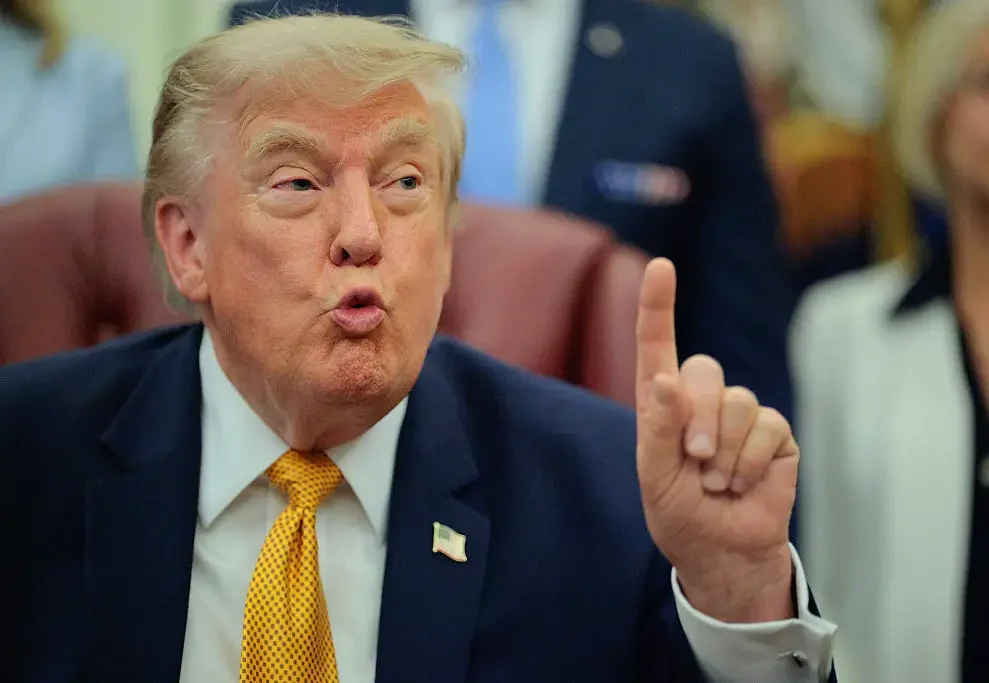
He extended the offer to journalists, with a caveat.
“If a reporter turned somebody in, you have to get approval perhaps from your wonderful newspaper,” Trump said.
Miami Man Killed Playing Dominoes, Then Police Link His Killing to a Murder He Committed 20 Years Ago
School Cop Accused of Choking and Arresting Black Mom During Tampon Drop-Off Was Later Named Officer of the Month
Trump argued the program is needed because the fraud found so far is only a fraction of the total.
“Since I came into office, we’ve already uncovered $260 billion of fraud,” he said. “And that’s peanuts compared to what the real number is.”
Vice President JD Vance said the idea came out of a conversation with the president about enlisting ordinary citizens in the fight. According to Vance, Trump’s instruction was simple: “do a commission, do an incentive program.”
The announcement took its most notable turn when Trump addressed what happens if people disagree over who deserves the money.
“I will be the arbitrator of all of these decisions,” Trump said. “In other words, I will determine whether or not the person is deserving.”
He promised to be generous and insisted the process would be quick.
“I’m not doing it for any other reason other than to expedite,” Trump said. “We won’t have long lines waiting or court cases or anything else. We will have a binding arbitration.”
On disputes involving multiple claimants, he added: “Maybe they will split it. I will make the determination.”
Citizen journalist Nick Shirley, who is 24, said the incentive is overdue. “There has never been an incentive for anyone to expose fraud,” Shirley said, adding that mainstream media “investigated [him]” instead.
Shirley is a YouTuber and self-described independent journalist whose viral video examined allegations of billions of dollars in fraud in Minnesota.
At the event, Vance said Shirley “is going to get a financial reward” under the new program.
Colin McDonald, who runs the DOJ’s National Fraud Division, told the president that “there is upwards of $800 billion of taxpayer money that is stolen by fraudsters.”
He said that amount could pay the entire DOJ workforce budget and noted that if fraud were its own department, it would be one of the most expensive departments in the federal government. Trump jumped in, saying it “could also balance the budget.”
Senior adviser Stephen Miller closed the event with the sharpest rhetoric, crediting Trump for the $260 billion figure and blaming “refugees, illegal aliens and foreigners” for looting taxpayers.
“The looting will stop, and the pillaging will stop, and the robbing will stop,” Miller said.


