Donald Trump has spent years promising to root out corruption in Washington.
The president’s latest effort was supposed to put ordinary Americans on the front lines of that fight.
The POTUS has repeatedly accused government programs of wasting taxpayer money while making unnecessary changes to the city. He insists his administration can uncover any wrongdoing that others have overlooked.
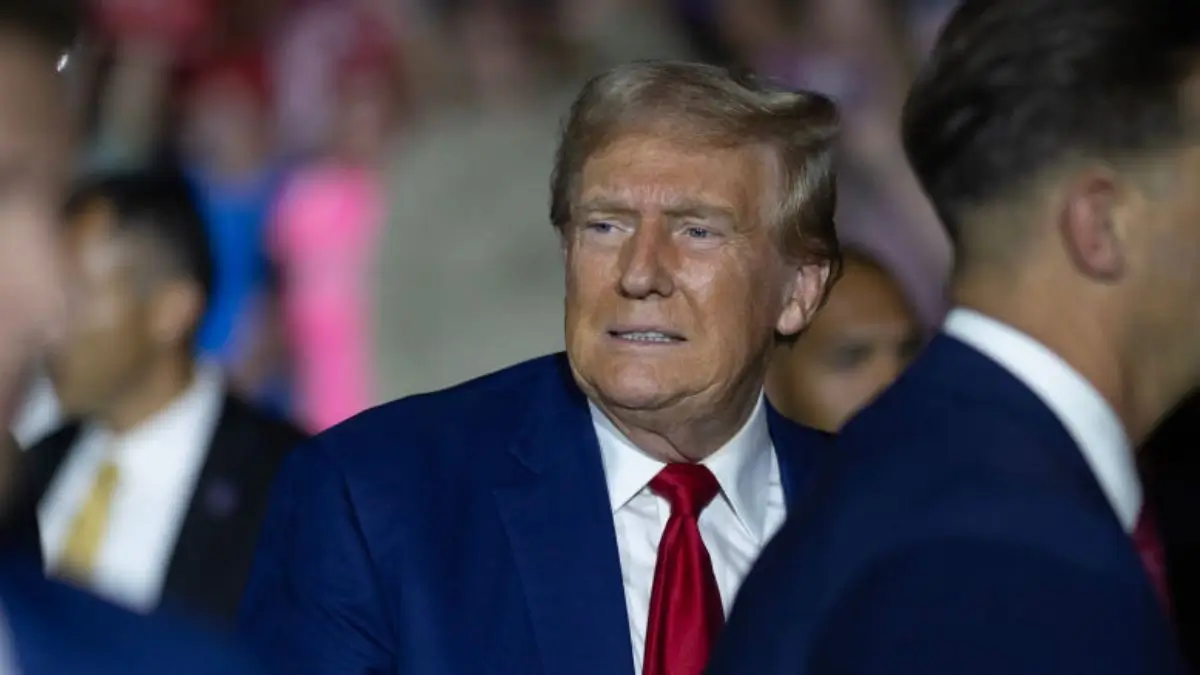
Now, he is betting that financial rewards will encourage Americans to expose those responsible, including him.
The 80-year-old president introduced a new initiative promising cash rewards for exposing fraud. He even suggested some whistleblowers could become millionaires.
But the announcement quickly took an embarrassing turn when critics found a different target for his latest crackdown.
On Tuesday, Oct. 20, the POTUS unveiled WHIP, the Fraud Whistleblower Incentive Program, alongside Vice President JD Vance.
According to the DOJ, the $25 million initiative offers rewards of $10,000 to $30,000 for tips leading to criminal fraud charges or significant enforcement actions.
Americans can submit information through fraud.gov, which the Justice Department will administer.
Trump also promised a 1 percent commission on recovered funds. He insisted his initiative could still make people millions while reporting fraud. Few were shocked when the executive put himself in charge of this process.
“I will be the arbitrator of all these decisions,” Trump declared.
However, The Independent’s Andrew Feinberg questioned why Americans would use the program when the existing False Claims Act already offers whistleblowers between 10 and 25 percent of certain recoveries.
Sen. Bernie Sanders immediately turned the president’s invitation against him.
“That’s great, Mr. Trump. I’d like to report a theft,” the senator tweeted.
The Vermont independent accused the administration of improperly spending tens of millions on advertisements promoting Trump.
“A man inside our government illegally spent nearly $22 million in taxpayer dollars on bogus campaign ads praising himself. He now resides on 1600 Pennsylvania Avenue,” Sanders continued. “Taxpayers want to know when they’ll get their money back.”
The accusation was Sanders’ allegation, not an established criminal finding.
Social media users quickly joined the pile-on over who faces consequences first. “So, we’re mass reporting him, right?” one X user asked.
On Threads, several people claimed they had already submitted complaints targeting the president and shared screenshots as proof.
“I reported fraud today to the federal government through the new website Trump just announced,” one person wrote.
Attached was an alleged complaint that read, “Trump has received $635 million in royalties through a company called Celebration Coins for letting the $TRUMP meme coin use his name and image; foreign actors and corporate interests used…”
A third person shared a screenshot requesting scrutiny of Trump’s cryptocurrency ventures, foreign investments, and corporate donations.
“Submitted my fraud complaint for the whistleblower program that Trump just announced today,” the user wrote.
The attached screenshot read, “I request a review of potential fraud, corruption, and conflicts of interest involving Trump’s cryptocurrency ventures, foreign investments benefiting his family, and corporate donations from companies.”
Others predicted the website would struggle to respond.
“That URL tab won’t last one Zacharia before he shuts it down because of the avalanche of posts like this. Brilliant,” someone joked. Another added, “As soon as it was announced, I knew this was going to happen. Bravo.”
The criticism comes amid growing scrutiny of Trump’s financial interests. Over the past year, his family’s business ventures, notably cryptocurrency, have drawn headlines. Critics accuse him of using his office to enrich his relatives. They cite his granddaughter, who launched a clothing line on the White House lawn.
Some also object to his acceptance of a luxury jet from Qatar.
The administration denies that Trump personally profits from the presidency, often noting he refused a salary.
Tuesday’s announcement sparked another controversy. Cameras caught Trump repeatedly closing his eyes while Vance and Dr. Mehmet Oz spoke. Viewers wondered if he had fallen asleep. Such moments feed an international narrative that he is unfit for office.
Days earlier, Trump called federal Judge Ana Reyes a “crazed lunatic” during a dispute over renovations at East Potomac Golf Links. His Justice Department attorneys subsequently faced questions about contradictions between his public statements and government court filings.
The president has also faced years of allegations that he cheats at golf.
During a September appearance in Dublin, Trump offered a remarkable explanation, citing the Secret Service agents around him.
“It’s not that I wouldn’t cheat, but you can’t move the ball,” he said.
Now, his fraud initiative has handed critics another opportunity to revisit questions about his conduct.
Trump wanted Americans to identify suspected fraudsters. Instead, some are asking whether the investigation should begin at 1600 Pennsylvania Avenue.
Trump announces "fraud whistleblower incentive program" — "All Americans will now be able to go to fraud dot gov and report cases of corruption and theft of taxpayer dollars in their communities … if you turn somebody in and you find $1 billion, we’re giving a commission of 1%. That’s a lot of money"
— Aaron Rupar (@atrupar) October 20, 2026


