The fallout from President Donald Trump’s ongoing feud with one of the U.S.’s closest allies and northern neighbor is hitting the country’s pocketbook at the worst possible time.
Canadian tourism in the U.S. has dropped significantly since Trump retook office in early 2025 and started a head-scratching fight with the longtime American friend.
Trump first declared Canada a 51st state in what seemed like a joke. But he kept repeating it for months. Canadians grew increasingly angry, and that anger continues today.
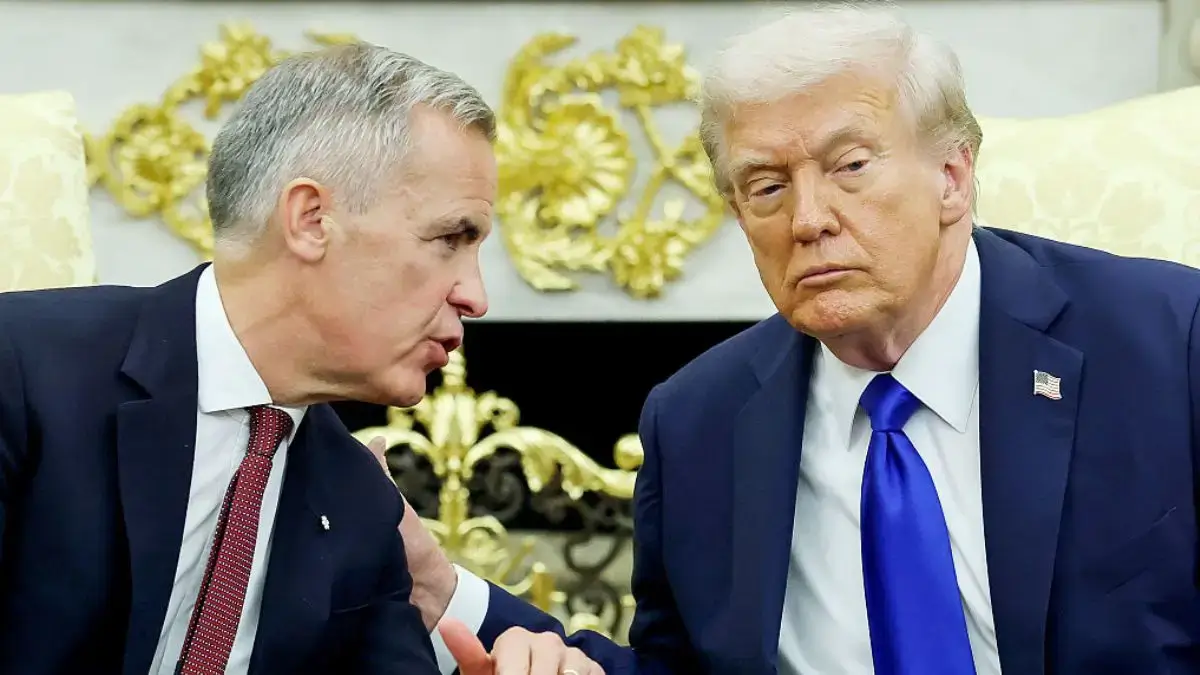
Canadians stopped traveling to the U.S. in significant numbers. In fact, according to the Canadian government, its citizens spent $18.8 billion on travel to the U.S. in 2025, according to Fortune. That may sound like a lot, but it’s $3.3 billion less than in 2024.
Axios reports that, in addition to the 25 percent drop in travel to the U.S. last year, Canadian government data show the trend is continuing in 2026.
‘He’s So Ignorant’: Trump Turns on the Charm for Hispanic Voters, But Can’t Help Himself and Blurts Out What He Really Can’t Stand About Them
The impact on the U.S. tourism industry can’t be overstated. Just eight months into Trump’s second term last September, Las Vegas Mayor Shelley Berkley pleaded with Canadians to return. Las Vegas has seen a steep decline not just in Canadians but in international travelers as well since Trump retook office.x
“As the mayor of Las Vegas, I’m telling everybody in Canada, please come. We love you, we need you, and we miss you,” Berkley begged, according to Fortune.
And it’s not just vacationers going elsewhere that’s casting a pall over U.S. tourism under Trump. International business travel is down, too, further hurting tourist hubs such as Las Vegas and New York.
Fortune reports business travel totals just 20 percent of all travel to the country, but it represents 60 percent of airfare and hotel revenue, according to the U.S. Travel Association.
That trend is also likely to continue both internationally and for Canadians. Trump ramped up his trade war with Canada in August, increasing tariffs on Canadian goods by double digits. As trade tensions increased, Canada reciprocated, angering Trump, who then renamed Lake Ontario to Lake America.
Even more concerning, critics say, Trump is fine with the current state of U.S.-Canadian relations.
Trump’s top trade official, Jamieson Greer, says the president is “comfortable” with the current state of affairs with Ottawa. And he’s in no hurry to reach a trade deal, according to CNBC.
“The reality is President Trump is comfortable where we are on Canada,” Greer told the network on Sept. 25.
“They call us now and then, and we have good conversations about potential deals. But there’s no urgency on our side,” he insisted.
“We’re still getting what we need from them in terms of oil, gas, potash, all of these things. We’re shipping back and forth across the border, so there’s still a lot of strong trade between the two countries,” Trump’s trade envoy crowed.
But for how long remains to be seen.
In a February Politico poll of 2,000 Canadians, 58 percent said the U.S. was no longer a reliable ally. Almost 80 percent believe Trump has weakened the U.S.-Canada relationship.
View on Threads


