Donald Trump has spent decades cultivating the image of a man who answers to no one.
The president put his name on skyscrapers, built a television career, became a pop-culture symbol of the loudmouthed charmer, and ultimately ran for president.
To many, Trump embodies what a boss is. But the image cracked once reporters approached him about something he didn’t expect.
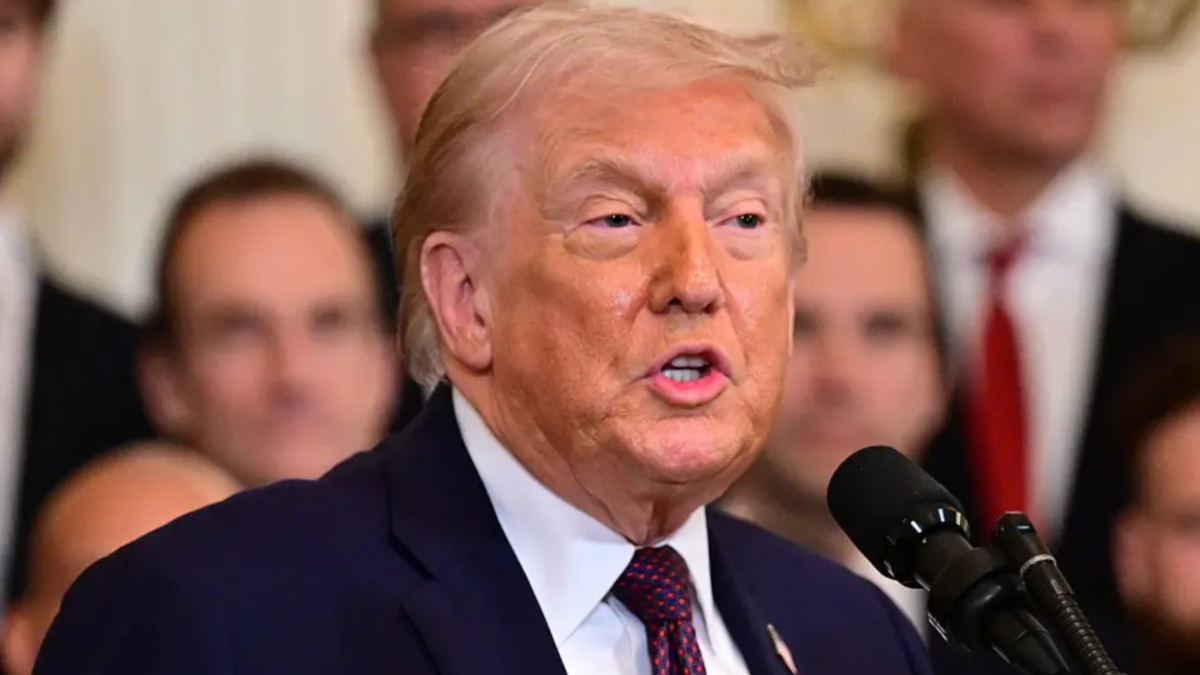
A reporter brought up his late father, the man who loved a show of strength, and Trump gave an answer that sounded a lot like asking Dad for permission.
His dad, Fred Trump, built the fortune that underpinned the president’s success in Brooklyn and Queens real estate.
Donald joined the family business before chasing larger projects and a brighter spotlight in Manhattan.
By the time he entered politics, he had built a brand around making his own rules. A question about what Fred thought of the campaign seemed tailor-made for a story about a proud father.
New York Times journalist Jason Horowitz recounted asking Trump during a 2016 interview in Trump’s Manhattan office what his late father, Fred, would think of his political journey. According to Horowitz, Trump responded: “He totally would have allowed me to do it.”
Highlighting the interaction on a recent “The Bulwark” podcast, Horowitz noted his surprise at Trump’s framing.
Allowed him? Trump was seeking the nuclear codes, and Horowitz heard an answer that sounded like a son asking to borrow the car.
“I was expecting, ‘Would have been proud of me, or he would have had some thoughts on it,’ but, ‘allowed’ me,” Horowitz said.
He described the wording as “a tiny window” into their complicated relationship. Trump spent years trying to please Fred, Horowitz said, but didn’t always manage it.
Horowitz covered Trump and his family during the 2016 campaign, then moved to Rome for The New York Times. His recollection gives fresh attention to an old answer.
Facebook commenters had their own ideas about Fred’s reaction.
“He would be disappointed,” one person wrote. Another was considerably less restrained, directing their fury to the deceased dad: “YOU DID A HORRIBLE JOB IN RAISING THIS TOTAL DESTRUCTIVE IDIOT!!!!!!!!!!!!!!!!!!!!”
A third person said. “He’d say your not really my son, you’re a miscarriage we found crawling out of a public toilet and 77 million [people] mistakenly made you the fake president.”
The Facebook crowd did not buy Trump’s version of fatherly approval. Trump, however, has long described Fred as the man who taught him how to work and make money.
In “The Art of the Deal,” he passed along one of his father’s favorite rules: “Every penny counts.”
Fred was also Donald’s first boss. His business gave Trump a place to learn real estate before he pursued the Manhattan deals that made his name familiar far beyond New York.
That history makes “allowed” an especially telling choice. Trump did not picture Fred cheering from the sidelines. He pictured him giving the go-ahead.
Family history has tripped up Trump on other occasions.
During a March Oval Office meeting with German Chancellor Friedrich Merz, the president spoke about his family’s European roots and incorrectly claimed that his father “was born there.”
Fred was actually born in New York City. Trump’s paternal grandfather, Friedrich Trump, immigrated from Germany.
In a separate interview about his family’s health history, Trump paused while discussing Fred’s Alzheimer’s disease. “What do they call it?” he asked, looking to former press secretary Karoline Leavitt for help. She supplied the word: “Alzheimer’s.”
Fred lived with Alzheimer’s disease in his later years and died in 1999 at age 93. His decline added a painful chapter to a relationship that had long revolved around business and approval.
By the time Trump ran for president, the father whose opinion he still seemed to weigh had been gone for nearly two decades.
Both moments drew online scrutiny, though a verbal slip offers no basis for a medical conclusion.
Horowitz’s story offers a rare glimpse behind the curtain. Trump had years to consider what his father might think of a White House run. Yet his choice of words cut straight through his signature bravado.
Fred Trump never saw his son win the White House. He never saw the campaign, let alone the presidency that followed. But when asked to imagine his father’s reaction, Trump offered something more revealing than a boast.
For a moment, the brash New Yorker sounded like a little boy. He was still wondering about the ultimate green light. And he still wanted it to come from his dad.
When Fred Trump, Donald’s father, became unmanageable due to Alzheimer’s disease, they reportedly set up a fake office for him, where he could sit behind a desk, read papers and sign documents — giving him the comforting illusion that he was still running the show.
— Olena Rohoza (@OlenaRohoza) September 29, 2026
So, well…… pic.twitter.com/fqQ3MqNvXv


