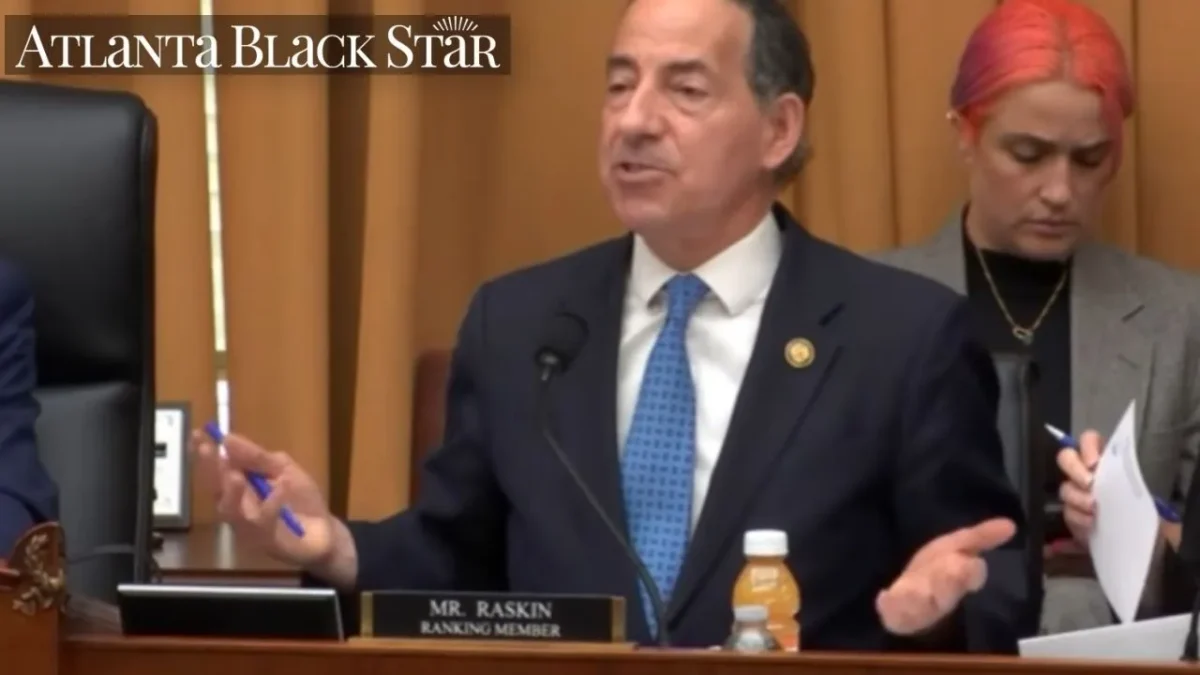
Rep. Jamie Raskin used one of his turns during the committee debate to dismantle the Trump administration’s trade war with Canada from the inside out.
The ranking member came to the House Judiciary Committee hearing on Sept. 16 with receipts.
The Maryland Democrat entered two articles into the record. The first, from Yahoo News dated March 11, 2025: “Trump Blasts His Own Trade Deal With Canada: Who Made These Decisions?”
The second, from Politico dated June 30, 2026: “Trump Now Hates His Own Trade Deal, But He’ll Have A Hard Time Killing It.”
Raskin said President Donald Trump negotiated most of the U.S. trade laws he now attacks during debate over the No Racketeers on Our Shores Act.
“He declared at the time, of course, the greatest trade deal ever signed,” Raskin said. “And now it’s the worst trade deal ever signed.”
He then turned to the relationship with Canada itself and what he called Trump’s “inscrutable, impenetrable fury” toward one of America’s closest partners.
“We don’t know where it comes from,” Raskin said. “Maybe he doesn’t like the prime minister for whatever reason. Maybe he thinks he’s getting too smart or is too good-looking or something. But in any event, he’s slapped 50 percent tariffs on the people of Canada.”
From there, Raskin turned to the relationship itself, rattling off numbers that painted a picture of how much damage Trump’s 50 percent tariffs on Canada could do.
Canada has been one of the U.S.’s top two trading partners for a decade, and it was also the top destination for U.S. exports in 2024 and the third-largest source of U.S. imports.
Raskin then noted that Canadians have begun boycotting American businesses in retaliation.
To continue proving his point, he explained the two countries have traded over $30 billion in U.S. agricultural products alone — cereals, pasta, fresh vegetables, ethanol — while Canada has sent back over $40 billion in farm goods along with energy products and automobiles.
“Donald Trump has thrown a monkey wrench into the whole thing,” Raskin said, “upsetting the apple cart that he built with Canada in his first term.”
Rather than examining whether the trade policy was actually hurting American workers, consumers, and businesses, Raskin said the administration instead chose to let Trump “personalize this,” even denying specific Canadian officials’ families visits to Disney World or Disneyland.
Raskin called the legislation — which Legis1 describes as a law “which would make certain foreign government officials who engage in economic discrimination against U.S. persons inadmissible or deportable” — an “insult and an affront both to the intelligence of the American people, as if we don’t understand what’s going on, but also to foreign countries.” Then he yielded back.


