Rajon Belt-Stubblefield was unarmed last year when he approached a Colorado police officer, challenging him to a fight.
Aurora Police Officer Matthew Neely responded by shooting him to death rather than using less-lethal weapons such as pepper spray or a baton, according to a new lawsuit.
Now Neely has been indicted on second-degree murder and manslaughter charges, and Belt-Stubblefield’s family has filed a wrongful-death lawsuit.
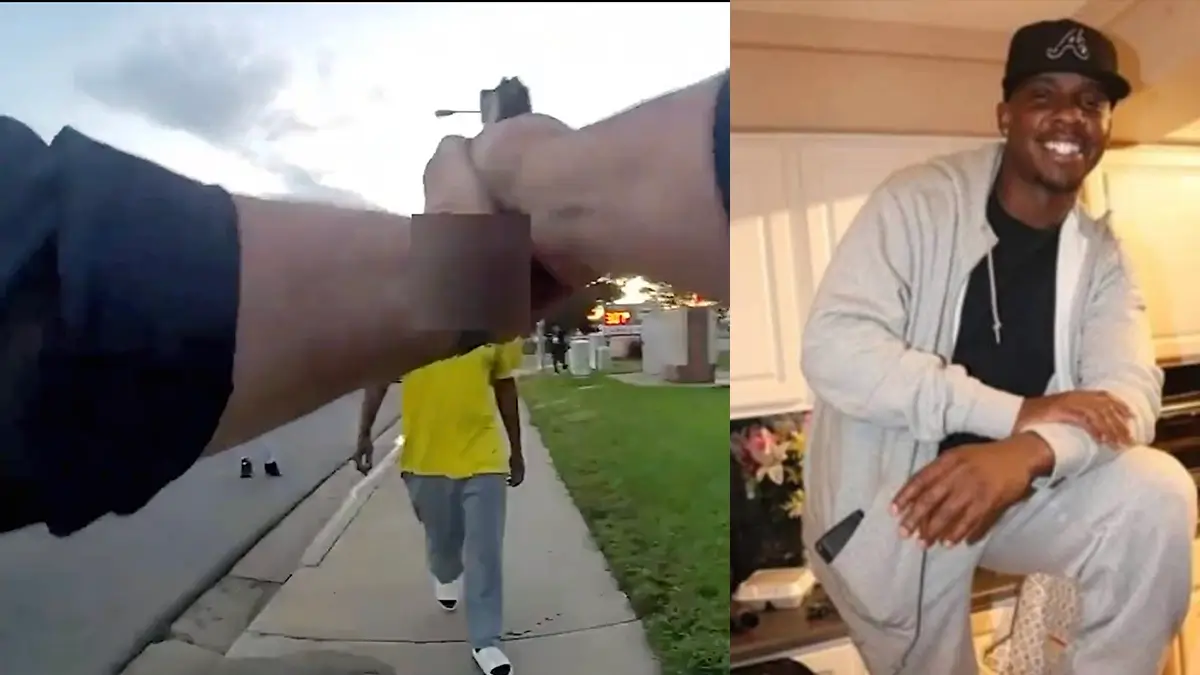
‘Executed Him’
The federal lawsuit, filed Aug. 30, is the latest in a long list of lawsuits against the Aurora Police Department. Black people in Aurora are 5.5 times more likely than white people to be killed by police, according to Police Scorecard.
The most notorious incident was the killing of Elijah McClain in 2019. McClain, a 23-year-old Black man, was walking home from a store with a bottle of iced tea when Aurora cops stopped him. His death resulted in a $15 million settlement and prison sentences for the cops, which were reversed in June.
“The killing of Mr. Belt-Stubblefield was not an aberration, and it was not bad luck,” states the lawsuit filed by Belt-Stubblefield’s widow and eight children.
“It was the predictable product of the Aurora Police Department’s longstanding customs and practices of unnecessary escalation, excessive force, and racially biased policing.”
“Defendant Neely shot Mr. Belt-Stubblefield twice in the chest, watched him stop, and then executed him with a third shot to the head,” the claim continues.
Watch the video below.
‘Don’t Shoot Me’
Officer Neely tried to pull Belt-Stubblefield over on Aug. 30, 2025, after clocking him at 54 mph in a 40 mph speed zone. Belt-Stubblefield continued driving until crashing into two other cars about a mile away.
Bodycam video shows Neely approach Belt-Stubblefield’s car with his gun drawn, telling him to “get your hands up, dude.”
“Don’t shoot me,” Belt-Stubblefield responded before stepping out of the car holding a gun, which he tossed into the grass.
“Get on the ground, get away from that motherf–king gun,” the cop ordered while keeping his gun pointed at Belt-Stubblefield, who continued walking toward him.
“Get that sh-t,” Belt-Stubblefield said, apparently speaking to his teenage son who was walking a few steps behind him, telling both the cop and his father to “chill.”
Belt-Stubblefield continued walking toward the cop with his fists balled up, telling him, “Get ready for this.”
“Get on the ground,” Neely responded.
Neely then fired three shots, striking Belt-Stubblefield in the chest and head about 40 seconds after ordering him to get away from the gun on the ground.
The claim states that Neely was not carrying a Taser because department policy did not require him to do so. But he was carrying pepper spray and a baton.
The complaint also states that Neely spent seven seconds trying to holster his gun so he could use a less-lethal weapon, but he could not holster it.
“Defendant Neely’s own effort to transition away from his firearm demonstrates that he recognized a firearm was not the appropriate tool for gaining control under the circumstances,” the lawsuit states.
Previous Incidents
“At one point, Defendant Neely attempted to holster his pistol so that he could transition to his retractable baton less lethal device, but he was unable to get the pistol into his holster.”
The 144-page lawsuit mentions several previous incidents in which Aurora police shot and killed unarmed Black people, including the 2024 shooting death of Kilyn Lewis, a 37-year-old Black man killed while holding both hands in the air with a phone. Two lawsuits in that case remain pending.
The claim also cites incidents involving Black people who survived but whose civil rights were allegedly violated. One involved Brittney Gilliam, who cops forced from her car at gunpoint and ordered onto the ground with her nieces after falsely accusing her of driving a stolen vehicle. Aurora settled that case for $1.9 million.
The lawsuit also mentions LaDarius Butler, a 32-year-old Black man who cops tasered, handcuffed and arrested after he and his partner decided to take their 3-year-old child from one hospital to seek another medical opinion.
‘Pattern and Practice of Racially-Biased Policing’
The complaint says Aurora entered into a consent decree with the Colorado Attorney General’s Office following the state’s investigation into the Aurora Police Department. It alleges the department did not make the required reforms.
In September 2021, after a 14-month investigation, the Colorado Attorney General found that Aurora Police “has a pattern and practice of racially biased policing, using excessive force, and failing to record required information when it interacts with the community.”
Aurora then signed a court-enforceable consent decree and promised to reform. “It never did,” the lawsuit states.
When Neely killed Belt-Stubblefield nearly four years later, the lawsuit alleges, Aurora had not achieved full operational integrity in any consent-decree area involving force, bias-free policing, stop documentation, or accountability.
“We are here to say we’re not going to let you sweep this under the rug,” attorney Ben Crump, one of the lawyers representing the family, said, according to local media.
“These extrajudicial killings of unarmed Black people are never going to be OK with us.”


