A viral video of a Black man defending his right to his own boat has sparked outrage online.
A white police officer harassed a Black boat owner standing aboard his own vessel, expressing disbelief that he owned it. The internet took notice.
The re-emerged video shows the man defending his right to stand on his private boat while docked at a marina.
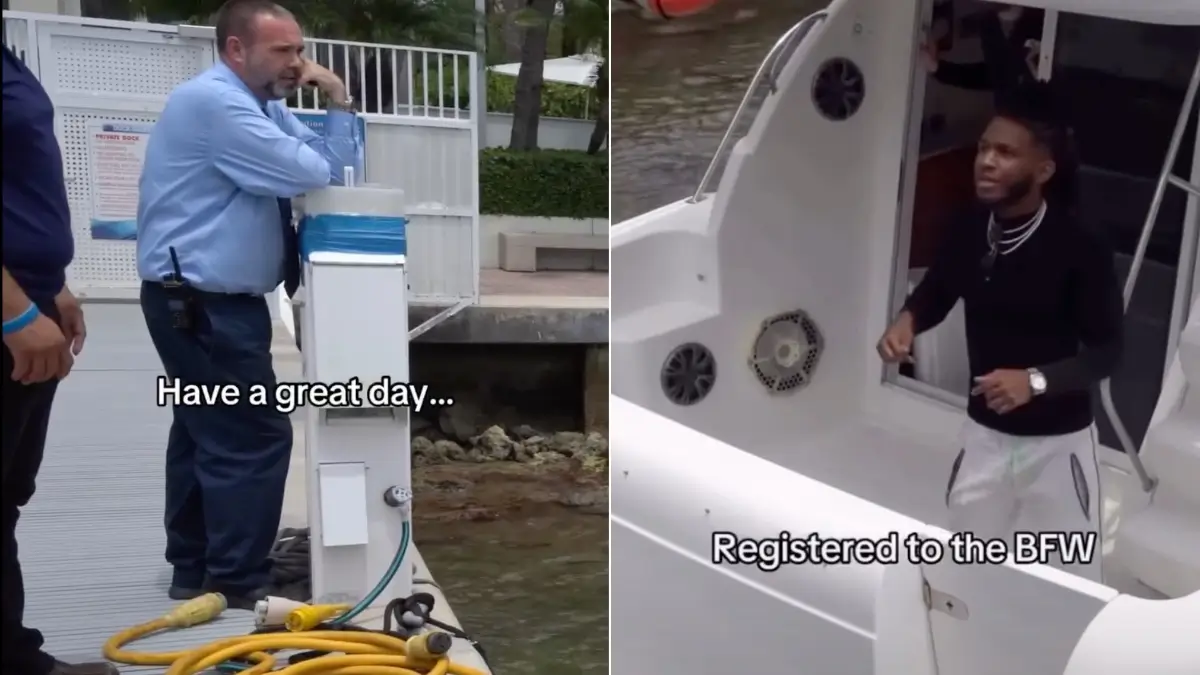
“I can walk wherever I want,” the man told the officer, who responded that he was not allowed on private property.
Less than 1 percent of boat-owning households in the U.S. are Black or African-American, according to the U.S. Coast Guard’s National Recreational Boating Safety Survey.
“This spot right here is my property,” the man shot back, citing standard property laws governing private vessels. After the officer told him “it’s not your boat” and demanded “paperwork,” the man offered to show his registration to prove ownership.
Maritime law gives officers broad authority to conduct safety checks. But challenging a Black man’s ownership of his own boat, with no apparent basis beyond disbelief, could raise concerns about unreasonable interference with his property rights.
In this case, the officer backed down and went on his way. But the interaction left a bad taste for many viewers, who suggested racial profiling was at play.
“Black success should not automatically be treated as suspicious. A Black man owning something expensive is not probable cause. It is not evidence of wrongdoing. And it should not require him to prove that he belongs in spaces where white people are rarely questioned,” read the post’s caption by realblackgirlpolitics.
Viewers overwhelmingly agreed in the comments. “The conversation needs to continue because there are too many people who say ‘get over it.’ Really? It’s sickening to think that people of color have to ‘explain why,’” wrote one, adding, “I hope this man never lets them forget the ignorance of their actions.” Echoing several commenters, another person urged: “This cannot continue to be the norm.”
View on Threads


