The two Colorado paramedics who injected Elijah McClain with an excessive dose of ketamine, leading to his death — and whose convictions followed — had their homicide convictions overturned last week over a legal technicality.
But former Aurora paramedics Jeremy Cooper and Peter Cichuniec have already served their prison sentences.
Cichuniec, in fact, already had his five-year prison sentence reduced to 10 months by a lower-court judge in 2024, and he remains on probation for an assault conviction that was not reversed.
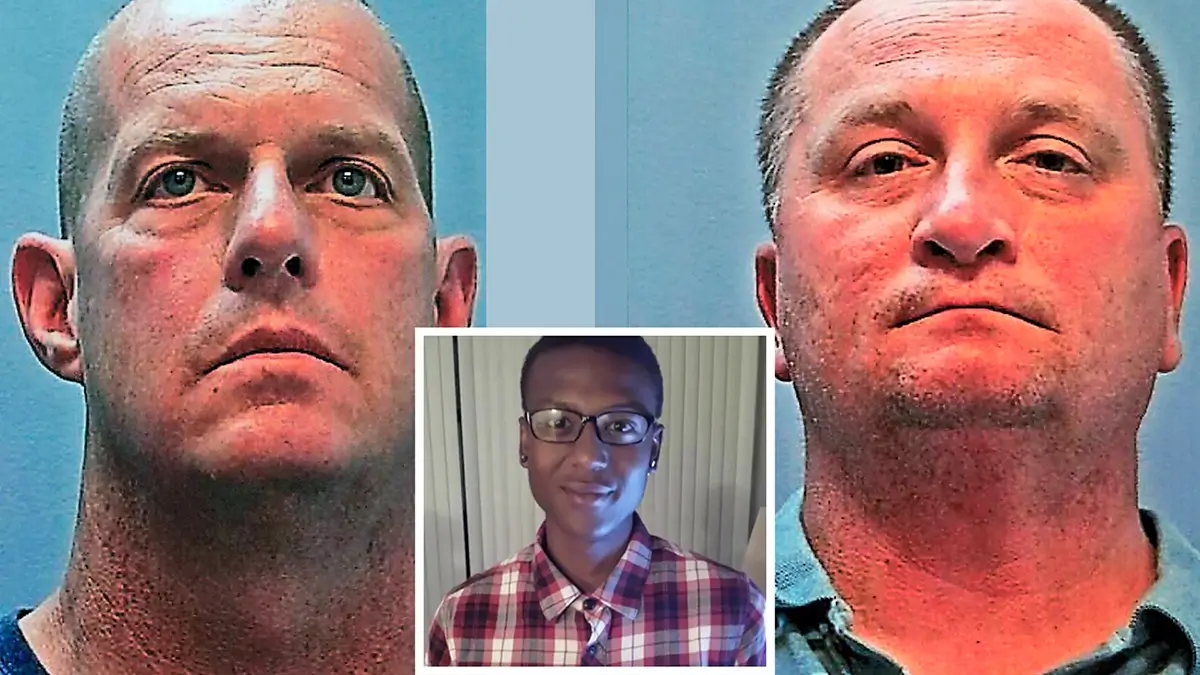
Cooper, who was sentenced to 14 months in jail under a work-release program that allowed him to leave during the day, is no longer on probation following the appellate ruling.
In its decision, the Colorado Court of Appeals sent the case back to the lower court for a potential retrial, but state prosecutors said they plan to appeal to the Colorado Supreme Court.
The state’s highest court could decline to review the case or uphold the appellate ruling, forcing prosecutors to decide whether to retry the men or dismiss the homicide charges altogether.
The appellate decision came as no surprise to McClain’s mother, Sheneen McClain.
“The Colorado Court of Appeals has made a decision concerning the former paramedics who injected my son Elijah McClain with a tranquilizer and who also helped the Aurora Police Department kill my son on August 24, 2019,” she wrote on Instagram.
“I am not surprised by the overwhelming lack of accountability in the court system,” she added on the page Divine Justice for Elijah McClain.
“Excited Delirium”
The technicality that led to the reversal may seem minor on the surface. It centered on the judge’s instructions to the jury, which directed them to evaluate the paramedics’ actions based on what a “reasonable person” would have done.
The appellate court ruled the jury should instead have been instructed to consider what a “reasonable paramedic” would have done in the same situation.
The paramedics injected McClain with 500 milligrams of ketamine without checking his pulse or vital signs, relying on police claims that he was experiencing “excited delirium.”
That raises a key question: Would a reasonable paramedic have been more cautious than an average person with no medical training?
Would a reasonable paramedic have conducted a more thorough evaluation, especially considering police officers are not medically trained to diagnose conditions like excited delirium — a term that several medical associations have since rejected as pseudoscience?
The appellate court acknowledged that excited delirium has since been widely discredited as a legitimate medical diagnosis, though that shift occurred after McClain’s 2019 death.
Still, even if the paramedics believed the condition was legitimate at the time, basic medical protocol would suggest checking vital signs before administering a powerful sedative.
The appellate court concluded that the “reasonable person” standard in the jury instructions may have “detrimentally influenced the verdict,” which is why it reversed the convictions.
At the same time, the court noted inconsistencies in how the paramedics determined the ketamine dosage. Cichuniec estimated McClain’s weight at 187 pounds, while Cooper estimated it at 220 pounds.
In reality, McClain weighed 143 pounds — a discrepancy that contributed to the fatal outcome.
“I Can’t Breathe”
McClain died after being confronted by Aurora police around 10:30 p.m. on August 24, 2019, while walking home from a store carrying a bottle of iced tea.
The 23-year-old was wearing a jacket and a ski mask, which his family said was due to a medical condition that made him feel cold. He was also listening to music through headphones and moving his arms along with it.
A caller reported him as “suspicious,” prompting a police response.
When officers approached, McClain appeared to have difficulty hearing them because of his earphones. Aurora officers Nathan Woodyard, Jason Rosenblatt, and Randy Roedema restrained him, forcing him to the ground.
When paramedics arrived, officers described McClain as being “on something” and having “superhuman strength.”
Although paramedics initially said police told them McClain had excited delirium, they later said they made that assessment based on officers’ descriptions.
After being injected with ketamine, McClain lost consciousness. He died six days later.
Prosecutors initially cleared both the officers and paramedics of wrongdoing, but public pressure led to the case being reopened.
The three officers were tried in 2023. Roedema was convicted of criminally negligent homicide and third-degree assault and served 14 months in a work-release program; he is appealing his conviction.
The paramedics were tried later that year and convicted of criminally negligent homicide. Cichuniec was also convicted of second-degree assault for administering the injection that led to McClain’s death — a conviction that remains in place.
“I am not surprised by the disregard for human rights in the United States,” McClain’s mother wrote after learning of the reversal.
“I am not surprised by the denial of true justice for American citizens at the hands of government institutions that allow criminal behavior in their police agencies. They are corrupt and cowardly.”


