Nearly 21 months after deputies killed 18-year-old Daevon Montez Saint-Germain in a SWAT raid, Knox County commissioners voted to destroy county surveillance data, raising fresh evidence-preservation questions in his family’s pending wrongful-death lawsuit.
The Knox County Sheriff’s Office claimed deputies fired in self-defense after Saint-Germain refused commands and displayed a rifle. Saint-Germain’s family and civil rights attorney Ben Crump dispute that account.
They maintain officers stormed the home while the teenager slept, leaving him disoriented and unaware the armed intruders were law enforcement.
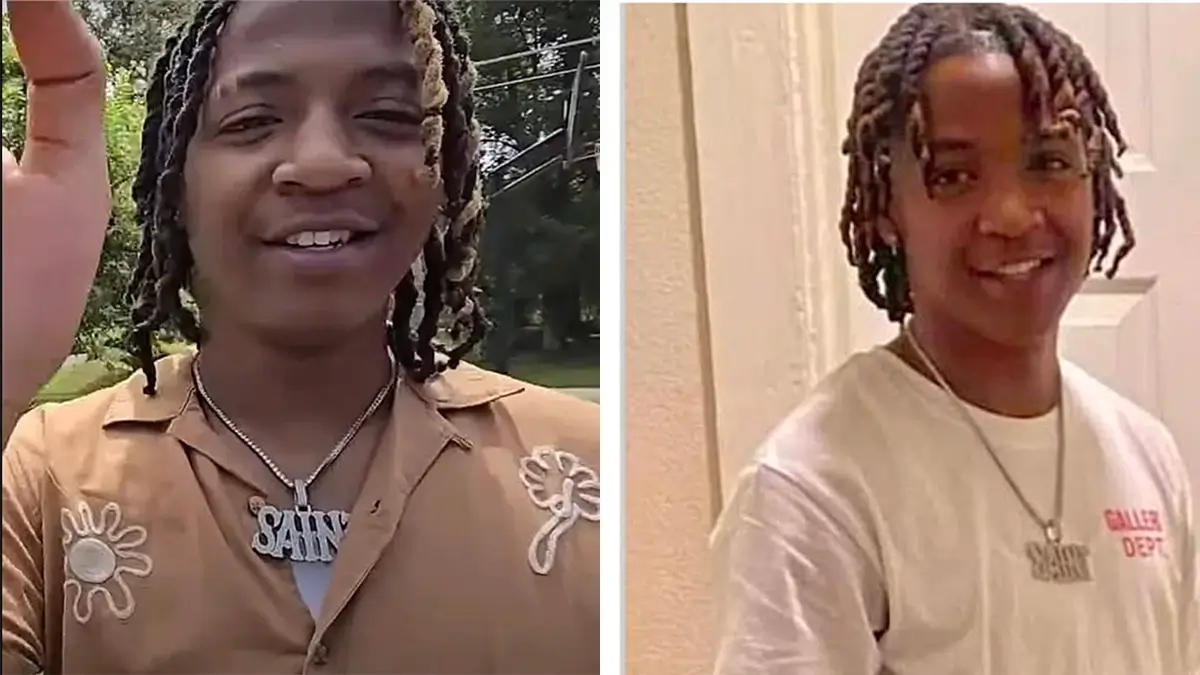
KCSO insists SWAT deputies did not wear body cameras. During an April 2025 press conference, Crump condemned the operation as an unannounced, dynamic raid.
“Daevon was an 18-year-old kid who had no criminal history whatsoever… And he was killed as a result of a no-knock warrant – not just a no-knock warrant, but a flashbang no-knock warrant,” Crump said.
“That’s when they come in, and they throw the grenade, smoke go everywhere, and everybody’s disoriented. And they did this… at 7 in the morning when the family’s just waking up – children, grandparents, mama in the house,” Crump added.
KCSO has neither confirmed nor denied allegations regarding flashbangs or entry tactics. Although a 2021 Tennessee statute enacted after Breonna Taylor’s death bars judges from signing “no-knock” warrants, officers routinely enter unannounced at the scene by claiming exigent circumstances or officer-safety threats.
That lack of video transparency took on renewed urgency last month after the county ordered agencies to purge surveillance records – a sweeping mandate commissioners acknowledged could reach beyond Flock cameras into evidence-management systems like Axon.
Unsealed search warrants show detectives based the raid on Saint-Germain’s public Instagram posts showing cash, marijuana, and rap lyrics, rather than an active undercover drug buy. Post-raid inventories listed a 9mm carbine rifle, two handguns, cash, and bulk marijuana seized from the residence.
Destruction of Evidence?
Unanswered questions surrounding video footage and SWAT tactics continue to shadow the teenager’s death, but an Aug. 31 county commission vote created fresh uncertainty across KCSO’s evidence systems.
The Knox County Commission voted unanimously to dismantle the county’s network of fixed automated license plate readers and immediately destroy all previously collected surveillance data. The measure carved out only one narrow exemption: data tied directly to an “active criminal investigation.”
“The Knox County Commission did more than vote to shut down the county’s fixed surveillance cameras,” Knox County resident Ed Browder wrote in an email to Atlanta Black Star. “During consideration of Commissioner Jay’s amendment, Commissioner Thompson proposed adding: ‘destruction of all Knox County data that has been collected thus far.’”
Browder’s scrutiny of KCSO record-keeping grew out of his 2021 arrest and subsequent prosecution. While reviewing discovery in that closed case, Browder discovered Flock surveillance data stored inside KCSO’s Axon Evidence.com platform — prompting legal challenges to expose and preserve the agency’s digital audit logs.
During floor debate, commissioners deliberately preserved broad deletion language rather than naming a single vendor, explicitly referencing Axon. One official observed: “If you just leave it as data, then it gets everything.”
“So the Commission’s direction to destroy previously collected surveillance data potentially reaches beyond the privacy and Flock-contract controversy,” Browder said. “It may affect records needed to determine what evidence existed, where it came from, how it moved between systems, who had access to it, and what remains available for judicial review.”
Looming Judicial Review
That question of judicial review now looms over Saint-Germain’s federal case.
District Attorney General Charme Allen closed the state’s criminal inquiry without charging the deputies involved, meaning the case no longer qualifies as an “active criminal investigation.” Saint-Germain’s parents, however, are actively pursuing their federal civil rights lawsuit against the county and Sheriff Tom Spangler.
Because KCSO never produced body-camera footage, surviving electronic records — including dispatch audio, phone extractions, and Evidence.com audit trails — remain crucial to reconstructing the fatal encounter. Yet the county’s sweeping purge directive leaves it unclear whether records from closed criminal probes facing active civil litigation will survive.
“I mean, can you think of a more dangerous scenario?” Crump asked during the 2025 press conference, pointing to the fatal risks of unannounced early-morning raids.
“It reminds me so much of Breonna Taylor, when they [used a] no-knock warrant and kicked in her front door at 1 in the morning. And how we reminded people they don’t do this in other communities. They do this to Black families and Brown families,” he added.
Federal discovery rules require defendants to preserve all electronically stored information once a lawsuit begins. For Saint-Germain’s family, the county’s data purge represents another hurdle in their push for transparency.
The evidentiary fight also unfolds against the backdrop of wider corruption troubles inside the agency. Atlanta Black Star reported in June that a state grand jury indicted five current KCSO deputies on felony charges alleging the theft of over $300,000 in department funds and cash seized during drug investigations.
Because KCSO has shielded the identities of the SWAT officers who carried out the fatal raid, the defendants remain listed only as “John Does” in federal court — leaving unanswered whether any indicted narcotics personnel participated in Saint-Germain’s case.


