The great-great-great-grandson of a U.S. senator who helped shape Mississippi’s Jim Crow-era political system is appealing directly to the family of Nolan Wells, the 18-year-old whose death continues to raise unanswered questions.
Charles Sims, an activist and Ocean Springs native, made the appeal during an event commemorating the 63rd anniversary of Rev. Dr. Martin Luther King Jr.’s historic “I Have a Dream” speech.
“I’m here to remind people we can do better,” Sims told the crowd.
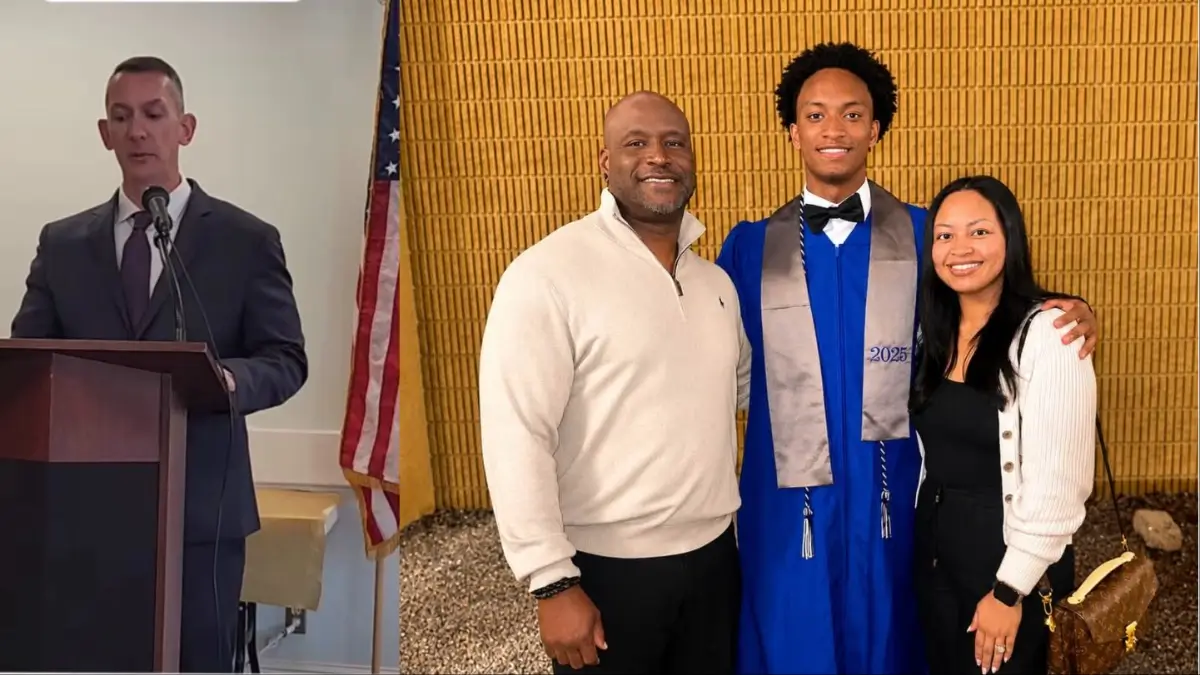
Sims is a direct descendant of U.S. Sen. James Z. George, who spearheaded the drafting of Mississippi’s 1890 Constitution. The landmark document effectively systematically disenfranchised Black voters and established the state’s legal framework for Jim Crow segregation.
“There’s another Mississippi I’ve seen recently,” Sims said. “Mississippi marked by grief, anger, suspicion, and unanswered questions.”
Sims then turned his attention directly to Wells’ family.
“To Nolan Wells’ family, I am the great-great-great-grandson of Jim Crow, and I have something to say to you. No one has the right to judge you for fighting to get answers for your child. Nolan’s mother carried him, raised him, knew his smile and his dreams,” Sims said.
Investigation Status
Wells disappeared July 4 while celebrating Independence Day with friends on Horn Island, a barrier island off the Mississippi coast. Search teams and park rangers recovered his body from the water along the shoreline two days later.
An independent autopsy commissioned by Wells’ family was unable to determine his cause or manner of death and could not rule out foul play. The findings of the state’s official autopsy remain unreleased.
The Jackson County Sheriff’s Office has said the investigation remains active and ongoing. Their evidence will be turned over to the DA’s office who will present it to a grand jury.
Wells’ family continues to press investigators for answers and has launched an independent investigation into his death with the help of civil rights attorney Ben Crump.
Among the questions raised by the family is why Wells did not return with the group of friends he went to the island with.
His parents have said they do not believe he would have voluntarily chosen to stay behind, describing him as someone who typically stayed with the group.
Questions also remain surrounding Wells’s personal belongings. Family members pointed to his phone and keys being left with a friend on the mainland as a key inconsistency, voicing suspicions that his phone may have been tampered with.
The family’s legal team, along with the DA’s Office, were supposed to jointly investigate the phone. Atlanta Black Star reached out to both parties to see if the examination happened and are awaiting a response.
Praying for Healing Before Judgement
Sims also appealed to the public, asking people not to rush to judgment as Wells’ family continues to grieve.
“Before the headline is a human,” Sims said. “We cannot let social media be our courtroom.”
Sims has publicly confronted his family’s legacy, actively calling for the removal of his ancestor’s statue from National Statuary Hall in the U.S. Capitol and proposing civil rights activist Medgar Evers as a replacement.
As a primary architect of Mississippi’s 1890 Constitution, George helped codify the legal framework that systematically disenfranchised Black Mississippians and entrenched Jim Crow segregation for decades.
Spanning from the late 19th century through the civil rights victories of the mid-20th century, the Jim Crow era codified racial segregation and white supremacy across the American South through state laws, local statutes, and violence.
Sims’ message focused on the intersection of Mississippi’s history and the future he believes community members can build together.
“Eventually, all roads lead home,” Sims said. “Sometimes you choose the road, sometimes the road chooses you. I didn’t come home because Mississippi is perfect, I came back because Mississippi is worth fighting for.”
He ended by posing a question to Mississippi residents about the future of the state.
“What kind of Mississippi will our children inherit?” Sims asked. “Will this be the Mississippi we chose to build?”


