Marco Rubio has made it a point to attend his son’s college football games, even when it requires flying hundreds of miles from Washington on a government aircraft.
At a recent University of Florida Gators game, the secretary of state arrived at Gainesville Regional Airport aboard a military jet, where security officers and a convoy of SUVs were waiting to transport him to campus.
For most parents, following their children’s college sports careers can be an expensive commitment.
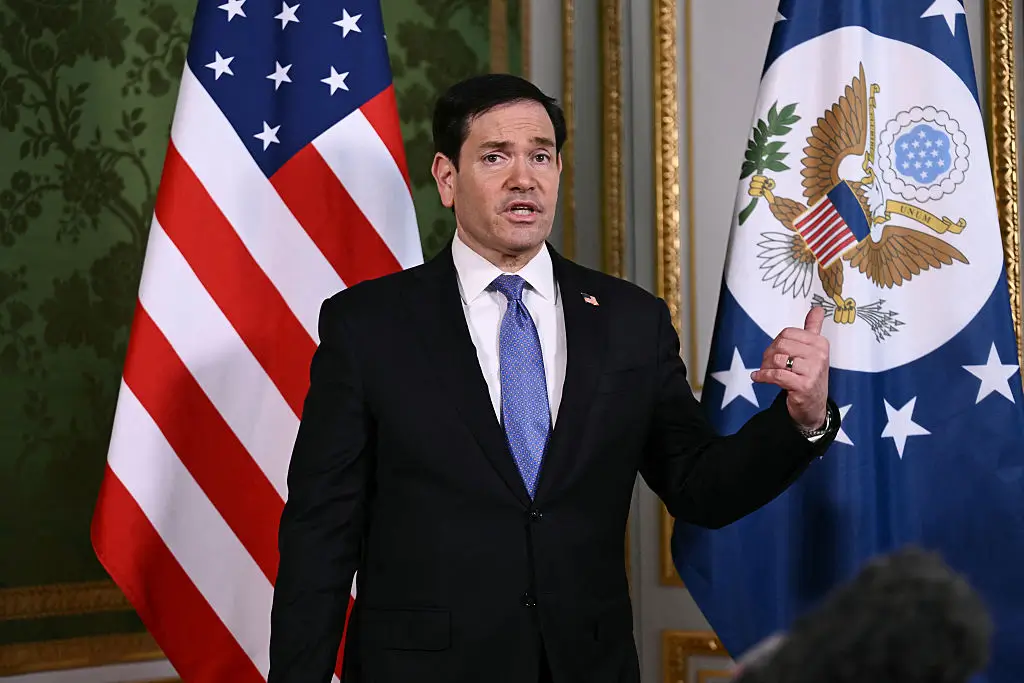
For Rubio, taxpayers have been footing much of the bill.
A Washington Post investigation found that Rubio has accumulated more than $1.2 million in government flight costs while traveling to Gainesville, Florida, where his son Anthony plays football for the University of Florida.
Although federal rules require Rubio to reimburse the government for personal travel, the estimated reimbursement based on commercial airfare would be about $18,000. Neither Rubio nor the State Department has disclosed how much he has actually repaid.
The State Department confirmed that Rubio has traveled to Gainesville aboard government aircraft at least 23 times since taking office last year. At least 10 trips coincided with Florida Gators football games, including five this fall.
The department classified 15 trips as “solely personal,” with estimated flight costs totaling approximately $770,600. Another seven trips combined personal and official travel, adding $443,900, according to the Post’s calculations using Defense Department flight rates.
The newspaper excluded Rubio’s most recent trip from its $1.2 million estimate because the State Department declined to answer questions about it.
Rubio primarily travels aboard Gulfstream C-37A and C-37B jets, which the Defense Department charges other federal agencies approximately $9,100 per flight hour to use, the Post reported. On three occasions, he traveled aboard a larger Boeing C-32A, an aircraft commonly used to transport the vice president and other senior government officials. Those flights cost approximately $18,600 per hour.
Security rules prohibit Rubio, the defense secretary, and the directors of the FBI and CIA from flying commercially. As a result, he must use government aircraft even for personal travel.
Federal rules require him to reimburse taxpayers only what an economy-class commercial ticket would have cost, rather than the actual expense of operating the aircraft.
The Post estimated that a round-trip commercial ticket between Washington and Gainesville on game days averaged $820. Applied to Rubio’s personal travel, that would put his estimated reimbursement at about $18,000—a small fraction of the $1.2 million government flight bill.
Rubio defended his travel in a statement to the newspaper, saying, “I have and will continue to try and make it to as many events that are important to me personally and to my family as possible.”
Assistant Secretary of State Dylan Johnson also defended Rubio’s use of government aircraft, saying they are necessary to “ensure continuity of operations, continuity of government and access to secure communications at all times. And he will continue to do so.”
But the frequency of Rubio’s personal trips has raised questions about whether following the rules is enough to satisfy a public official’s responsibility to taxpayers.
Cynthia Brown, senior ethics counsel at Citizens for Responsibility and Ethics in Washington, said federal rules may permit the trips, but they still raise concerns about how Rubio spends taxpayer money.
“If this travel becomes something that is undermining the integrity of your service, are you really taking care of taxpayer dollars the way that you’re obligated to as a public official?” Brown asked.
She described the issue as “more of an optics issue than a violation” but added that although it may not be “technically improper, it is something that I think is really important to shine the light on.”
The scrutiny also creates an uncomfortable contrast with Rubio’s own position on government travel before joining the Trump administration. In 2023, while serving as a Republican senator, he demanded an investigation into then-Transportation Secretary Pete Buttigieg’s use of government aircraft.
“American taxpayers deserve assurances that their tax dollars are not wasted by the government’s highest officials,” Rubio wrote at the time.
An inspector general ultimately found that Buttigieg complied with federal rules, with his government aircraft travel totaling $59,000.
Rubio’s football devotion is well established, according to the Post. His son Anthony, a walk-on running back who did not receive an athletic scholarship, is now a senior at Florida. He has appeared in only four games over four years, accumulating 75 yards and scoring one touchdown. Rubio has attended every game his son has played, along with several in which Anthony never smelled the field.
Rather than address the unanswered questions about the reimbursement, former White House press secretary Karoline Leavitt took a different approach after the Post published its findings.
“Washington Post confirms Secretary Rubio is a great dad,” she wrote on X.
The response did not sit well with critics, who argued that being a supportive parent does not explain why taxpayers should shoulder the cost of repeated personal trips.
“His child is an adult,” one person said. “Most parents with a college athlete can’t afford to go to every game. But when @SecRubio does it on the tax payer dime, we’re supposed to applaud? I couldn’t afford to go to all my daughters competitions… so out of touch.”
Another critic questioned why ordinary taxpayers should subsidize the personal activities of Cabinet officials.
“He can go to his son’s game on his own dime. I’m sick of paying for Trump and his Cabinet officials entertainment. Greedy Pigs!”
A third reaction broadened the criticism beyond Rubio, pointing to a growing pattern of complaints about the administration’s use of public resources.
“Thank God voters showed up. We are sick and tired of the constant grift and corruption. Each one is worse than the one before.”


