A Missouri defense attorney could have his law license suspended for calling a Black assistant prosecutor a racial slur in court.
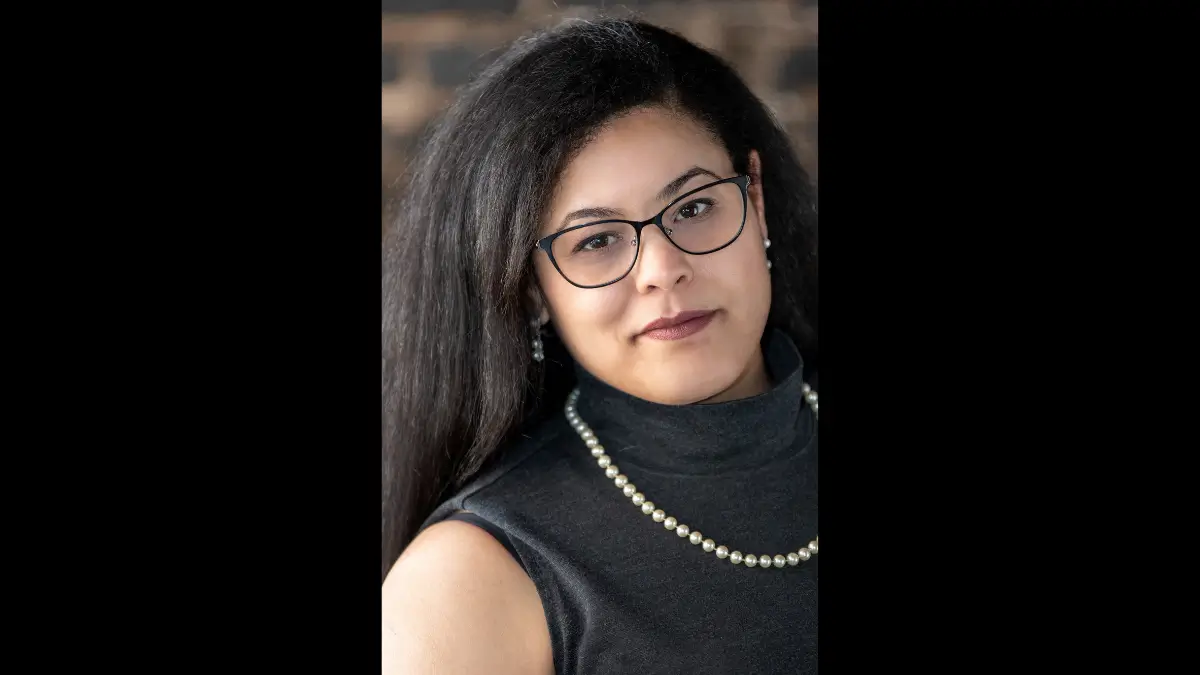
In May 2024, Lynette Lockhart, a Platte County assistant prosecuting attorney, filed a complaint with the Missouri Bar against a local defense attorney, Scott Campbell.
Court records state that the incident happened in March 2024. Campbell was representing several clients in Division V of the Sixth Judicial Circuit Court in Platte County for a criminal docket, and Lockhart was handling the docket that day.
Campbell was allegedly speaking to another attorney about their ability to get along with various Platte County assistant prosecutors.
When the other attorney reportedly complained about his difficulty obtaining favorable plea offers from Lockhart, Campbell asked, “Is it because she is a n—r?” court documents state.
Lockhart stated that she later learned about the slur from Platte County Prosecutor Eric Zahnd and First Assistant Prosecuting Attorney Mark Gibson.
In a letter to the Office of Chief Disciplinary Counsel (OCDC), she wrote that she had to weather weeks of self-doubt and constant questions about the colleagues surrounding her.
“When I learned that Mr. Campbell called me a ‘N—-,’ I cried,” Lockhart wrote to the OCDC. “Certainly, I was offended and hurt, which might be expected. But what came after was weeks of self-doubt, incessant questioning, and frankly, fear of anyone around me, including those colleagues who I thought I could trust, even though the only person I had reason to doubt is Mr. Campbell.”
She continued: “That’s the problem with the N word. There are not enough academic, professional, or financial accomplishments in the world for me to attain that can outweigh the color of my skin. I thought, after practicing law for over 15 years, serving my country for nine years in the United States Army, and being a resident of Platte County for almost 10 years, that I wouldn’t have to see myself as different than my neighbors, colleagues, and friends.”
In response to the complaint, Campbell wrote to the Office of Chief Disciplinary Counsel (OCDC), “These allegations made me literally sick to my stomach. I have worked with Ms. Lockhart on many, many cases. I have nothing but respect for her as a person and as an attorney.”
He did admit that when the attorney he spoke with complained about his difficulty securing favorable plea negotiations, Campbell said he whispered in his ear, “Is it because she is a (inappropriate word)?”
He told a disciplinary committee that he “grew up in the backwoods,” where no one really ever told him not to use the slur.
“I did it that one time, and it will never happen again ever. Ever,” Campbell said.
After reading Lockhart’s letter about how the slur impacted her, Campbell resigned from his position on the Sixth Circuit Judicial Commission, a nominating committee for judges in Platte County.
Campbell went on to vow that the situation would never happen again and apologized for the pain it caused her.
The disciplinary committee found Campbell guilty of professional misconduct.
Now, the Missouri Supreme Court is tasked with deciding whether Campbell should be suspended or merely reprimanded. The court heard oral arguments in the case on April 14.
Andrea Spillars, an OCDC attorney, argued that she doesn’t believe Campbell was unaware of the psychological harm the slur causes, given that he has been practicing law for 34 years in municipal, domestic, and criminal courts.
“It is simply inconceivable that respondent was not aware of the historically negative racial connotations surrounding that slur,” Spillars said, per Missouri Lawyers Media. “To find otherwise would require we suspend belief.”
James Morrow, Campbell’s attorney, said that Campbell never defended his use of the word and underscored that he believes mitigating factors, such as the context in which the slur was used, should allow him to walk out of court with a reprimand.
“(This was) a whispered statement,” Morrow said. “It doesn’t excuse the statement at all. The context could have been worse had it been stated as an insult, as a bullying statement, as an intimidating statement in an effort to get something from someone, but we know that it was an isolated one time (incident), and there is absolutely no evidence in this record that this has ever been stated by Mr. Campbell at any other time, especially in a situation that would involve representation of a client.”
Lockhart’s complaint cited Missouri Bar rules of professional conduct that prohibit lawyers from manifesting “by words or conduct, in representing a client, bias or prejudice, or harassment, including but not limited to bias, prejudice, or harassment based upon race, sex, gender, gender identity, religion, national origin, ethnicity, disability, age, sexual orientation, or marital status.”
Morrow argued that attorneys are entitled to free speech rights, except when they are representing a client. Since the speech occurred in a courtroom before a hearing, he called the situation a gray area.
Morrow also claimed that Campbell isn’t in the habit of using slurs, but the OCDC cited his inconsistent testimony about his use of the word.
“At the sworn statement, he initially acknowledged using the word only the ‘one time’ but then later stated he may have said it in a joking manner in the past,” OCDC filings state. “At the hearing, he testified to never using the term prior to April of 2024.”
Campbell could face suspension, disbarment, or a reprimand for his actions.


