“I love it.”
That was President Donald Trump’s immediate reaction in the Oval Office on Wednesday after learning from reporters of the Supreme Court’s decision that day that gutted the Voting Rights Act of 1965, the landmark civil rights law that restricted racial gerrymandering and racial discrimination in voting.
Asked if Republican-led states should now redraw their congressional maps ahead of the 2026 elections, he said, “I would.”
Later in the day, Trump praised the 6-3 ruling on Truth Social as a “BIG WIN for Equal Protection under the Law, as it returns the Voting Rights Act to its Original Intent,” and thanked “brilliant” Justice Samuel Alito for authoring the majority opinion.
Alito’s ruling in Callais v. Louisiana effectively invalidates Section 2 of the VRA as it has been understood for four decades without explicitly striking down the statute, explained Democracy Docket, a progressive news site. It now will require proof of intentional discrimination — something Congress did not write into the law and that’s difficult for plaintiffs to show — in order for gerrymandered districts to be overturned.
Courts examining voter rights violations based on race must now give less weight to “discrimination that occurred some time ago and present-day disparities characterized as ongoing ‘effects of societal discrimination’,” Alito wrote.
Justice Elena Kagan, who was joined in dissent by Justices Sonia Sotomayor and Ketanji Brown Jackson, called the ruling the “latest chapter in the majority’s now-completed demolition of the Voting Rights Act.”
Legal experts say the Callais decision may be the most damaging judicial affront to the VRA since the Supreme Court’s Shelby v. Holder ruling in 2013, which eliminated the requirement for states and jurisdictions with a history of voting discrimination or disparities to seek approval from the Department of Justice or the U.S. District Court for Washington, D.C. before making changes to their voting laws.
Preclearance had been a huge success, noted the NAACP Legal Defense Fund, preventing discriminatory voter suppression laws from taking effect and giving Black Americans unprecedented access to the ballot box.
In her dissent, Justice Ruth Bader Ginsburg wrote that “throwing out preclearance when it has worked and is continuing to work to stop discriminatory changes is like throwing away your umbrella in a rainstorm because you are not getting wet.”
The Shelby decision has since led many states to pass restrictive voter ID laws and to redraw political maps in ways that hurt Black residents’ chances to elect candidates of their choice, the NAACP argues.
The Supreme Court’s ruling in Calais this week has sparked a mobilization of Republican redistricting efforts across the South ahead of the 2026 midterm elections.
Louisiana’s congressional primaries scheduled for May 16 have been suspended, AP reported.
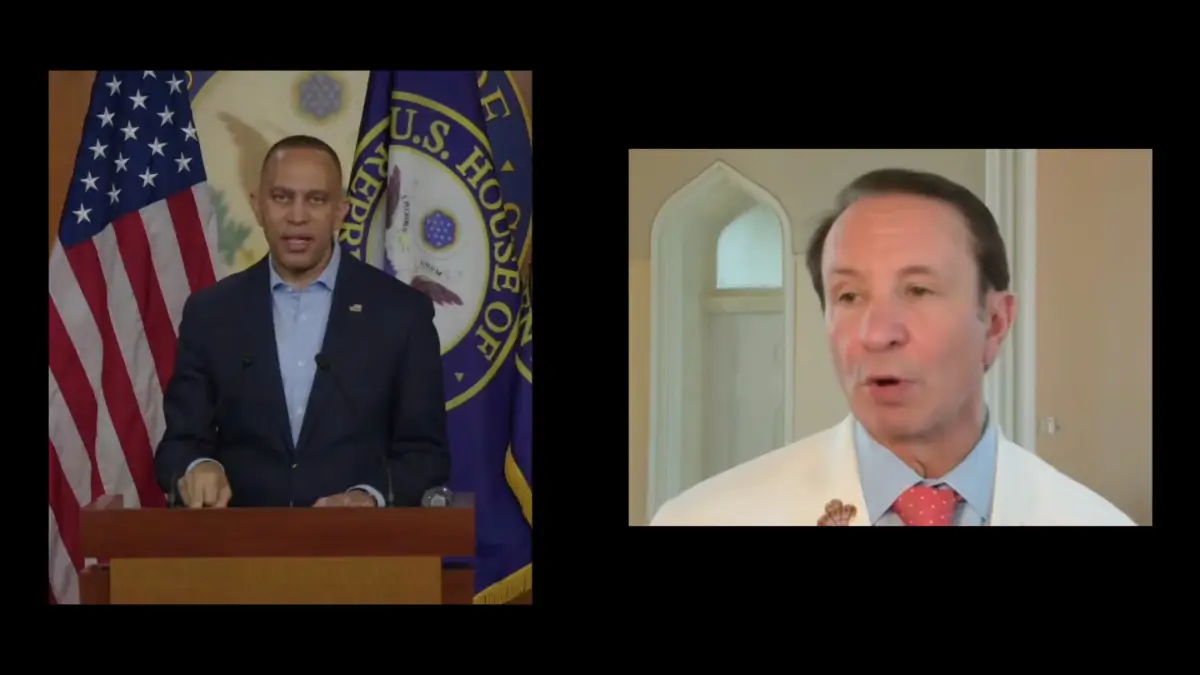
Gov. Jeff Landry and Attorney General Liz Murrill, both Republicans, said in a joint statement that the Supreme Court ruling, which threw out Louisiana’s congressional map for relying too heavily on race to sort voters, prohibits the state from carrying out the primaries under the current districts.
“We are working together with the Legislature and the Secretary of State’s office to develop a path forward,” they said in a statement posted on social media.
Landry is expected to allow lawmakers to pass a new congressional map before the November elections, according to two officials with knowledge of the decision, USA Today reported.
Louisiana is currently represented in the U.S. House by four Republicans and two Democrats. A revised map could give Republicans a chance to pick up at least one more seat in the November midterm elections.
Florida lawmakers already passed a new gerrymandered map just hours after the Callais decision was issued. The weakening of the VRA means the GOP has fewer legal challenges to their new map to contend with and gives Republicans an edge in four seats now held by Democrats, Democracy Docket reported.
Republican leaders in Georgia started calling for the GOP-controlled Legislature to redraw the state’s political maps hours after the high court ruling, noted The Georgia Recorder. All legislative and congressional seats in Georgia are on the ballot this year, along with statewide races for the U.S. Senate seat held by Democratic U.S. Sen. Jon Ossoff and an open seat for governor.
Georgia lawmakers were ordered by a federal judge to redraw the state’s voting maps during a special session in 2023 after the court ruled that the state’s congressional and legislative voting districts diluted the voting strength of Black Georgians.
“The Supreme Court made the right decision today,” Lt. Gov. Burt Jones, a top Republican candidate for governor, said in a statement. “I support Georgia moving forward with fair congressional maps that do not take race into account when redrawing our districts.”
Gov. Brian Kemp’s press secretary, Carter Chapman, said the office is “actively analyzing this ruling and its potential impacts.” Kemp said Friday that the May 19 Primary Election will go on as planned, but new maps will be adopted in 2028.
The pro-voting rights groups Fair Fight Action and Black Voters Matter released an analysis in October that found if Section 2 of the VRA was dismantled, Republicans could redraw maps to secure up to 27 additional safe seats in Congress and nearly 200 seats in state legislatures across the South.
To counter the GOP’s expected gerrymanders, House Minority Leader Hakeem Jeffries said Democrats are considering mobilizing at least four states for potential new congressional maps ahead of the 2028 elections, Politico reported.
“All options are on the table as we get through the 2026 election and look to the future,” Jeffries said on Thursday. “As many governors have already indicated, we will be prepared to respond in states like New York, Illinois and Maryland, as well as in Colorado, in advance of the 2028 election.”
Some Democrats in the immediate aftermath of the Callais ruling raised the possibility of diluting majority-minority districts to help spread Democratic-leaning voters around additional districts, Politico noted.
“Republicans have concluded that they need to cheat to win, and the Supreme Court conservatives have decided to aid and abet their scheme. Democrats are going to fight back with every tool available,” Jeffries said.
Other prominent Democrats and civil rights leaders are urging Americans to use their voting power to combat the Supreme Court decision and to express their political will.
“This ruling is a major setback for our nation and threatens to erode the hard-won victories we’ve fought, bled, and died for,” NAACP President Derrick Johnson said in a statement. “But the people still can fight back. Our best defense and offense is the ballot box, and we’re going to turn out voters in the midterm elections to make sure we can elect representatives who look out for us.”
Former President Barack Obama called the Supreme Court’s ruling “just one more example of how a majority of the current Court seems intent on abandoning its vital role in ensuring equal participation in our democracy and protecting the rights of minority groups against majority overreach.”
“The good news is that such setbacks can be overcome,” he said. “But that will only happen if citizens across the country who cherish our democratic ideals continue to mobilize and vote in record numbers – not just in the upcoming midterms or in high-profile races, but in every election and every level.”


