President Donald Trump’s health and fitness for office are front and center once again after a second interview with another high-profile publication in less than a month, meant to dispel growing concerns and instead fueling even more speculation about his mental well-being.
The 79-year-old Trump sat for an interview in the Oval Office with New York Magazine in an article that was published Monday, Jan. 26, and follows an explosive story by The Wall Street Journal on Trump’s health, which was published in early January.
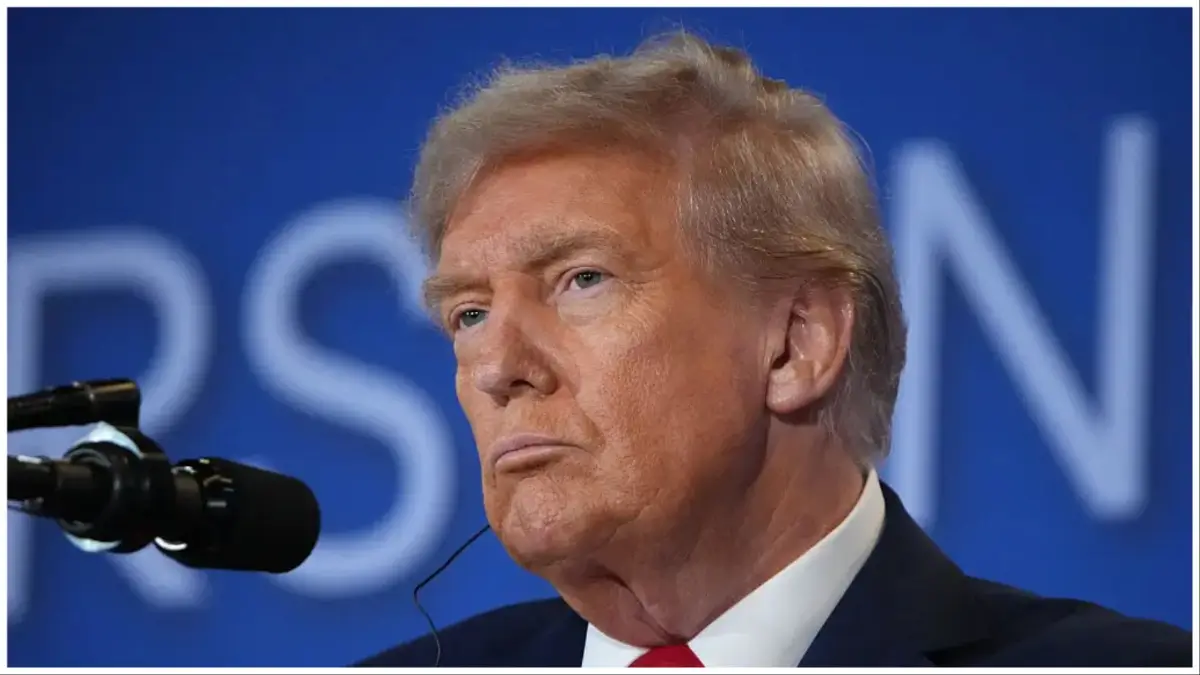
In this latest interview, the president insisted he’s in great shape, but then something happened that turned the tables so abruptly that even White House Press Secretary Karoline Leavitt had to scramble to get the interview back on track.
Trump, the oldest U.S. president to ever assume office at 78 last January, and who turned 79 in June, was bragging that his father, Fred Trump, was in great health in his later years, and so by association, he’s in great shape, but then Trump surprisingly admitted his father did indeed have a major health issue.
“He had one problem. At a certain age, about 86, 87, he started getting — what do they call it?” an ironically forgetful Trump mused as he looked hopefully over at Leavitt for help, according to the Daily Beast.
Ironic, given the disease Trump’s father had in his later years.
“Alzheimer’s,” Leavitt quickly jumped in.
“Like an Alzheimer’s thing,” Trump quickly stated before quickly declaring, “I don’t have it.”
Journalist Ben Terris, the New Yorker’s Washington columnist, then asked Trump whether he ever thought about Alzheimer’s, Raw Story reported.
“No, I don’t think about it at all. You know why?” Trump asked. “Because whatever it is, my attitude is whatever.”
OK, whatever that means, because in the WSJ article, also on his health, the president insisted he feels energetic and that he takes after his parents.
“Genetics are very important,” Trump proclaimed, before adding, “And I have very good genetics.”
If that’s the case, critics have pointed out that Trump could very well have something to worry about after all.
Readers did not hold back comments about Trump’s latest explanations about his health.
“STROKE. That’s why he takes 325 (mg) aspirin, which is recommended after a person has a STROKE! And yes, he has dementia too,” Happy Canadian Retiree stated
“At this point, it is a continuous gaffe,” another reader chimed in. “Trump is always awkward,” another writer said.
And this humorous comment, “White House: we are not hiding President Trump’s mental and physical decline – we put it on public display daily.”
The Mayo Clinic says Alzheimer’s disease is the most common form of dementia. It affects almost seven million Americans 65 and older, and of the 55 million people with dementia worldwide, 60 to 70 percent have Alzheimer’s.
Those with early symptoms of the disease might forget recent events or conversations, and over time, the illness leads to major memory loss and the inability to perform everyday, ordinary tasks.
There is no cure for Alzheimer’s yet, and complications from the illness can eventually lead to death.
Trump’s health conditions, or at least what the press has learned about them, have been well documented. He’s admitted to swollen ankles from a condition known as chronic venous insufficiency.
He’s constantly dozing off in public at White House events and meetings, especially over the past three months, and he’s delivered plenty of long-winded, meandering speeches where he’s slurred his words and lost his train of thought.
On Tuesday, Jan. 27, on a trip to Iowa for a rally, the president showed up wearing one stark, black glove over his right hand, to hide big purple bruising, which he normally covers with makeup.
In a speech before world leaders at the World Economic Forum in Davos, Switzerland, a few weeks ago, he rambled nonsensically and lost his train of thought more than once.
He’s fallen publicly fallen asleep at White House events and meetings on more occasions than anyone can count.
And he was noticeably dragging his right leg when entering his New Year’s Eve Party at Mar-a-Lago, his Florida estate.
The White House has tried to explain away Trump’s persistent health issues by repeatedly downplaying obvious problems and claiming the president doesn’t sleep much and that he works very hard.


