A video recorded at a Perkins restaurant in Somerville, South Carolina, appears to show a Black adult confronting a young boy with a disability about using the N-word.
But the boy in question is actually a 22-year-old man, William Sharpe, the son of retired WCSC-TV News Anchor Bill Sharpe.
William has Costello Syndrome, a rare genetic disorder that can hinder growth, and his daily struggles and adventures have been well chronicled by his famous father, who has posted dozens of feel-good videos of his son on social media.
This video, however, was a shocking departure. After amassing millions of views, the Black customer who filmed the incident reportedly shut down his account, but the video continues to circulate online, sparking debate.
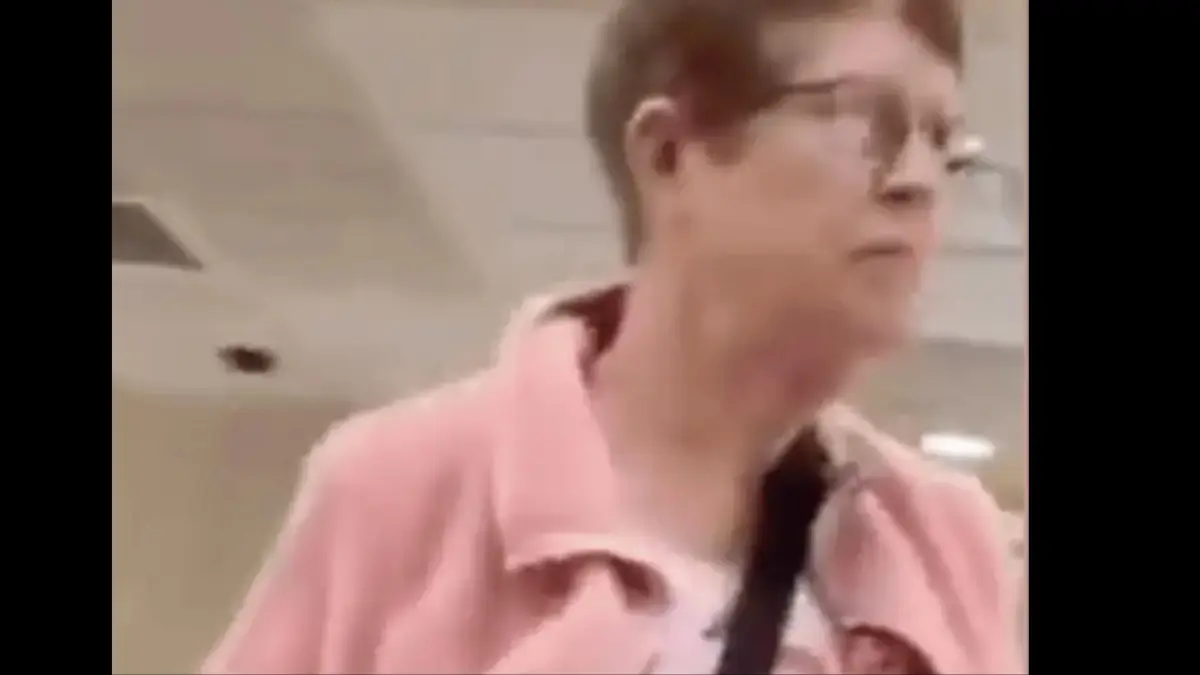
The outraged Black man, whose identity has not been confirmed, can be heard challenging a female caretaker after William hurled the N-word at him while he was dining out.
The unidentified caretaker was quick to offer excuses when confronted about the slur and, according to the video, did not immediately apologize. Strangely enough, she also did not correct the man’s assumption that William was a young boy.
“Make sure you tell your son to watch his mouth; he’s using derogatory terms,” the man told her as she held William’s hand, guiding him through the restaurant.
“He’s not my son,” she responded. “He’s special needs. We cannot make him stop saying it.”
After the man continued to press the issue, the woman explained that he learned the word at school — “his family doesn’t talk like that” — and that he “has a genetic disorder… his brain is not right.”
But the man filming didn’t buy her reasoning, pointing out that he knew enough to direct the slur at a Black man. “So why is he using it against other people?” he asked. “He’s smart enough to know where to use the word AT.”
Opinions online are divided on what William said next. Some believe he said, “N-word mouse,” while others contend he said, “Mickey Mouse.” The Black man’s sharp response was, “I see a midget,” which also stirred up controversy.
Many viewers have expressed support for the man filming, saying that, regardless of disability or age, anyone should know better than to insult a stranger. As one Instagram user put it: “Would you teach or keep trying to teach a special needs child not to play in traffic? Or not to touch a hot stove? Or not to eat poison? Ok then…”
Another chimed in, “Special needs does not mean you don’t know right from wrong…” while others took the woman to task for not handling the situation better: “The fact that she didn’t apologize on his behalf tells you everything you need to know.”
But many who are familiar with William through his father’s posts are rallying around him, and flooding Bill Sharpe’s Facebook account with comments that it was all a joke. “This cracks me upppp,” said one, followed by, “Aye, William, funny af!! He said Mickey Mouse.”


