By Ashonti Ford
As the White House renews its push for criminal justice reform, two Illinois men are putting a human face on one of the justice system’s most painful failures: wrongful convictions.
Frankie Benitez and Troshawn McCoy were both teenagers when court documents show they were arrested in Chicago and pressured into confessing to crimes they did not commit. Combined, they spent more than 50 years in prison — lost decades in what’s known as the “wrongful conviction capital of the country.”
“I never thought it was going to happen. I still thank God every day that I’m out,” said Benitez, who was exonerated after spending 34 years in prison. He now works security at the Field Museum in Chicago, slowly adjusting to life in a world he no longer recognizes since he was released. “My car’s smart. My phone’s smart. When I went in, we barely had Nintendo. There was no internet.”
The “Marquette Park Four” were four teenagers (Charles Johnson, Larod Styles, Troshawn McCoy, and LaShawn Ezell) who were wrongfully convicted in 1995 for a double murder and robbery at a Chicago car dealership.
They were coerced into confessing by detectives, including James Cassidy, who had a history of questionable confessions from children. No evidence tied them to the crime, and after years of legal battles, they were exonerated and received certificates of innocence.
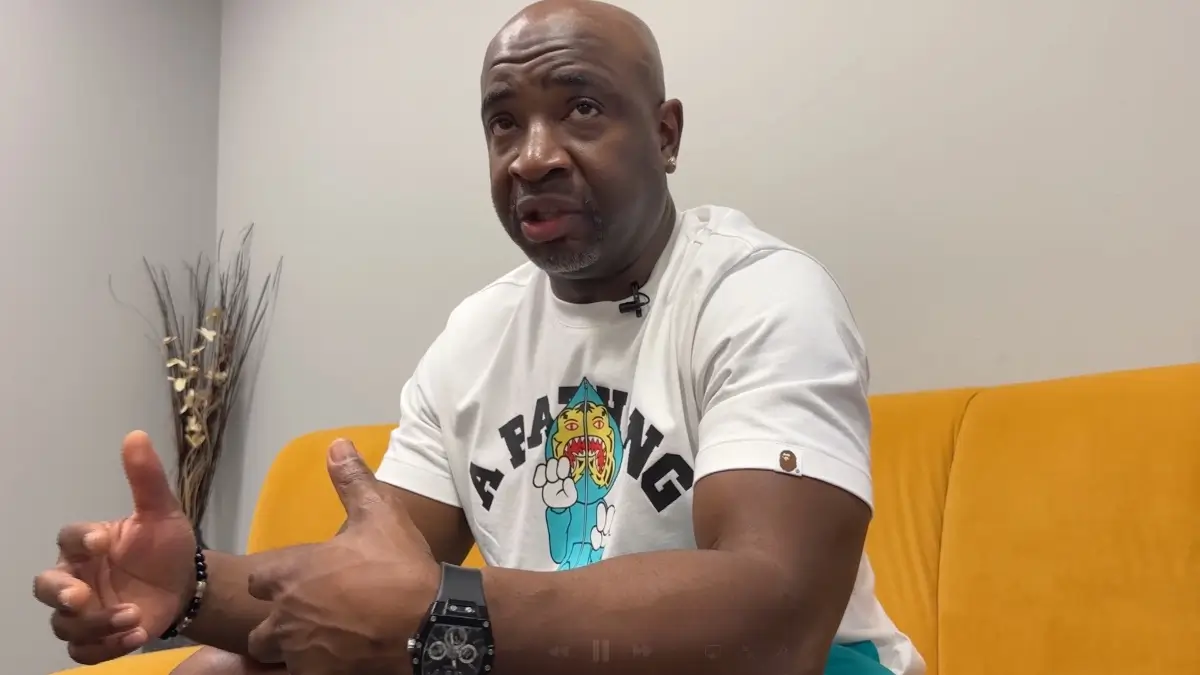
Troshawn McCoy was just 17 when police pulled him out of class and interrogated him for hours without an attorney or his parents present.
“They promised me I could go home if I signed the confession,” McCoy recalled. “But as soon as I did, they walked me straight into a jail cell.”
He spent 22 years in prison before Northwestern University’s Center on Wrongful Convictions helped uncover new fingerprint evidence that did not match him or his co-defendants. McCoy now owns multiple businesses in Chicago, including two restaurants and a transportation service. He also co-founded a nonprofit to help formerly incarcerated people reenter society.
“It’s like being institutionalized for so long, then dropped into chaos,” McCoy said. “People out here don’t realize how different life is in there. You don’t just snap back.”
A National Problem, A Local Legacy
According to the National Registry of Exonerations, Cook County has exonerated more people than any other county in the United States. Many of those cases involve patterns of misconduct — particularly during the 1980s and 1990s — including coerced confessions, fabricated evidence, and corrupt detectives. In 2019, Cook County State’s Attorney Kim Foxx said wrongful convictions were “the civil rights issue of our time.”
Across the country, lawmakers are stepping up efforts to address the systemic failures that lead to wrongful convictions. In Massachusetts, legislators have introduced a bill to ban deceptive police interrogation tactics and mandate the recording of all custodial interviews — critical safeguards to prevent coerced confessions.
In New Jersey, a proposed Innocence Study and Review Commission would examine how wrongful convictions happen and push for policy reforms. Meanwhile, Pennsylvania and Kentucky lawmakers are fighting for fair compensation for exonerees, ensuring those who lose years of their lives behind bars receive meaningful financial support and access to vital services. These bipartisan efforts reflect a growing acknowledgment that wrongful convictions are not isolated mistakes, but symptoms of deeper flaws in the justice system that demand urgent reform.
CPD Under Scrutiny
The Chicago Police Department (CPD) remains under a federal consent decree, imposed in 2019 after a Department of Justice investigation found widespread constitutional violations. In a recent statement, CPD called itself “a department in transformation,” adding that it continues to invest in reforms and accountability.
This reporter reached out to CPD for comment on the cases of Benitez and McCoy, as well as the department’s current practices. As of publication, the department has not responded.
The City of Chicago settled a lawsuit with McCoy and his three co-defendants for a combined $50 million.
For Benitez and McCoy, the scars of the system are still fresh — from discrimination in housing to struggles with technology to lost time with loved ones.
“I tried to book an Airbnb,” Benitez said. “They denied me, said I had a record for double murder — even though I was exonerated. I sent them paperwork. They still shut down my account.”
Despite it all, both men are pushing forward — turning their pain into purpose and advocating for others still behind bars.
“There are more like us,” McCoy said. “A lot more. We were just lucky to get out in time.”
If you or someone you know has been wrongfully convicted, resources are available through The Exoneration Project and local legal aid organizations.


