Two Black men who were falsely accused in the notorious 1989 killing of a pregnant white woman in Boston were awarded $150,000 in a settlement with the city this week.
The financial restitution comes nearly two years after Mayor Michelle Wu issued a formal apology on behalf of the city, calling the police investigation into the murder “unjust, racist, and wrong,” and the apology “long overdue.”
On October 23, 1989, Charles Stuart, who was white, called police from his car in Boston’s then-diverse, working-class Mission Hill neighborhood, saying that his pregnant wife had been shot in the head during a carjacking after leaving a birthing class at a nearby hospital. When police arrived, he told them the man who had also shot him in the chest was a Black man wearing a tracksuit.
Carol Stuart died the next day, and their child, delivered by Cesarean section, died a few weeks later. Charles Stuart survived the incident.
In the following weeks and months, Boston Police cracked down on Black men in the city, frequently stopping them in the street and spreading fear through the city’s Black community, reported MassLive.
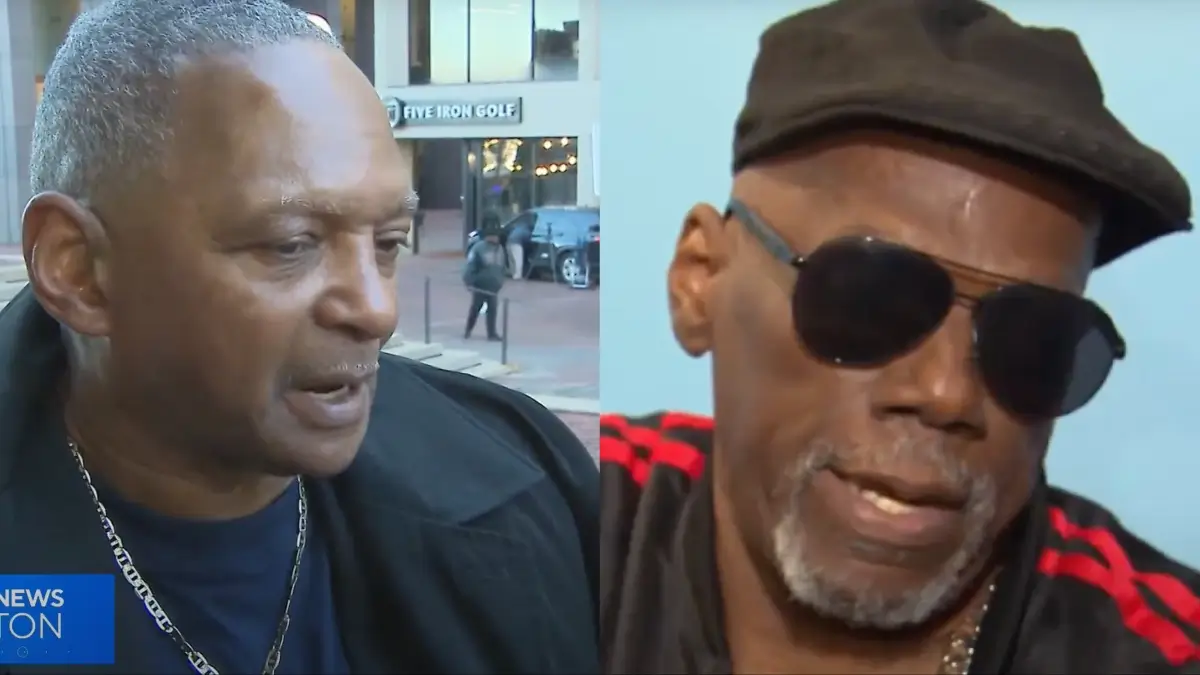
Alan Swanson was arrested five days after the shooting and jailed for three weeks, until police ruled him out, reported CBS Boston. Then police zeroed in on Willie Bennett, who had a criminal record, after Stuart picked him out in a police lineup as the shooter.
But around the time of the lineup, police learned that Stuart himself was tied to the murder and had lied about the alleged carjacking, MassLive reported. It was later revealed that he had shot himself and killed his wife in pursuit of life insurance money, and had confessed the scheme to his brother, who helped him to cover it up.
As his story was unraveling, Stuart died by suicide on Jan. 4, 1990 — 73 days after his wife’s murder— by jumping off the Tobin Bridge over Boston’s Mystic River.
Swanson told CBS Boston that the false accusation had ruined his name and that he remained destitute in 2023. “That case is never gonna go away,” he said.
An HBO documentary series and podcast, Murder In Boston, released in 2024, explores the deep roots of racism in the city and how clashes between police and Black and white residents, and intense pressure from politicians to quickly solve the murder, contributed to the simmering tensions, racial profiling, and false arrests.
When Wu apologized to Swanson and the family of Bennett (who didn’t attend the event) at Boston City Hall in December 2023 on behalf of the mayor’s office and the police department, she recalled that during the period of the manhunt for the phantom killer, “If you knew or loved a Black man in Boston, you feared for his life. There was no evidence that a Black man had committed this crime, but that didn’t matter because the story was one that confirmed and exposed the beliefs that so many shared, from residents and reporters to officers and officials at every level.”
“I am sorry not only for the abuse our city enacted, but for the beliefs and bias that brought them to bear,” she said.
Wu acknowledged that city officials and police “took actions that directly harmed these families and continue to impact the larger community, reopening a wound that has gone untended for decades.” She said the apology was “just a first stop in a long road of accountability for the city.”
Joey Bennett, the nephew of Willie Bennett, said at the city hall event, “It takes great humility and courage to acknowledge someone else’s wrongdoing and to try and make amends. Your apology is accepted.” He added that the family had been determined to “change the narrative on this Bennett hoax. We did that.”
Bennett’s mother had years earlier sued the city and received a $12,500 settlement, which the family and civil rights advocates had deemed poor recompense for the trauma Bennett and his family had suffered.
Per the settlement announced by city officials this week, the city will pay Bennett $100,000 and Swanson $50,000, MassLive reported.
Reverend Kevin Peterson, organizer of the Boston People’s Reparation Committee, called the $150,000 settlement a “pittance” that reflects decades of disrespect to the Black community as it relates to the case, the Boston Herald reported.
Peterson said that while no dollar amount would have made up for the past harm caused by the city’s actions, “a settlement that reaches into the millions” would have been “appropriate.”
“The city’s offer is just another expression of injustice to these two gentlemen who were innocent of the allegations made against them,” Peterson told the Herald. “It symbolizes the continuing insult upon the Black community related to the Charles Stuart case.”


