For longtime fans of the Kardashian family, it’s no secret that Khloé Kardashian is one sibling whose appearance changed drastically over the years. But apparently the outcome hasn’t been completely rewarding.
On her podcast “Khloé Wonder Land,” Khloe chatted with fitness influencer Whitney Simmons about her weight loss journey which had adverse effects on her confidence. She shifted into the fitness lifestyle and lost 40 pounds after finalizing her 2016 divorce from her ex-husband Lamar Odom.
While many people get a boost of confidence from slimming down, Khloe revealed in the June 19 episode that that wasn’t necessarily the case for her.
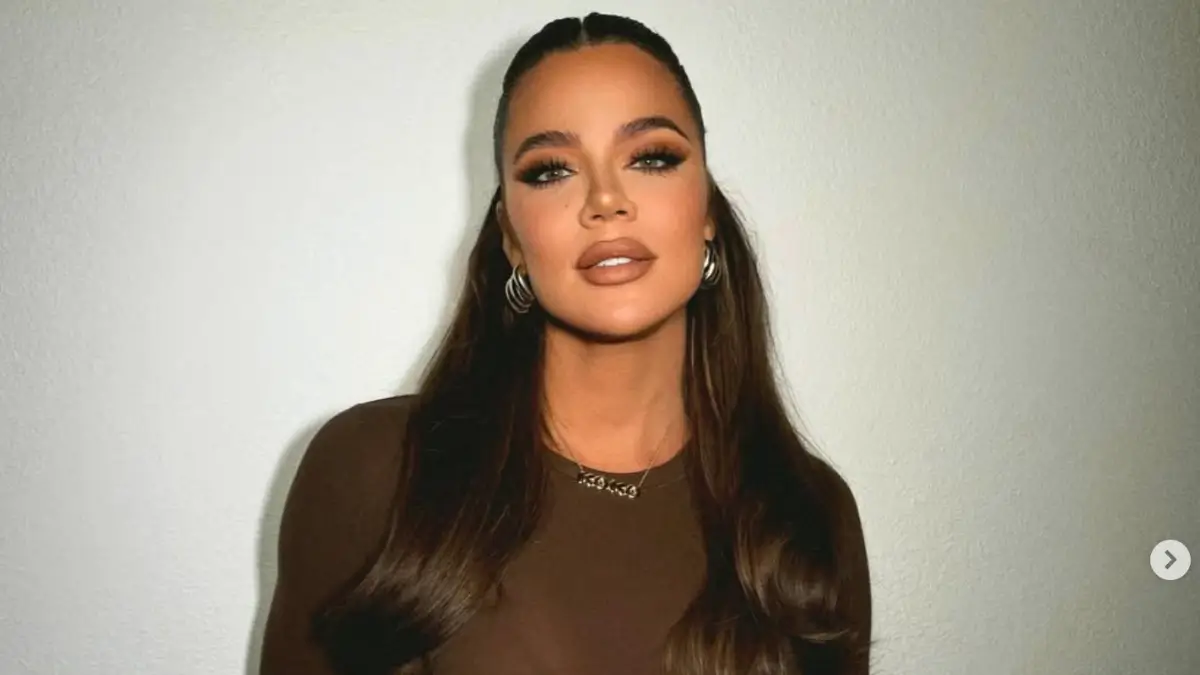
“The bigger I was, I was way more confident,” she explained. “I think because, like, what are you going to say about me? I know all the things you’re going to say. I would have my days that I would feel low and all of that. And then, I will say, when I started my fitness journey and, becoming in shape, I felt such a need that I had to keep this up, like even if it wasn’t for me. I felt like, ‘Well, I can’t get fat again, because everyone is expecting that to happen.’”
The 40-year-old said she then realized that, in terms of how the public made her feel, losing weight wasn’t all that it was cracked up to be.
“It was also a different type of attention I was now receiving,” Khloe shared. “And then once I got a little older, I was like, ‘Wait, this is gross.’ I hated that that’s why I was getting more attention because I looked a certain way. Because it’s exciting and it’s all this newness so you’re in it and you’re like loving it and then after a minute you sort of remove yourself and you’re like ‘This is all so fake.’”
Now the mom of two has a lot of check-ins with herself to make sure that whatever journey she is on, she is doing it for herself and not to impress other people.
The Kardashian family has been in the pop culture spotlight since their family reality show premiered on E! in 2007. But being on television made Khloe more of a target for constant criticism about her size compared to her petite sisters. During their run of “Keeping Up with the Kardashians,” the media began to paint Khloe out to be “the fat sister.”
“I never thought that I was fat until I got on TV and everyone told me how fat I was,” she told Simmons. “And what’s interesting is, looking back, I’m like ‘Wait, I actually wasn’t as fat as even I convinced myself that I was but it was a different time too. People were so thin during that time.
While she did get some support from her podcast viewers for her openness, others called BS. Those critics ignored her moment of vulnerability to further accuse her of not completely being her natural self on social media.
One person on Daily Mail said, “She is always heavily filtered in images she posts- nothing real at all there. I never believe a word they say.”
Another wrote, “Never see without a filter. Even during the podcast or any tv interviews she makes them put a filter on.”
A third said, “So I look a little different…. Um she has a completely different face. So there’s that. It’s not about weight loss, it’s all the surgery they pretend not to have.”
According to multiple outlets, Kardashian admitted to using editing apps to tweak her photos before posting. She told People in 2016, “Of course I believe in airbrushing apps, I just think airbrushing apps, like who doesn’t want to airbrush a thing here or there. I love FaceTune, that one’s great. I don’t really know of many more, but a filter, that’s like airbrushing. Who doesn’t love a good filter? Sometimes you’re having a bad day.”


