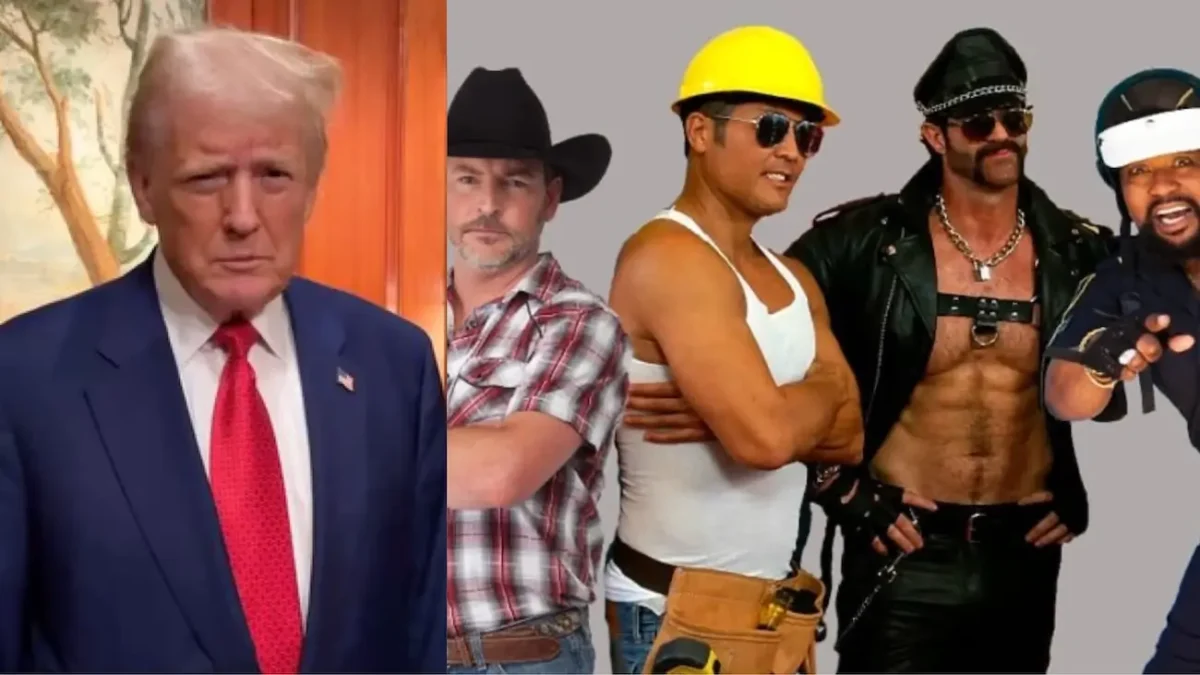
The Village People performed their iconic hit “Y.M.C.A.” at Donald Trump’s 2025 inauguration, but fans were disappointed when all six of the original members were not onstage.
The O.G. members have spent decades feuding amongst themselves after Victor Willis, the original cop and lead singer, assumed control of the name and assets of the group— leaving other members on the outs and not supporting Trump’s event.
Felipe Rose, the “Native American” character in the group, didn’t hold back when asked about participating in the event.
When interviewed by the Daily Mail on Jan. 17, he said, “What makes you think I’m going to be f—ing there? I have nothing to do with the group.”
His bitterness stems from legal disputes that have shaped the band’s trajectory over the past decade.
“I was in the group for 38 years, and then Victor Willis came roaring back with his wife and sued the s—t out of everyone,” he explained.
Willis regained control of the group’s name and royalties after a highly publicized lawsuit in 2017, a move that alienated his former bandmates. Rose, who left the group during the fallout, said he had tried to warn others that their lack of ownership would be their downfall.
“You don’t own it,” he recalled telling them, acknowledging that the legal wrangling left him sidelined.
According to Consequence, The Village People, formed in 1977, became cultural icons for their flamboyant costumes and infectious disco hits. But the camaraderie that propelled their success didn’t last.
Over the years, disputes about the group’s direction and its association with LGBTQ+ culture have further strained relationships.
In late 2024, Willis reignited tensions by claiming “Y.M.C.A.” was never intended to be a gay anthem, even threatening legal action against those framing it as such. This bold assertion clashed with former members like David Hodo, who embraced the song’s enduring significance within LGBTQ+ communities.
Despite these fractures, Willis, now 73, remains the sole original member actively performing under the Village People banner.
The current lineup, a collection of new faces, includes Nicholas Manelic as the cowboy, James Kwong as the construction worker, and others filling roles once immortalized by Rose, Randy Jones, and Glenn Hughes.
For diehard fans, the contrast between the current iteration and the beloved original lineup is troubling. But for many, who just loved the commercial success of the songs, they don’t care.
The group’s announcement on Facebook acknowledged this tension, saying, “We know this won’t make some of you happy to hear; however, we believe that music is to be performed without regard to politics.”
They expressed hope that “Y.M.C.A.” could act as “a global anthem that helps bring the country together.”
Some view the decision to perform at Trump’s inauguration as a betrayal of the group’s roots, particularly given their history of LGBTQ+ advocacy.
The same backlash looms over rappers like Snoop Dogg and Nelly, who also agreed to participate in the inaugural activities.
This discourse plagued singer Chrisette Michele, who sang at Trump’s 2017 inauguration and was bashed by colleagues and fans. She now says she wish she had not performed at the concert.
Others see it as a practical move by Willis to keep the group relevant, albeit with a markedly different political stance than before.
In 2023, Willis issued a cease-and-desist order to Trump’s campaign, forbidding the use of Village People songs at rallies. He hopes, with the reversal of his decision, that the performance will unify, not divide the country, emphasizing that the performance is about bridging divides after a contentious election cycle.
According to NPR, Willis issued a statement sharing the reason for his decision to perform the inauguration. “”We’re trying to make people come together and unite the country, and regardless if you didn’t vote for him – Basically, I’m a Democrat. We lost, so… we have to put that aside and it was time for everybody to get behind the President-Elect,” he said.
But for Rose and other former members, the inaugural performance was yet another chapter in a long history of hurt and betrayal. The original Village People were more than just a band— they were a symbol of unity and freedom during the disco era. Now, the cracks in their foundation are as much a part of their legacy as their enduring hits.
Despite the backlash from the original members, Willis and his stand-ins performed at Donald Trump’s pre-inauguration day rally on Jan. 19 as the president joined them on stage.
Fans expressed their disappointment following the Village People inauguration appearance featuring the addition of new members.
“A cheap imitation of the real VP,” one person commented on Instagram.
Anther person commented, “Village People from TEMU,” followed by numerous vomiting emojis.
“Your choice is unconscionable. Shame on you. Every one of you,” commented another angry fan.
Their performance no doubt evoked memories of dancefloors past, but it also underscored the cost of fame, control, and the enduring complexity of their relationships. Whether their music can truly unify remains to be seen, but the bad blood among the original members ensures that, for some, the spotlight will be bittersweet.


