Pastor Keion Henderson does not have to fill a father-figure void in the lives of his bonus children, but that does not make his role as a stepfather any less influential.
The former collegiate basketball player is married to Shaunie Henderson, ex-wife of NBA great Shaquille O’Neal. The “Basketball Wives” co-creator and O’Neal are parents to four biological children — sons Shareef and Shaqir and daughters Amirah and Me’Arah.
Shaunie is also the mother to son Myles from a previous relationship, and Shaq is the father of a daughter named Taahirah, whom he shares with an ex-girlfriend he dated years prior to marrying Shaunie. Keion and his ex-wife, Felecia Henderson, are parents to a daughter named Katelyn.
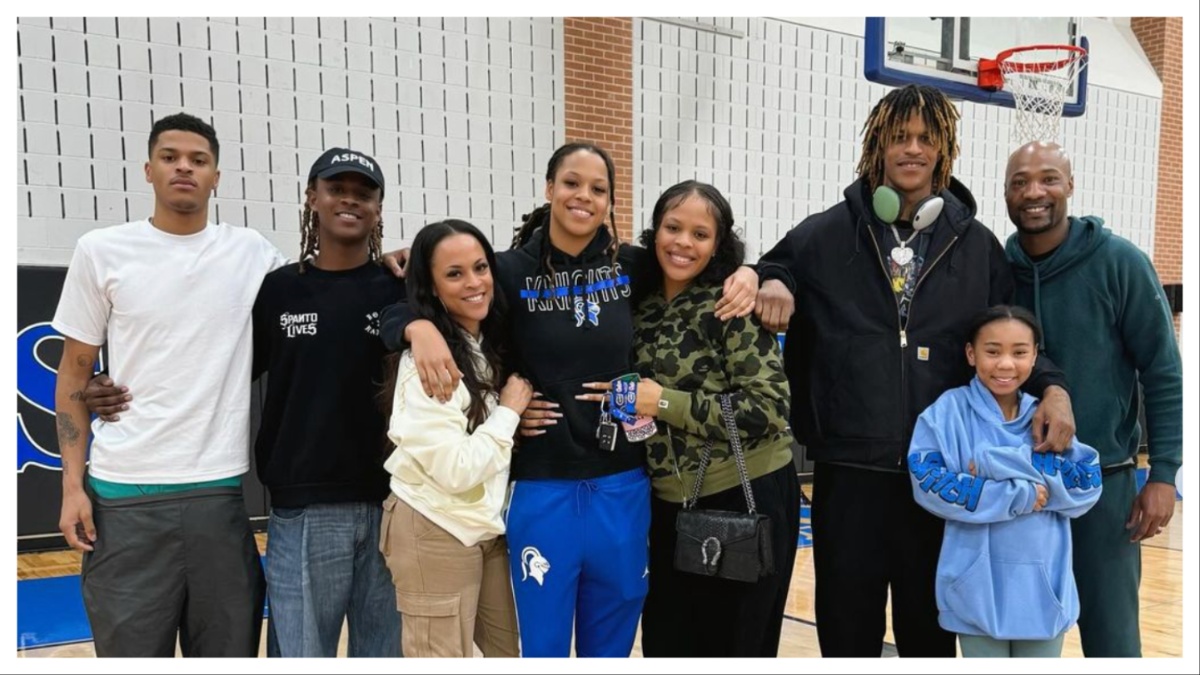
Speaking of their blended family, The Lighthouse Church leader has said that he and the Los Angeles Lakers champion not only share good rapport, but that there has never been an issue regarding his involvement in the retired athlete’s children’s lives.
“He a full grown man, I’m a full grown man. He’s always respected me. I’ve always respected him,” said Keion in a past episode of his and Shaunie’s “The Groow Zone” podcast. “I think he would say the same. Ain’t nothing but love. No issues. Grown people don’t do that,” he added.
In an Oct. 10 episode, the faith leader revealed how he has managed to impart wisdom, in particular, to young men about how the world perceives Black people.
“I want to raise the perception that people have of us and not to log us into the monolithic perspective. This is my contribution to the extended Black family, if you will, to all of my brothers and sisters all over the world. Me, as an individual, I want to contribute to the dismantling of the negative perception that’s been there for many years,” Keion disclosed.
He then detailed how his concerns about interacting with racist police spurred a real-time life lesson.
“I was so afraid one day driving, uh, I was driving your car—when you had the blue truck—I had Shareef, Shaqir, and Greg [a friend] in the car with me. … We were leaving basketball practice, and you know Shareef, he has 10 percent skin and 90 percent tattoos. This man’s entire body is covered in tattoos. … Shaqir, a tattoo here and there. It’s sprinkled,” Keion first explained.
As his story continued, his concerns about their safety became apparent. “They got the windows down, they don’t have any shirts on, and I’m driving in Texas. And I’m scared to death because I know that when people see Black men with tattoos, they see thugs. When they see other people with tattoos, they see art,” he said.
Congratulations are in order for Shaunie O’Neal and Pastor Keion Henderson who tied the knot on Saturday in a ceremony and reception held in Anguilla! 💍❤️ pic.twitter.com/0GXXt4E4XY
— TheShadeRoom (@TheShadeRoom) May 29, 2022
“I thought oh my God a police officer’s gonna pull us over and assume that they’re four drug dealers in this expensive car and we’re gonna be another statistic,” he admitted. “And it may not have been true, but here I am telling the boys, ‘Put yo arm in that window. Roll that window up. Sit that seat up straight. Put a T-shirt on so we can get home.’ That’s how we have to live.”
Shaunie acknowledged that her children were not raised with fear of police brutality and racism looming as a real reality. “These are California kids, so driving around like that in LA is normal to them,” she said while agreeing with her husband that perception influences how Black people are policed and navigate in society.
In the YouTube comments, one person wrote, “That’s a convo I had with my boys when they were teenagers.” While a second viewer commented, “I think it’s that way because it’s a thin line between Caucasian and racism.”


