A Black woman recorded the moments she made a department store employee pick up after her after noticing the worker stalking her through the store.
After a shopper claimed in a viral video that she went through a racial profiling ordeal at a TJ Maxx store in Wisconsin last week, yet another shopper posted a video on TikTok of a similar shopping experience, this time at a Kohl’s store.
TikTok user @lenaonnat posted the video titled, “Worker kept following me so I gave her work to do,” with the caption, “#profiling.”
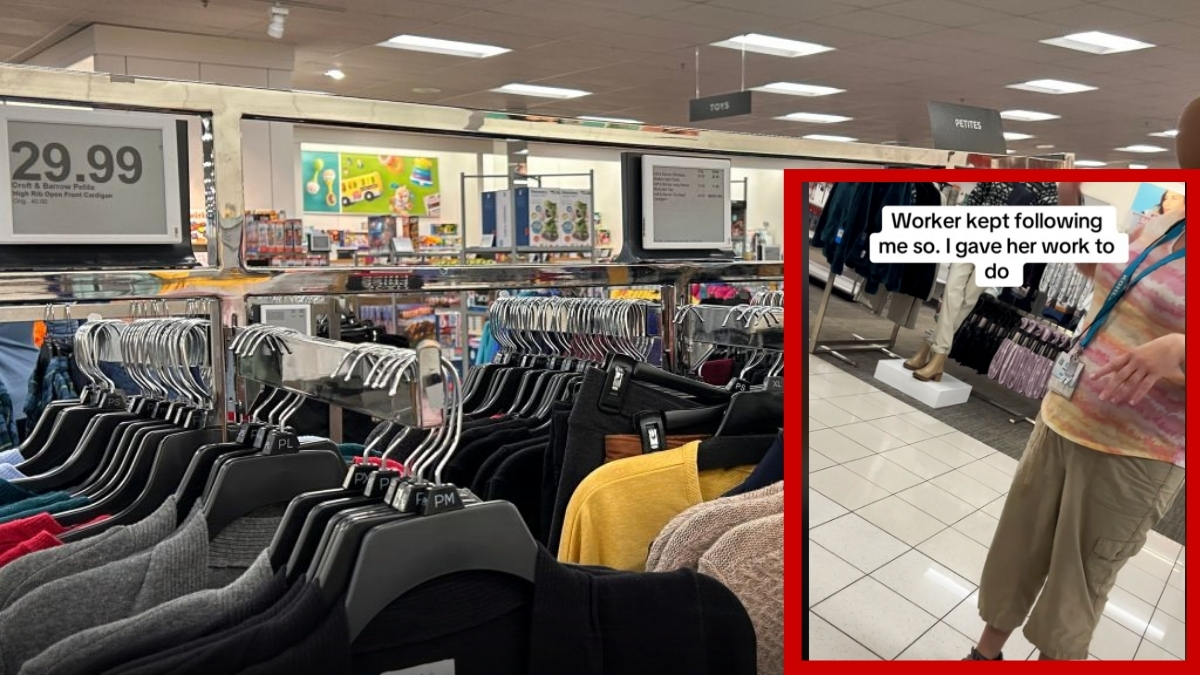
“I’m about to leave some sh-t or her to pick [up],” she says to the camera before addressing the worker directly.
“Hey you!” the shopper calls to the employee. “You can come pick all that up if you want to sit here and keep on following me,” the shopper tells the employee. “There’s some work right here.”
The employee starts stuttering in response before telling the shopper, “I had no idea what you were doing,” and claiming that she was conducting work in a different department nearby.
The shopper tells her that she saw her and another worker follow her through the store, so she left some clothing items that she considered purchasing scattered on the floor for the employee to pick up and organize.
“If you need some work, there’s some right there,” the shopper tells the employee while pointing to the clothes she left behind. “I don’t even want the sh-t that I’m buying. So weird,” she says while walking away.
Commenters praised the shopper’s response in an uncomfortable situation.
“Good for you for speaking up,” one person wrote.
“Love your approach to give them work. But on a real note I’m so sorry they did that to you,” another person stated.
“It makes me so angry especially when I’m about to spend big,” another commenter wrote. “The audacity.”
The shopping experience @lenaonnat underwent mirrors the experience that a Black T.J. Maxx shopper shared on social media last week.
Sophia Madrid claimed that she and her boyfriend visited the store in Racine, Wisconsin, to shop for purses only to notice multiple employees eyeing their movements, following them, and radioing each other about the couple as they browsed.
According to the Alberta Civil Liberties Research Centre, consumer racial profiling is the practice of targeting a consumer for discriminatory treatment based on the consumer’s race, ethnicity, or both. Many companies employ shoplifting profiling tactics, which are legal, for loss prevention purposes. Racial profiling, however, is illegal.
Store employees might profile shoppers by following them as soon as they enter a shop, physically searching shoppers and their belongings, removing shoppers physically from the store without just cause, questioning them about their ability to afford a product or service, or regularly accusing them of theft and detained wrongfully.
A 2021 report published by the State of Racial Profiling in American Retail revealed that more than 90 percent of Black shoppers experience racial profiling while buying or browsing. More than 1,000 Black consumers were surveyed, 52 percent of whom said they would refuse to revisit a shop after being profiled.


