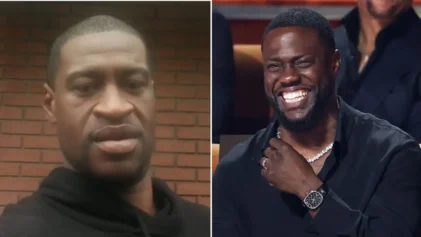
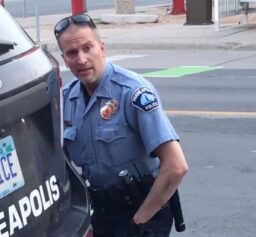
The Supreme Court on Monday declined to hear an appeal from former Minneapolis police officer Derek Chauvin in the latest bid to overturn his murder conviction for the fatal arrest of George Floyd more than three years ago.
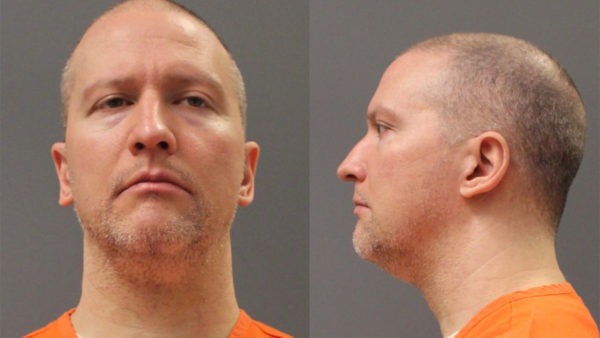
The latest legal setback for Chauvin adds to a series of unfruitful appeals, including one that was turned down by Minnesota’s high court in July, while marking another failed bid by the 47-year-old ex-cop to challenge his April 2021 conviction for killing Floyd.
In his filing to the high court, Chauvin requested a judicial review citing concerns over pervasive media coverage leading up to his trial in Minneapolis, arguing that prejudice among the jury warranted a change of venue in the case that he never got.
Additionally, Chauvin urged the justices to assess his conviction, questioning whether the trial judge was obligated to conduct a hearing to address jury misconduct allegations following the trial.
The appeal also emphasized concerns about potential riots in the city due to the racial aspects of the trial, suggesting jurors might have been swayed by a personal interest in delivering a guilty verdict to appease the Black community for Floyd’s death.
“Mr. Chauvin’s case shows the profound difficulties trial courts have to ensure a criminal defendant’s right to an impartial jury consistently when extreme cases arise,” his attorney wrote in the filing.
By refusing to take up the case, the nine justices on the high court affirmed Chauvin’s 2021 state conviction, allowing the verdict to stand without further action, including no statement from the court.
Previously, a federal appeals court twice rejected Chauvin’s request for a new evidentiary hearing on several other legal grounds.
The latest development in Chauvin’s legal saga comes a week after the ex-cop filed a motion in federal court to overturn his conviction based on an unsubstantiated theory on Floyd’s cause of death, which was proposed by a Kansas pathologist who never examined the body.
Officially, the Hennepin County Medical Examiner determined Floyd died as a result of a heart attack that was likely caused by Chauvin’s brutal knee restraint. Doctors hired by the family found Floyd died from asphyxia, while Chauvin’s attorney argued in court that Floyd died from natural causes due to drug abuse.
Chauvin has so far served 16 months of a 21-year federal sentence for violating Floyd’s civil rights during the deadly arrest on Memorial Day 2020.
That’s when the white officer kneeled on Floyd’s neck for more than nine minutes after Floyd was accused of passing a counterfeit $20 bill at a nearby convenience store.
As the life drained from his body, Floyd pleaded with Chauvin to let him up, screaming, “I can’t breathe,” while also calling out to his mother for help.
By the time paramedics arrived, it was too late.
The excruciating episode was filmed by several bystanders who then shared the videos to social media, triggering months of sustained protests around the world while bolstering the Black Lives Matter movement in America.
After his state conviction, Chauvin was sentenced to more than 22 years in prison before he pleaded guilty to federal civil rights charges in December the same year. Chauvin agreed to plead guilty after prosecutors amended the case to include a 2017 incident in which Chauvin used excessive force to restrain a 14-year-old boy.