Jill Scott let her audience members know what ground they truly walk on after singing her own rendition of “The Star-Spangled Banner.”
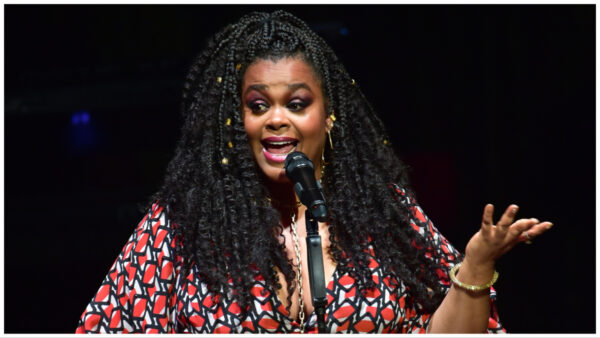
A resurfaced video of the neo-soul singer belting her own lyrics to the national anthem was recently re-posted by commentator Angela Rye on her Instagram page.
As the clip opened up, viewers can hear Scott sing, “Oh say can you see.”
She then changed the rest of the lyrics, and decided to give her crowd a lesson about Black American history, “By the blood in the street, that this place doesn’t smile, on you colored child.”
Cheers begin to ring out from the audience as her backup singers chanted, “Watching men,” after she finished each line.
Once she reached the second part of the song, Scott sang, “Whose blood built this land, with sweat and their hands? But you’ll die in this place, and your memory erased.”
The 51-year-old’s voice heightened as she revealed what land America really is, “Oh say does this truth hold any weight? This is not the land of the free, but the home of the slaves.”
Applause for Scott’s rendition filled the auditorium as the opening to her 2000s hit “Watching Me” can be heard in the scene just before the video cut out.
“There’s a reason I had shirts that said land of the free, home of the slave. #JillyfromPhilly nails it with this one,” Rye captioned the post.
Fans praised Scott’s lyrics in the comment section, and a few even suggested that the “A Long Walk” vocalist’s rendition be the new anthem.
“Made me teary…and we will continue to survive”
“the only national anthem that should be recognized”
“Our good sis, Jill from Philly always gonna represent”
“Truth is real!! Erasing how this country was built, in slavery, by slaves and still they continue to try an erase us from history. Without us, there would be no U.S. We created what we use today.”
The original video was recorded by a TikTok user whose handle is @mynd_over_matter. The user appeared to have attended Scott’s concert in Augusta, Georgia, for her current tour, “This Is Jill Scott.”
This tour is dedicated to her debut album “Who Is Jill Scott?: Words and Sounds Vol. 1,” which turns 23 on July 18.
Although Scott’s rendition is new to fans, according to RNB Soul Music Lovers on Instagram, the Grammy winner wrote the anthem when she was only 19 years old.


