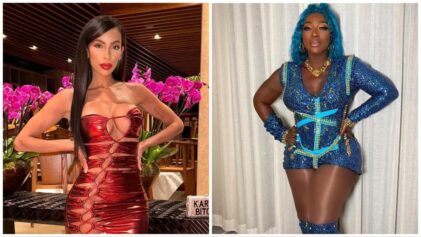
Gone are the days of Erica Mena and Safaree Samuels being in love and doting over their children together.
After less than two years of marriage, the reality TV personalities called it quits and had their divorce finalized in September. Together they share two children, 2-year-old daughter Safire Majesty Samuels, and 1-year-old son Legend Brian Samuels.

“Love & Hip Hop” fans watched the former couple go from being madly in love to despising each other as their tumultuous union played out on television. Now, in the wake of Mena and Samuels airing the aftermath of their split for millions to see, fans are getting even more insight into their journey as co-parents.
In a clip from the reunion special, Mena spoke in detail about the toll her failed relationship and strained interactions with her ex-husband have had on her. In particular, she spoke to the heavy emotions she endured when she learned about Samuels’ child support payments. According to TMZ, Samuels was ordered to shell out $4,305 in monthly payments. They will retain joint custody of their two children.
“I was really like breaking in pieces day by day,” she told reunion host Claudia Jordan. Mena went on to explain that she sought therapy during her darkest hours after giving birth to their second child.
“I’ve found so many lessons that I needed to learn, and I was able to tap into, like, I attracted this energy into my life. I’ve had some faults in my marriage, but at the same time I’ve also swept so much under the rug, and I think that’s why I got taken advantage of — because for the first time I thought I was safe,” she explained.
Safaree explained that while his public demeanor depicts him living his best life and seemingly going unbothered by their divorce and co-parenting struggles, he does deal with pain.
“Who wants to get married, have kids, and then end up here? I wouldn’t have thought that two years later this is where we would’ve been,” said the “No Regular Girl” rapper.
In the end, his only hope is that he and Mena can one day find peace with their new normal. “Just to be better than where it’s at now,” he said about his hopes on their future co-parenting.
“It’s obvious Safaree and me will never be,” said Mena she continued, “He don’t owe me nothing. All he owes now is his kids, and that’s all I care about.”
Online, viewers shared their hot takes on the failed relationship and subsequent turmoil the reality show personalities have faced.
“This is the result two of deeply wounded ppl coming together thinking they could save eachother, but hadn’t saved or healed themselves first. She is right about attracting it, we date & settle for the level of our self esteem. If its not high & healed, this could be the result,” tweeted one person.
“I really wish Safaree would have said something. I wanted him to voice his feelings so bad because watching this made me feel like he really didn’t give a crap about Erica, the marriage or the divorce. I see on social media he loves his kids so that wasn’t ever a question,” tweeted another.
And a third commented, “This relationship took a wild turn honestly, I really thought they wouldn’t go through with the divorce, but they both look hurt I mean Erica looks tired man healing needs to happen here from both parts.”