Mase has been going viral since rapper Fivio Foreign claimed he signed a deal with the veteran rapper for $5,000 on the “Millon Dollaz Worth of Game” podcast last week. This week, the former Bad Boy artist joined hosts Wallo267 and Gillie Da Kid to explain he actually gave Fivio $750,000 in total.
“What he came up here and said was very reckless,” said Mase. “At one time, I gave him $5,000, but I gave him $750,000”
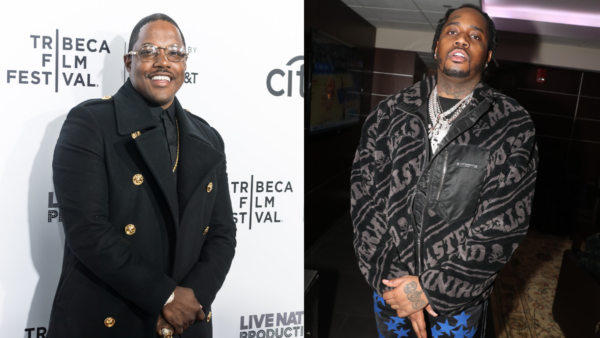
The 46-year-old claims it was structured “because I set him up to do a deal to where I can control the deal … make the deal what it should be, because I knew if he had the leverage, he would go in there and sell both of us out.”
“Then, when we went in the building, I took $800,000 and he took $700,000,” He continued. “The reason why it went down to $700,000 is because when I gave him $750,000 and I took $750,000, he owed me $50,000.”
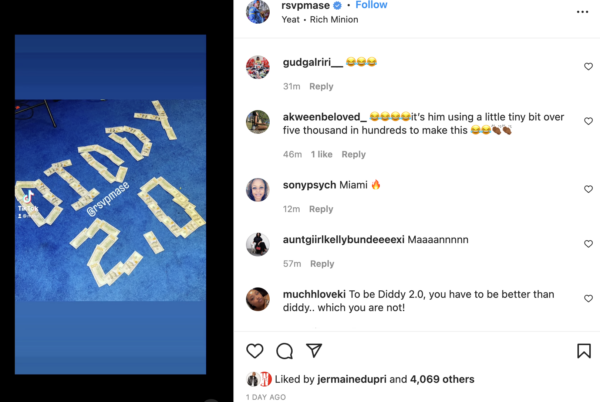
Mase explained that $50,000 was payment for the work he put into Fivio’s career before he signed the deal. After the story went viral on social media, the “Harlem World” rapper began trolling the conversation by calling himself “Diddy 2.0” and spelled it out with cash on social media.
It’s no secret that Mase has a personal issue with Diddy over shady business deals in the early years of his career. He called out the music mogul on March 2022 diss track, “Oracle 2: Standing on Bodies,” which is the sequel to his 2017 Cam’Ron diss song “The Oracle.”
Later in the interview, the “Mo Money’ Mo Problems” artist was asked what went down between him and his former label boss.
“Mhmm that’s really good. Let me take my shades off,” Mase began. “Now, I can say this because it’s not something I didn’t say to him. Puff — how do I want to say this? — I feel like I did more than I got credit for, more than I got paid for.”
“I’m trying to be nice,” he added before clearing up details on his “disdain” for Sean “Puffy Daddy” Combs.
“I never got paid what I was worth, and I never got the respect I was worth, so this disdain that I got for Puff is more like you trying to keep me here n——,” he said, gesturing with his hands as if pushing down to the floor.
Mase blames Diddy for holding him back and not allowing him to become a boss like “all my peers.” “He just kept trying to keep me here like he didn’t want me to grow at anything,” he asserted while pointing at the floor.
Further, Mase also mentioned he came up with the lyrics and beat for “Mo Money, Mo Problems” with producer Stevie J. “So just imagine all of these moments that are taken from you. The records, the beats, you ain’t getting the money, you ain’t getting the publishing, you ain’t getting the respect.”