A federal jury awarded $6 million to a North Carolina man earlier this month who spent 20 years in prison for wrongful murder and arson convictions.
Darryl Howard, originally sentenced to 80 years in prison for the 1991 murders of Doris Washington, 29, and her 13-year-old daughter Nishonda, walked free in 2016 after a Durham County judge vacated the sentence, citing prosecutorial misconduct.
“I am happy about the verdict, but I am kind of upset about the damages,” Howard told the News & Observer. The $6 million he says is barely enough considering his pain and suffering, “Just imagine, 23 years I stayed in prison.”
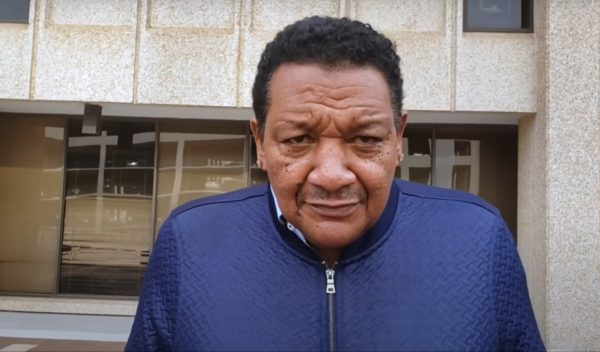
He filed a lawsuit in 2017 against Durham police detective Darryl Dowdy and the city, alleging they were responsible for his wrongful conviction.
Dowdy is now the sole defendant named in the suit. The jury found that Dowdy, who worked with the Durham Police Department for more than three decades, made up evidence that lead to Howard’s conviction.
Dowdy investigated the case after firefighters found Doris Washington and her daughter dead in a public housing unit someone set on fire on Nov. 27, 1991. Autopsies found semen inside both victims and clear evidence of sexual assaults of both, although that element of the crime was not pursued at trial.
A jury found Howard guilty of arson and two counts of second-degree murder four years later.
Howard’s attorneys argued that about a year after the killings, Dowdy shared details of the case with Angela Oliver, who abused substances and worked as a prostitute at the time.
In a taped recording played for the 1995 jury that convicted Howard, Oliver said she’d seen Howard beat Washington and take her upstairs. No physical evidence linking Howard to the crime was offered at trial.
In August, Oliver recanted the statement and said Dowdy fed her the information.
Documents show Oliver gave the statement over a 45-minute period, but the tape is just 10 minutes long. Howard’s attorneys say Dowdy stopped the tape to coach Oliver on what to say. The tape and Dowdy’s notes on the case have since gone missing.
A North Carolina judge exonerated Howard in 2016 based on DNA evidence. Evidence instead linked New York Boys gang associate Jermeck Jones and another person to the crime. Howard’s attorneys claim Washington sold or stored drugs in her home and owed the gang money.
Howard also said Dowdy hid the fact that another key witness, Roneka Jackson, had ties to the New York Boys. Dowdy claims he didn’t know about Jackson’s ties to the gang until months after Howard’s trial.
Dowdy testified that he still believes that Howard is guilty and claims Oliver is lying about the 1995 testimony.
Howard’s attorneys wanted him to receive $48 million in damages: $2 million for every one of the 21 1/2 years he spent in prison and $5 million for the impact the conviction had on his life.
“It’s a huge number,” Emma Freudenberger, one of Howard’s attorneys, told the jury. “And you know what? It is not nearly enough.”
More news from our partners:
“F**k You, LeBron”: Kyle Rittenhouse Blasts LeBron James For Mocking His Courtroom Tears


