Supermodel Tyson Beckford was the face of Diddy’s Sean John clothing line in the early 2000s, helping the line gain popularity because of his already rising career. Instead of walking away from the business relationship with a strengthened relationship with the brand for his contributions, Beckford ended up confused and in court after severing ties due to a breach of contract.
Beckford took the Bad Boy mogul to court in 2005 after failing to receive $600,000 of the $1.2 million that he was contractually obligated to be paid. He admitted to VladTV that not only did he never receive the rest of the funds personally, but he’s also still confused about why things took the turn they did.
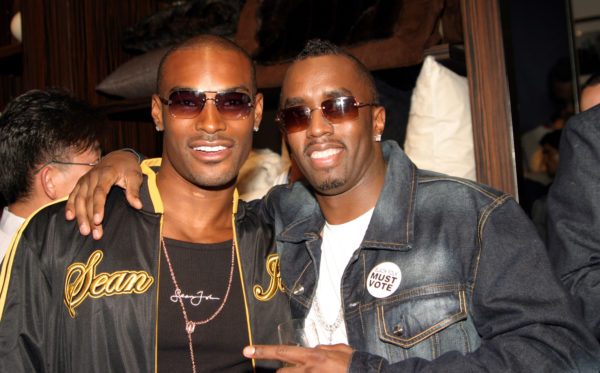
“I still to this day don’t understand what was going on because I thought we were a good fit,” said Beckford. “He reached out to me and Bethann [Hardison]…I don’t know man; I heard rumors that they felt like I was getting too big and I was going to make him obsolete, but how am I going to make him obsolete? He’s his own; Sean John is him. I’m just the face. I felt like maybe it was a fact of like they didn’t want me to be as big as I was over at Ralph [Lauren].”
“I came in the situation just trying to do what I was hired to do and blow s**t up like I normally do,” he continued. “So we ended up going to court over the rest of the payment, which was just heartbreaking.”
Beckford sued Diddy for $5 million in damages from both Bad Boy Entertainment and Sean John, after reportedly receiving only two of the agreed-upon four payments for his modeling work. Before involving the courts, Beckford’s team attempted to collect payment several times unsuccessfully but were told that Tyson’s ads would be pulled. The ads still ran, and according to the suit caused the model “irreparable commercial harm” to his standing as “a popular culture icon.”
The former “Make Me a Supermodel” host explained that he was “sad” that things had to go that far and couldn’t understand the reason why. “Nobody was making the numbers like me, and it was just like ‘Why? You’re this rich guy. Why is it a problem?’ ” I show up on set on time. I actually had to pick up the phone and my manager was like ‘Walk out. Walk out right now.’…I never did that on a job before, walk out like that. It was so unbecoming and it was just sad and it was like ‘Yo, we supposed to be brothers. Why we can’t get this done?’ “
The entire ordeal blindsided Beckford, but looking back on a word of advice that he claims he received from late rapper and former Bad Boy artist Black Rob, his financial gripes were “nothing new” to anyone involved with Diddy.
“To this day I’m still mesmerized by what happened,” he said. “I never got, like, a full explanation or an apology but it is what it is. It ain’t nothing new as far as it goes in that camp because I remember the late great Black Rob telling me ‘You gon’ run into some problems.’ I didn’t think about it and didn’t really digest what he was saying, but I get it. It’s all good.”
Although he holds no grudges and eventually won the court case, Beckford still considers the overall experience a “loss,” but wasn’t going to let the disappointing situation slow him down. “We finally got the money, but I guess they felt the need for it to go to the United Negro College Fund or something like that? Like I said, it’s still to this day unexplainable,” he said. “All I did was chalk it up as a loss and keep it moving.”


