Sportscaster and husband to reality star Cynthia Bailey, Mike Hill is making some bold claims against his former employer ESPN.
The sports network has been trending over the last week over comments made by one of its white anchors, Rachel Nichols, who seemingly suggested during a private conversation that was recorded without her knowledge that the network wanted to her replace her with Black sports journalist Maria Taylor, in order to “polish up its diversity record.”
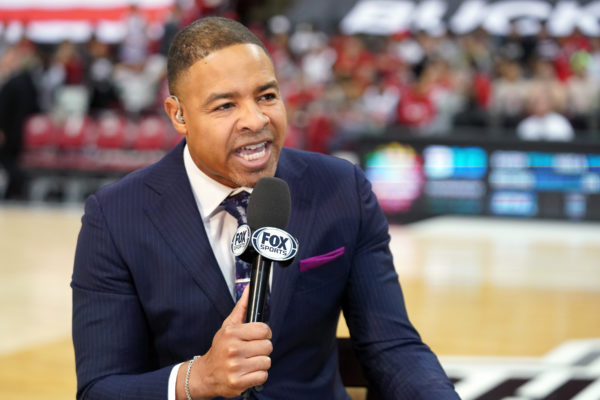
Hill, who worked for ESPN and appeared on a variety of shows for the network from 2004 until his exit in 2013, recently spoke on the scandal and the company’s culture as a whole while co-hosting the BNC News with Sharon Reed.
The New York native stated that while he credits the network for giving him a platform and exposure to further his career, “At the same time, I did realize, and I did experience a culture at ESPN that, maybe exist at other places, but the sad thing about ESPN is that it could be such a great utopia, but at times it isn’t. And a lot of times, the accountability factor is select accountability.”
Hill claimed that there were instances where he’d be reprimanded for comments and decisions he made while his peers, who were not Black, were praised for those very same actions. “There has not been one Black person that has been on air, that I can think of now, that has not gone through hell at ESPN,” he added. He then went on to list popular Black figures, including the late Stuart Scott, Stephen A. Smith, and Jemele Hill, who parted ways with the network in 2018 following a two weeks suspension for a “second violation of our social media guidelines.”
Hill argued that ESPN played a crucial role in how Nichols’ comments about her job placement were expressed. “It’s not just Rachel’s issue. It’s also the network’s and other networks like ESPN’s issue that also tries to explain to people why they’re not in a position that they are in,” he explained. “That brings the entitlement. That brings the privilege a lot of these people have.”
The media personality said he was all but too familiar with that scenario and recalled a time where executives tried to explain to him why he failed to move up in the company. “When I was there, I was told, in a meeting with a talent executive, he said, ‘The reason you’re not moving up here at ESPN is because you’re too ghetto.’ This is from an executive, a talent executive there, an old white man — Bud Morgan.” He added, “And he said they already have one of those,” referring to his former co-worker Scott who gained popularity for his catchy phrases and on-air persona.
Hill said he may come off bitter with his comment but doesn’t care and has since moved on from his relationship with his former employer. “But that is the culture that has existed when I was there, and obviously, some things have not changed,” he added.
Check out the interview with Mike Hill and Sharon Reed down below.