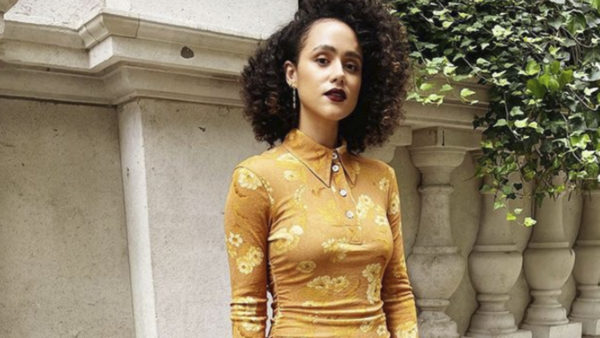
“F9” actress Nathalie Emmanuel admits she’s not sure she would have reached the same level of success in the entertainment industry if she hadn’t looked outside of her home country.
The actress, whom many recognize from her role in “Game of Thrones” as Daenerys Targaryen’s trusted friend and advisor Messandei, is originally from the English resort town Southend-on-Sea and got her start in British television, but her career began to take off once she made the crossover into American television in one of the biggest TV series of all time. Since being cast in “Game of Thrones,” Emmanuel has also starred in two films in “The Maze Runner” trilogy, three “Fast & Furious” films, and the Hulu miniseries “Four Weddings and a Funeral,” among other projects.
Emmanuel is one among a long list of names of Black British actors making it big in Hollywood. She joins the likes of Regé-Jean Page, David Oyelowo, John Boyega, Leticia Wright, Idris Elba, Lashana Lynch, and Thandiwe Newton, just to name a few. If anyone has ever wondered why such a large part of Black Hollywood is made up of Black Brits, the answer is one that Black people across the globe can understand: racism.
“I think it speaks to something that’s actually not so positive. The British industry hasn’t always embraced us,” Emmanuel said in a recent Essence interview when asked to share her thoughts on the reason behind the influx of Black English talent in Hollywood. “So many Black mixed people like myself have come out to America because the opportunities just weren’t here for us. Unfortunately, what’s happened is a lot of Black talent has been lost to the States.”
“It’s not like we hadn’t been calling for this for many years. It was just falling on deaf ears,” she continued. “I think, frankly, that the U.S. has so much more opportunity for people of all kinds of backgrounds and all kinds of people. The industry is bigger so there’s more being made, and there’s kind of space for more people. While it has its issues too, and we’re still calling for necessary, important change through every area of the industry, there seems to be just more opportunity.”
While the barrier to entry may be lower for Black actors from across the pond here in the U.S., there has been an ongoing debate within the Black Hollywood community about whether it’s appropriate for non-American Black actors to portray American characters, such as Daniel Kaluuya’s recent turn as Fred Hampton in “Judas and the Black Messiah” and Cynthia Erivo starring as famed abolitionist Harriet Tubman in “Harriet.”
In 2017, actor Samuel L. Jackson expressed his opinion that Black British actors’ life experiences aren’t the same as Black American actors, which directly impacts the emotional angles they imbue in American roles.
“There are a lot of Black British actors in these movies. I tend to wonder what that movie would have been with an American brother who really feels that,” he said to New York radio station Hot 97 while referring to Daniel Kaluuya’s starring role in Jordan Peele’s debut horror film “Get Out.” “Daniel grew up in a country where they’ve been interracial dating for a hundred years. What would a brother from America have made of that role? Some things are universal, but [not everything].”