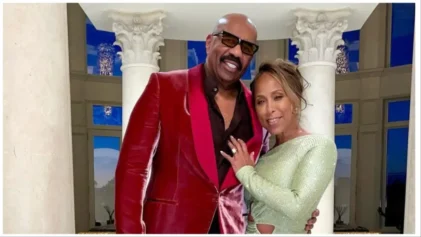
Last year Steve Harvey made his dream of bringing his iconic game show “Family Feud” to Africa a reality. The show that pits two families against each other as they answer survey questions now features South Africa and Ghana along with several other countries on its growing viewership roster.
“Bringing ‘Family Feud’ to Africa has long been a dream of mine,” Harvey told Deadline in 2019. “And this is just the beginning in Africa. I expect this show to lead to multiple media and business projects in and throughout the continent.”
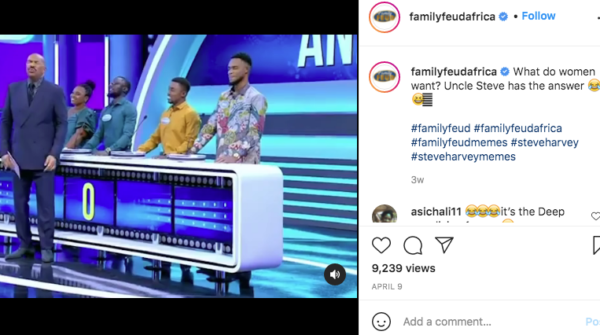
With one international season under his belt, the host of ten years says he sees no difference between his African audiences and that of American viewers. In fact, Harvey says his African audience is “just like me.”
“I don’t see no difference because you are African and I’m African-American. Everything that we are in America we got from you– that’s the part I don’t understand,” he told Sowetan Live last week while discussing the second South African “Family Feud” season set to start airing next month. But when it comes to what the 64-year-old comedian loves most about filming in Africa, he shares that not being the only, or one of few, Black people in a room has been phenomenal.
“It gives me the pleasure of waking up every day and not having to be a minority,” he says. “I am 64 years old and I’m not a minority anymore. I’m in the majority over here, I’m winning!”
He further elaborates with, “It’s an amazing feeling. See, y’all are so used to it… it’s like you wake up, this is like a Detroit to me, it’s very refreshing. Like, it’s really nothing about racism it’s just about the feeling of not having to factor in every morning every day when I wake up that I’m black! But back in the States, I have to factor that in that I am black.”
Considering the overwhelming sense of belonging and an endless well of culture, Harvey says he really does not get why so many Africans want to immigrate to America.
“Everything we do is because of you,” he says. “The way we dance, we got them from Africa. If it wasn’t for you, there is no us, that’s what the connection is. That’s what so many people miss, but I get it and that’s why I wanna be here so bad because I understand the connection.”
Fans of Harvey and the show are equally as enthusiastic about the host.
“Come to Zambia Mr Steve,we love your shows so much 🙏”
“I love uncle Steve ❤️❤️❤️”
“Am proud to be an African looking at this man n all this achievements”