Georgia-raised rapper 2 Chainz recognizes the common belief among many felons that, based on their prior convictions, they’re not allowed to vote and can’t participate in the upcoming presidential election.
To help dispel that way of thinking, Chainz partnered with Michelle Obama‘s nonprofit When We All Vote. The organization released a video on Sunday, Aug. 9, where the metro Atlanta-based artist stressed that voting isn’t out of reach for felons, despite what they may have been told.
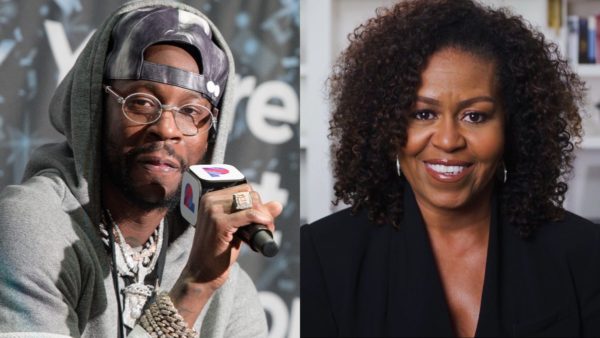
“As you know, or may not know, me as well as many peers my age and where I’m from have been either incarcerated maybe once or twice in their lifetime,” said the “It’s a Vibe” performer. “And for those of you that have been through those unfortunate circumstances, I would like to notify you about some of the things and give you some real clarity about voting and your rights.”
2 Chainz then explained that voting laws for felons vary by state, and he gave some examples.
“If you live in Maine, Vermont, or [Washington] D.C., you never actually lose your rights to vote, even while being incarcerated,” he stated. “And in at least 20 states, or something like that, you’re allowed to vote after you pay your fines, your restitution, get off parole or probation. So it really depends on where you live.”
2 Chainz also said that this upcoming presidential election matters more than any other in the past, and he wanted to speak directly to those who feel that their voice doesn’t matter.
“We need it,” he told them. “We need everybody’s voice in this particular moment. So I feel like collectively, if we come together during this time, we can get what we need to get done.”
Celebrities across various fields of entertainment have been encouraging people to vote through Obama’s When We All Vote initiative; this includes Janelle Monáe, NBA star Chris Paul, Kerry Washington, Tracee Ellis Ross, and Common. They also appeared in a PSA about the importance of voting, with that video being posted to Obama’s Instagram page last month.
2 Chainz didn’t appear in that clip, but his desire to help spread the message about voting rights for felons is nothing new.
In June, he shared an Instagram Live video and revealed that he tried to help educate felons about voting in the past when Barack Obama was running for president.
“My first time voting was for [Barack] Obama,” said Chainz. “When he was running, I was trying to get with some of his people to spread awareness about felons and their reinstatement to vote.”
Had that connection taken place, it likely could have made a difference for West Coast rapper Snoop Dogg, who told Los Angeles station REAL 92.3 he thought his voting rights were taken away due to his felony conviction.
“For many years they had me brainwashed thinking that you couldn’t vote ’cause you had a criminal record,” Snoop explained. “I didn’t know that. My record’s been expunged, so now I can vote.”
In Snoop’s home state of California, a felon’s voting rights can be automatically restored after he or she gets out of prison and completes parole.


