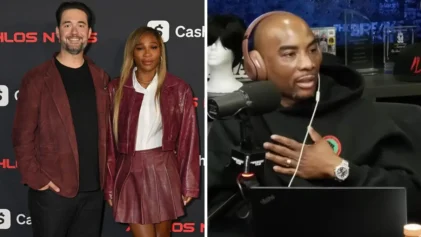
Kobe Bryant’s Oscar win has been overshadowed by headlines touting his past rape allegation and Charlamagne Tha God isn’t here for it.
The retired NBA star’s animated short, “Dear Basketball” won the Academy Award for Best Animated Short Sunday, March 4. That made Bryant, who executive produced the flick, which was based on his 2015 poem, the first Black person to win in the category.
But a quick Google search for coverage of his moment — which occurred as the #MeToo movement marches on — readily brings up the star’s 2003 rape accusations. Bryant, who was married to wife Vanessa, admitted he had relations with the 19-year-old but maintained each encounter was consensual. The criminal case was dropped in 2004 after the woman refused to testify. He settled in a civil suit out of court in 2005, the amount of which was undisclosed.
But for Charlamagne, the new criticism isn’t genuine.
“I really can’t believe that people are pulling up a 16-year-old sexual assault case to slam Kobe Bryant’s Oscar win,” he says. “It just seems disingenuous because I wanna know where everybody’s been for the past 16 years?”
After rattling off a list of Bryant’s NBA accolades, Charlamagne said he couldn’t recall any boycotts erupting over his Nike and Turkish Airlines commercials over the claims in the early aughts.
“I’m just tryna figure out now, 16 years later, people are triggered because he won an Oscar for a short film about basketball. You haven’t been concerned about any of the other accolades, but why now and an Oscar? I have two questions: why now are people triggered and why isn’t a man — especially a Black man in America — ever truly not guilty of anything in the court of public opinion?”
“Why can’t that man be allowed to grow and evolve and learn from his mistakes?” he adds. “Roman Polanski won an Oscar for directing in 2003. And Roman Polanski was accused of drugging and raping mad young girls and he fled the country! He was charged with five offenses of raping a 13-year-old girl.”
The radio host also pointed out that fellow 2018 Oscar winner Gary Oldman has also faced accusations of abusing his wife in front of their children. While he denied the claims and charges were never filed against him, Charlamange said the reaction to that isn’t the same as the one to Kobe.
“I smell B.S. ladies and gentleman,” he says. “Are we guilty forever? Even when we haven’t been found guilty? Even after charges get dismissed or dropped?”
In response, several Twitter users let their differing opinions fly.
We dont support rape artist lenard lol
— Gage (@KingGage_) March 5, 2018
Ayo Charlamagne, I look up you, but you the worst at keeping that same energy, cause you were delightfully talking about all the people who’s careers ended because of solely allegations, nobody’s trying to end Kobe, just keep the same attitude whoever that is, you trippin
— Alex EGFpodcast (@alex_egfpodcast) March 5, 2018
Charlamagne spoke that real this morning about Kobe!!!!!!!! I need that recorded
— Grandad. (@Ikicklife) March 5, 2018