LeBron James responds to the vandalism incident at his home pic.twitter.com/goMoicIIit
— Sports Illustrated (@SInow) May 31, 2017
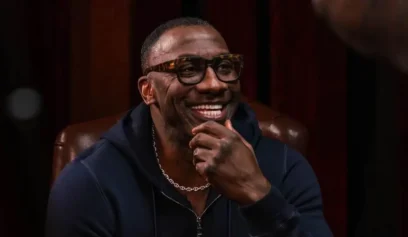
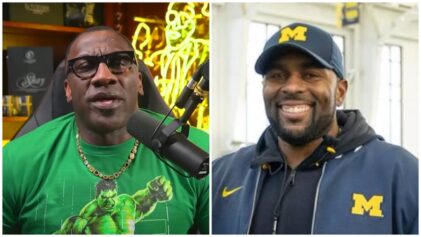
Ask Jason Whitlock and Shannon Sharpe for their take on LeBron James’ statement about being Black and wealthy and you’ll get two drastically different responses.
On the eve of the Cleveland Cavaliers’ 113-91 loss to the Golden State Warriors Thursday night, James addressed the N-word scrawled on his Los Angeles home.
“No matter how much money you have, no matter how famous you are, no matter how many people admire you, being Black in America is — it’s tough,” James tells reporters Wednesday, May 31. “And we got a long way to go for us as a society and for us as African-Americans until we feel equal in America.”
Whitlock staunchly disagreed, slamming the Cavs star for supposedly playing the victim and writing the situation off as an “inconvenience.”
"Racism is an issue in America, but it's primarily an issue for the poor. It's not LeBron James' issue." – @WhitlockJason pic.twitter.com/6IqMTxIRg9
— Herd w/Colin Cowherd (@TheHerd) June 1, 2017
“Racism is an issue in America, but it’s primarily an issue for the poor. It’s not LeBron James’ issue,” Whitlock says Thursday on “The Herd With Colin Cowherd.” “He has removed himself from the damages and the ravages of real racism.”
The former sports journalist called James’ statement about it being tough to be Black “a lie,” and outlined his own privileged lifestyle before noting “I’m not nearly as rich as LeBron James” to support his idea.
However, Sharpe had a completely different take.
Like Whitlock, Sharpe also has wealth, but he believes that doesn’t save him from enduring racism.
“The hardest job in America is being Black because it’s the one thing you can’t outrun,” Sharpe says on “Undisputed” Thursday. “I was born dirt poor, but I rose through the ranks because God gave me a talent, I cultivated it … I got an education. But guess what I still was? I’m wealthy, I’m well-off, I’m financially secure, I’m educated, but I’m still Black. And that’s how they see [you].”