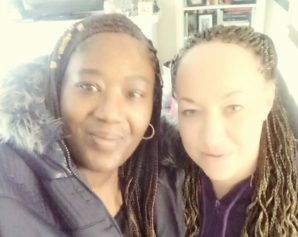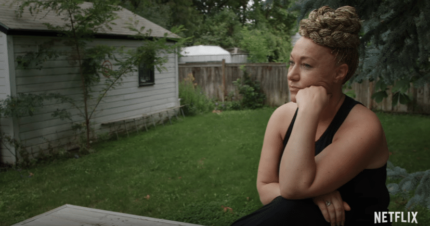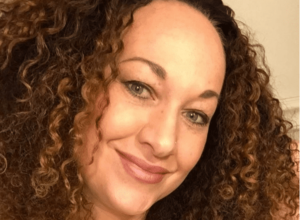
Rachel Dolezal is in South Africa discussing her experiences with race. (@racheladolezal/Instagram)
Rachel Dolezal says crossing color lines is nothing new and during a visit to South Africa this week, she explained how Black people have been making the switch for decades.
“Historically, there has been more of the numbers crossing the color line in the opposite direction, people born categorized as Black in the United States who passed for white or lived a white life. That sense of racial fluidity certainly has a bit of a spectrum,” Dolezal said on 702’s “Breakfast Show” Tuesday, April 18. “And yet‚ even people like Michael Jackson and others have reversed their pigmentation or their skin color. So, there is [a] possibility for fluidity in many directions.”
Dolezal made headlines in 2015 when she was exposed as being a white American woman who had been parading as Black for years. She left her position as the president of Spokane, Wash., chapter of the NAACP as a result.
“This really brings up that race is a social construct,” she added. “President Barack Obama even said that race is more social than it is biological and if you are perceived as African-American‚ you are African-American‚” she said.
Fill-in host Stephen Grootes said many Black Americans wouldn’t have the ability to go unrecognized as Black the way she was able to go unseen as white. Dolezal acknowledged she does have a privilege over Black Americans in that regard.
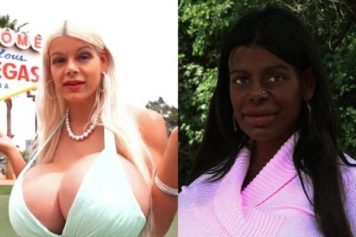
“The spectrum that I just mentioned is a privilege spectrum‚ whether it’s somebody who is light-skinned and classified as Black at birth or whether somebody is born white and has certain features that would be racialized as Black,” Dolezal said. “I think that there is an ethnically indeterminate kind of zone that has a privilege for sure because then you have the personal agency to decide without certain surgeries — there are racial reconstruction surgeries available where people can go to extreme measures to alter an appearance toward one race or the other — and that’s not just Black and white.”
Dolezal explained she’s had other people reach out to her about how they’ve undergone surgery to look more like another race, such as an Asian man who had his eyes widened and a white man who had a nose job to appear Latino.
Grootes said Dolezal would not have consciously decided to identify as Black if she were living in the era of enslavement or Jim Crow.
“The color line has been crossed many, many times so people who say you can’t do it if you’re Black… there’s a [book] called ‘A Chosen Exile’ by Allyson Hobbs. That textbook discusses those journeys and … once you cross the color line, you have to exile yourself from the other side and so you lose all connection with the Black community that you were born into and truly have a white life,” Dolezal said.
“In my case‚ there was a crossing of the color line, but it’s not as cavalier or it’s not a choice in a way that people think it was. This is how I have always felt. When I say authentic identity‚ it’s because this is who I have always been.”
When asked why she feels Black Americans have disregarded her, Dolezal blamed it on the way her story was presented and pointed to her memoir, “In Full Color,” as the source for how things really happened.
“People were responding to somebody who was a race faker,” Dolezal said. “It wasn’t a confirmation of how I had always felt and who I really am. If it had been presented in a different way, people would have had a different reaction.”
She noted she’s heard from Black people from around the world who called her courageous.
“I don’t know that just because the loudest voices have been oppositional that we can say all or a majority of a group or a certain demographic is oppositional,” she said. “I think that Twitter is a very shallow way to judge society.”