[playwirevid id=’3665977′]
By Manny Otiko
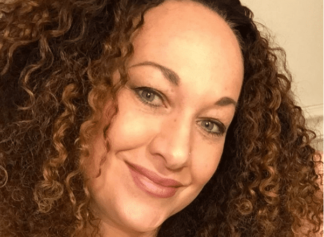
(Updated) Rachel Dolezal, a Spokane, Wash. NAACP leader who sparked an international media storm when it was revealed she lied about her ethnicity, has stepped down from her post. In a lengthy written statement, Dolezal said she was stepping aside so the local NAACP chapter could continue its fight for social justice.
She wrote: “It is with complete allegiance to the cause of racial and social justice and the NAACP that I step aside from the Presidency and pass the baton to my Vice President, Naima Quarles-Burnley. It is my hope that by securing a beautiful office for the organization in the heart of downtown, bringing the local branch into financial compliance, catalyzing committees to do strategic work in the five Game Changer issues, launching community forums, putting the membership on a fast climb, and helping many individuals find the legal, financial and practical support needed to fight race-based discrimination, I have positioned the Spokane NAACP to buttress this transition.”
Dolezal was supposed to attend a meeting with local NAACP officials Monday, but according to Al-Jazeera, cancelled the day before claiming she needed “to continue discussion with regional and national NAACP leaders.”
Although Dolezal taught Africana studies at Eastern Washington University and wore a “natural Afro,” she was outed by her estranged parents, who showed evidence from her birth certificate and childhood photos indicating she was clearly Caucasian. Dolezal’s hair now appears to be “naturally kinky” and in the past she has worn braids, but previous pictures showed her hair was blonde and straight.
Dolezal says she doesn’t care what her parents say, she considers herself Black. In a TV interview, she says she prefers the term “Black” over “African American.”
Her ruse has been met with a combination of anger, sympathy and ridicule. Some people say her long record of advocacy for Black causes should overshadow her dishonesty. She has appeared with Baltimore City Attorney Marilyn Mosby and spoken to Al-Jazeera on the issue of police violence. Dolezal was married to a Black man, and adopted her African American brother, who she now calls her son.
MSNBC host Melissa Harris-Perry discussed Dolezal in detail during her weekend shows. Allyson Hobbs, a Stanford history professor who has written a book on the subject of “passing,” also commented on the issue. Speaking on MSNBC, Hobbs said there is “certainly a chance that [Dolezal] identifies as a Black woman and there could be authenticity to that.”
In an interview with The Los Angeles Times, Hobbs said many people are confused why Dolezal would want to give up the benefits of being white.
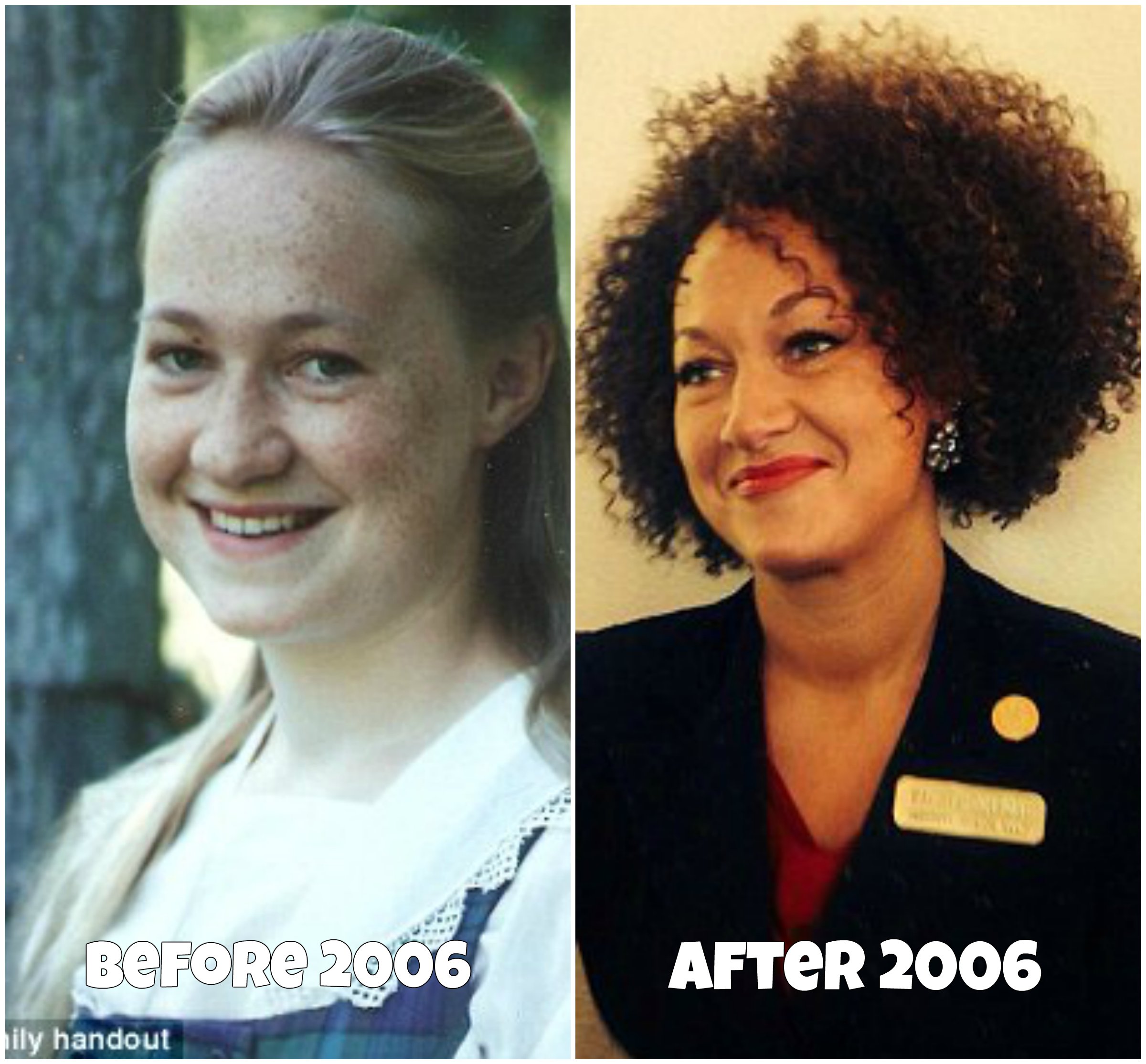
Rachel Dolezal
“Part of what we really struggle with is this notion that, if given the choice, a white person would not choose to give up their privilege of being white,” said Hobbs. “I don’t get the sense she’s using a Black identity in an opportunistic way. I think a lot of people just feel like, ‘oh my God, why would someone choose to be Black’?”
Other people are less sympathetic, accusing Dolezal of cultural appropriation and fraud. Some of Dolezal’s family have been critical of her behavior, with her own brother accusing her of performing “blackface.” Ezra Dolezal said his sister also darkened her skin to complete her new identity.
“It’s kind of a slap in the face to African Americans because she doesn’t know what it’s like to be Black,” said Ezra Dolezal in a CNN interview. “She’s only been African American when it benefited her. She hasn’t been through all the struggles. She’s only been African American the last few years.”
Ezra Dolezal is also estranged from his adoptive parents. According to court documents, he accused them of using physical punishment and banishment when he failed to follow their religious rules.
Kitara Johnson, a local NAACP member, says Dolezal’s actions have compromised her leadership and has started an online petition calling for her to step down.
According to Al-Jazeera, Johnson said, “It’s not about race, it’s about integrity. If you’re a leader, you have to have integrity. She clearly lacks integrity. The other piece is credibility.”
Dolezal may be guilty of more than just creating a false identity. She has claimed she was the victim of hate crimes, when she received threatening letters, although a police investigation showed the letters had no postmark. She also applied to serve on a Spokane city police commission where she marked “Black” on her application.
However, Dolezal is not the first high-profile white person who has pretended to be Black. Mezz Mezzrow, the son of Russian Jewish immigrants, passed himself as Black to increase his standing as a jazz musician. And writer John Howard Griffin darkened his skin to gather information for his 1961 book Black Like Me, which detailed his experiences passing as a Black man in the South.