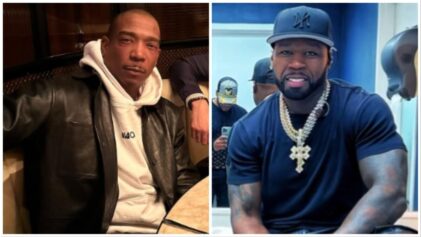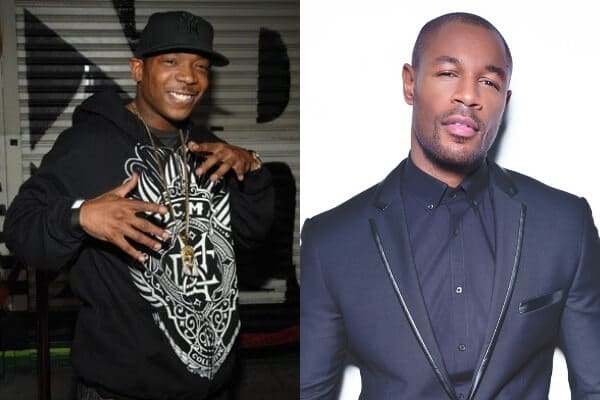
Ja Rule, accused of using misogynistic language in his music, believes #BlackBoyJoy isn’t positive for Black men. Tank disagrees. (Wikimedia Commons/Atlantic Records)
Rapper Ja Rule and R&B singer Tank recently found themselves at odds over the meaning of the hashtag #BlackBoyJoy.
BET posted a photo from the American Black Film Festival Honors on Monday, Feb. 20, featuring actor Omari Hardwick, singer Maxwell and several of the stars of “The New Edition Story” mini-series. The network would air the ABFF Honors that Wednesday and geared viewers up by describing it as an event that featured “a lot of #BlackBoyJoy.”
https://www.instagram.com/p/BQv_9kBjuEp/?taken-by=bet
The hashtag took off last year when Chance the Rapper tweeted a photo of himself with the uplifting message in August. Since then, many Black boys and men have adopted it to express moments of happiness in a climate clouded with constant threats to Black male life due to police brutality.
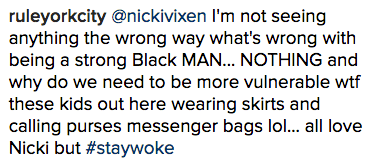
#BlackBoyJoy’s history was lost on Ja Rule, who wrote one of the first comments on BET’s image. Ja questioned the phrase’s origins and criticized it as being derogatory, condemning the use of the word “boy” to describe Black men due to its ties to enslavement.
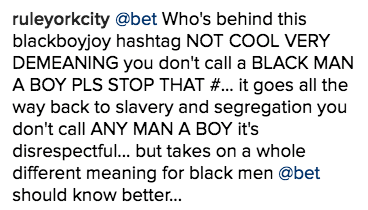
Tank chimed in later, slamming the New York entertainer for attacking singer-actors Elijah Kelley, Luke James, Keith Powers and Woody McClain for “injecting positivity into our community.”
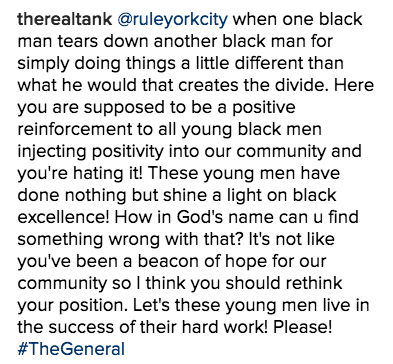
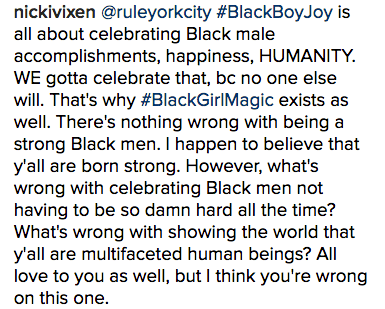
The discord was not only limited to the rapper and singer. Instagram user @nickivixen also broke down why#BlackBoyJoy is rooted in Black men embracing vulnerability.
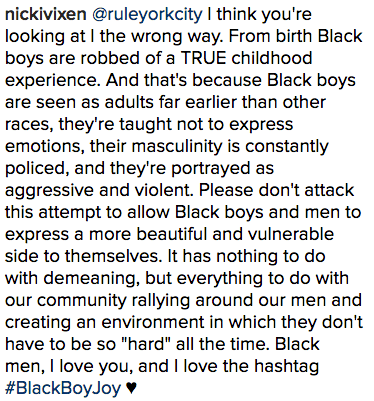 Ja didn’t get on board with her message and the two continued to disagree.
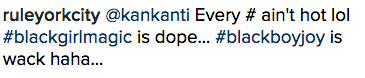
Many other commenters were equally as divided.
Some sided with Tank and believed the hashtag simply puts Black men in a positive light.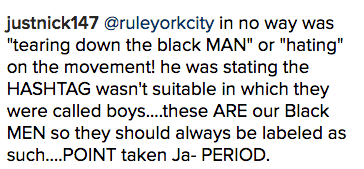
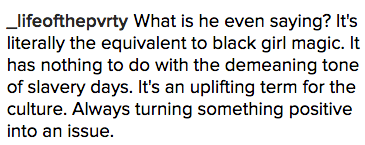
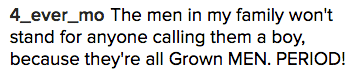
Others thought Ja had the right mindset and sided with his argument that pointed to racist terminology.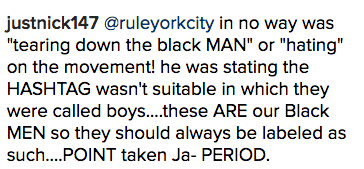
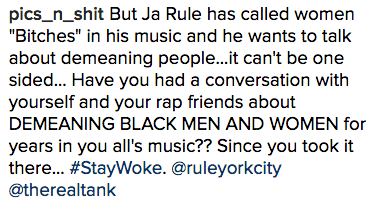
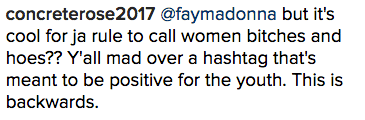
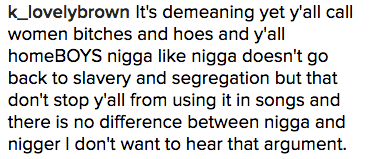
Several people called out the MC for hypocritically referring to women with degrading names and using the N-word throughout his lyrics.