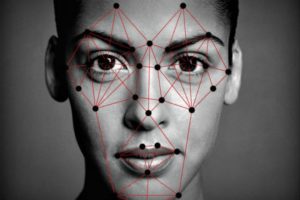
Image courtesy of SpaceOTechnologies.com
It’s common knowledge that African-Americans oftentimes suffer the brunt of implicit (and explicit) racial bias from law enforcement personnel. But what about the high-tech systems used by police to capture and analyze images of potential crime suspects? Could this widely used technology be the new culprit behind racial profiling?
According to a new report out of Georgetown University law school’s Center for Privacy & Technology, half of all American adults have their likeness stored in at least one facial recognition database that’s searchable by police. However, the growing use of these systems has resulted in a disproportionate racial impact on Black citizens.
Because African-Americas are more likely to be arrested and have their mug shots taken — which is the main way images end up in police databases — the facial recognition technology essentially ups the likelihood of Blacks being singled out as potential crime suspects. Even those who may be innocent are mixed in with the suspects, the report states.
“This is a serious problem, and no one is working to fix it,” said Alvaro M. Bedoya, executive director of Georgetown’s Center for Privacy & Technology. “Police departments are talking about it as if it’s race-blind, and it’s just not true.”
Researchers discovered that criminal databases are rarely “scrubbed” to delete images of innocent people, nor are facial recognition technologies regularly checked for accuracy, the Washington Post reports. The study, titled “The Perpetual Line-Up,” also noted that some systems even have trouble distinguishing between darker-skinned faces.
Each facial recognition system, whether it be at the federal, state or local level, differs from the next. According to the Washington Post, some police databases contain mug shots while others store driver’s license photos. In states like Maryland and Pennsylvania, authorities use both systems to examine crime scene images and identify potential suspects.
The report stated that some police agencies have even expressed interest in utilizing real-time facial recognition technology. Such a system would potentially give law enforcement officials the ability to quickly identify people who walk past a discreet neighborhood camera — or attend a political rally that police just happen to be surveilling.
It’s this aspect of policing that has some civil rights groups concerned. According to the Washington Post, a coalition of civil rights advocates and civil liberties groups plan to deliver a scathing letter to the Department of Justice’s civil rights division demanding a full investigation into the use (and abuse) of facial recognition technology.
In the letter, coalition members requested that the DOJ “expand ongoing investigations of police practices” while examining whether “the use of…facial recognition technology has a disparate impact on communities of color.” It asked the same of the FBI.
“Face recognition technology is rapidly being interconnected with everyday police activities, impacting virtually every jurisdiction in America,” read the letter signed by over 40 civil rights organizations. “Yet, the safeguards to ensure this technology is being used fairly and responsibly appear to be virtually non existent.”
The FBI has maintained that facial recognition systems are effective crime-fighting tools, adding that the technology doesn’t actually compare characteristics like skin color, age or gender.
Sakira Cook, counsel at the Leadership Conference in Civil and Human Rights, said the issue may not lie in the technology itself, but rather in the bias of how and where it’s used.
“[A higher arrest rate] doesn’t mean African-Americans are committing crimes at higher rates,” Cook said. “It just means that they are being policed, surveilled and arrested at higher rates. It compounds the issue of racial profiling.”
The report concluded that while law enforcement face-recognition networks include the faces of over 117 million American adults, different uses of the technology carries different risks. It also pointed out that most police face-recognition systems are unregulated and out of control — hence the need for the in-depth report.
Writers of the report recommended that legislators pass laws to regulate such technologies and that the DOJ works to make significant changes to the FBI’s facial recognition system.